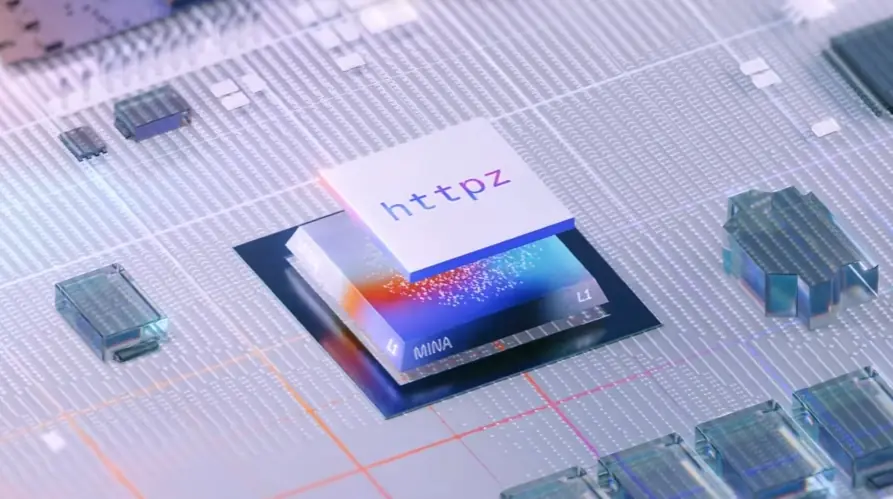

Bridging Hardware and Imagination: Visualizing the Infrastructure of Tomorrow###Executive SummaryIn a landscape where technology is often invisible, Advids partnered with a global technology leader to visualize the tangible power of Artificial Intelligence. By bridging the gap between complex engineering specifications and high-concept brand storytelling, we delivered a global marketing campaign that positions the client's new server and consumer hardware ecosystem as the engine behind modern innovation.
The Challenge: Visualizing the Invisible IntelligenceThe client presented a dual challenge: they needed to showcase the physical robustness of their new server racks and laptops while simultaneously visualizing the abstract, invisible concept of "Ubiquitous Artificial Intelligence." The marketing team possessed high-fidelity engineering files but lacked a visual language to translate these technical assets into an emotional narrative. The primary hurdle was to create a visual representation of data flows that felt integral to the hardware, not just a decorative overlay, while maintaining photorealistic accuracy across diverse environments—from sterile data centers to bustling smart cities.
The Advids SolutionWe deployed the Advids Precision Visualization Workflow, a high-end production pipeline designed to transform Computer-Aided Design data into cinematic assets. Our approach focused on "narrative physics"—using particle and fluid simulations to represent data as a living, fluid entity that interacts dynamically with the hardware. By integrating physically based rendering with stylized data visualizations, we created a seamless journey from the microscopic circuits of a motherboard to the macroscopic view of a smart metropolis.
Client Profile* Industry: Technology & Hardware Manufacturing
- Area of Focus: Artificial Intelligence Servers, Consumer Electronics, IoT Solutions
- Scale: Global Enterprise
Primary ObjectiveTo launch a global campaign that visually unites the client's enterprise (servers) and consumer (laptops) product lines under the brand promise "Always Incredible," demonstrating how their hardware powers specific industry verticals like healthcare, manufacturing, and retail.
The Advids Precision Visualization WorkflowThis project utilized our specialized pipeline for high-fidelity industrial and product animation, ensuring that every screw, texture, and light reflection adhered to the strictest standards of realism while serving the artistic vision.
Stage 1: Data Ingestion & Optimization (Tessellation)
- Goal: Prepare raw engineering files for the animation pipeline.
- Process: We ingested the client's heavy Computer-Aided Design assemblies for the server racks. These files were mathematically precise but geometrically dense. We utilized retopology techniques to optimize the polygon count, ensuring the models were lightweight enough for complex animation but retained perfect curvature for close-up rendering.
- Action: Created the master asset file
Server_Rack_Assembly_Optimized_v04.obj.
Stage 2: Look Development (Physically Based Rendering)
- Goal: Achieve photorealistic surface properties.
- Process: We built a custom material library. For the server chassis, we developed an anodized aluminum shader with specific roughness maps to simulate real-world light dispersion. For the laptop sequence, we created a specialized "Zen" metal texture that interacted dynamically with our lighting setup.
- Action: Finalized the
Material_Library_Anodized_Black_v2.lib4dfor global usage.
Stage 3: Technical Animation & Camera Choreography
- Goal: Create a sense of scale and momentum.
- Process: We moved away from static product turntables. The camera was animated to "fly through" the hardware, mimicking the path of a data packet. This required precise keyframing to ensure the camera focus landed on key chipset components at the exact moment of the voiceover cues.
Stage 4: Simulation (Fluids & Particles)
- Goal: Visualize the "flow" of intelligence.
- Process: We utilized high-end particle systems to create the "digital water" and "data streams" seen throughout the video. This involved simulating millions of individual particles that reacted to the geometry of the cities and servers.
Project at a Glance| Category | Details |
| --- | --- |
| Project Type | Global Marketing Campaign Video |
| Video Style | 3D Industrial Animation & Motion Graphics |
| Core Technology | 3D Animation, Particle Simulation, Physically Based Rendering |
| Duration | 9 Weeks |
| Deliverables | Main Campaign Film (60s), Social Cut-downs (15s), High-Res Stills |
| Collaboration Stack | Slack (Real-time Communication), Google Drive (Asset Management), Vimeo Review (Video Feedback) |
Project Timeline* Week 1: Discovery & Data Ingestion
-
Received raw Computer-Aided Design files.
-
Kick-off workshop to define the visual representation of "Data."
-
Quote: "The data stream needs to feel like it's powering the city, not just floating above it." — Client Creative Director
-
Week 2-3: Previsualization & Style Frames
-
Delivered
Animatic_Blockout_v3.mp4for timing and camera moves. -
Created
Style_Frame_Smart_City_v2.pngto establish the holographic aesthetic. -
Week 4-6: Asset Creation & Simulation R&D
-
Texturing of server racks and consumer devices.
-
Development of the particle flow systems.
-
Artifact:
Particle_Flow_SmartCity_Sim_v12.abcgenerated for the city wide shot. -
Week 7: Lighting & Rendering
-
Setup of Image-Based Lighting environments for the server room and city.
-
Initiated high-resolution rendering on the farm.
-
Week 8: Compositing & Sound Design
-
Layering of render passes (Diffused, Reflection, Specular).
-
Integration of sound effects to match the motion graphics.
-
Week 9: Final Mastering
-
Color grading and final export.
-
Output:
Global_Campaign_Master_ProRes_vFinal.mov.
Production Deep Dive: Engineering the Aesthetic####The Critical Juncture: The Simulation BreakthroughMidway through the production (Week 5), we encountered a significant aesthetic hurdle. The particle simulations designed to represent "Ubiquitous Artificial Intelligence" were behaving too chaotically. In the close-up shots of the server racks, the particles were visually "clipping" through the hardware geometry, creating a messy, glitchy appearance that undermined the message of precision.
The Solution:
Advids technical directors developed a custom "flow field" solution. Instead of standard random turbulence, we created magnetic guide curves that followed the physical contours of the server hardware. We applied a proximity-based transparency shader, meaning particles became more opaque and luminous as they neared the processing units, and faded out as they moved away. This turned the "visual noise" into a directed, intelligent stream of energy that highlighted, rather than obscured, the client's product architecture.
Feedback Loop: Refining the Holographic Aesthetic* Context: The "Smart City" sequence (00:33) required a delicate balance between realism and data overlay.
- Advids Submission: We uploaded
Comp_City_Test_v04.mp4to Vimeo Review, showing a realistic city with a faint blue overlay. - Client Feedback: "The city feels too heavy and concrete. The 'Smart' aspect is getting lost. Can we push the buildings to look more like data structures themselves?"
- Advids Action: We pivoted the approach. Instead of rendering solid concrete textures, we utilized a "wireframe-over-solid" shader technique. We adjusted the opacity of the buildings' geometry and increased the emission strength of the connectivity lines. This successfully transformed the visual from a "video of a city" to a "digital twin," aligning perfectly with the smart city narrative.
Feedback Loop: Perfecting the Product Finish* Context: The laptop reveal shot (00:49) featured a fluid simulation washing over the device.
- Advids Submission:
Laptop_Fluid_Sim_v02.mp4showed the liquid moving quickly over the screen. - Client Feedback: "The liquid moves too fast; it looks like water. It needs to feel more viscous, like 'liquid intelligence' or mercury."
- Advids Action: We adjusted the viscosity settings in the fluid simulator and re-baked the cache (
Fluid_Cache_HighViscosity_v03). We also slowed down the time scale of the simulation by 20%, giving the fluid a weightier, more premium behavior that emphasized the elegance of the laptop design.
Visual Asset Analysis| Serial No. | Image Placeholder | Timestamp | Rationale | Placement |
| --- | --- | --- | --- | --- |
| 01 | 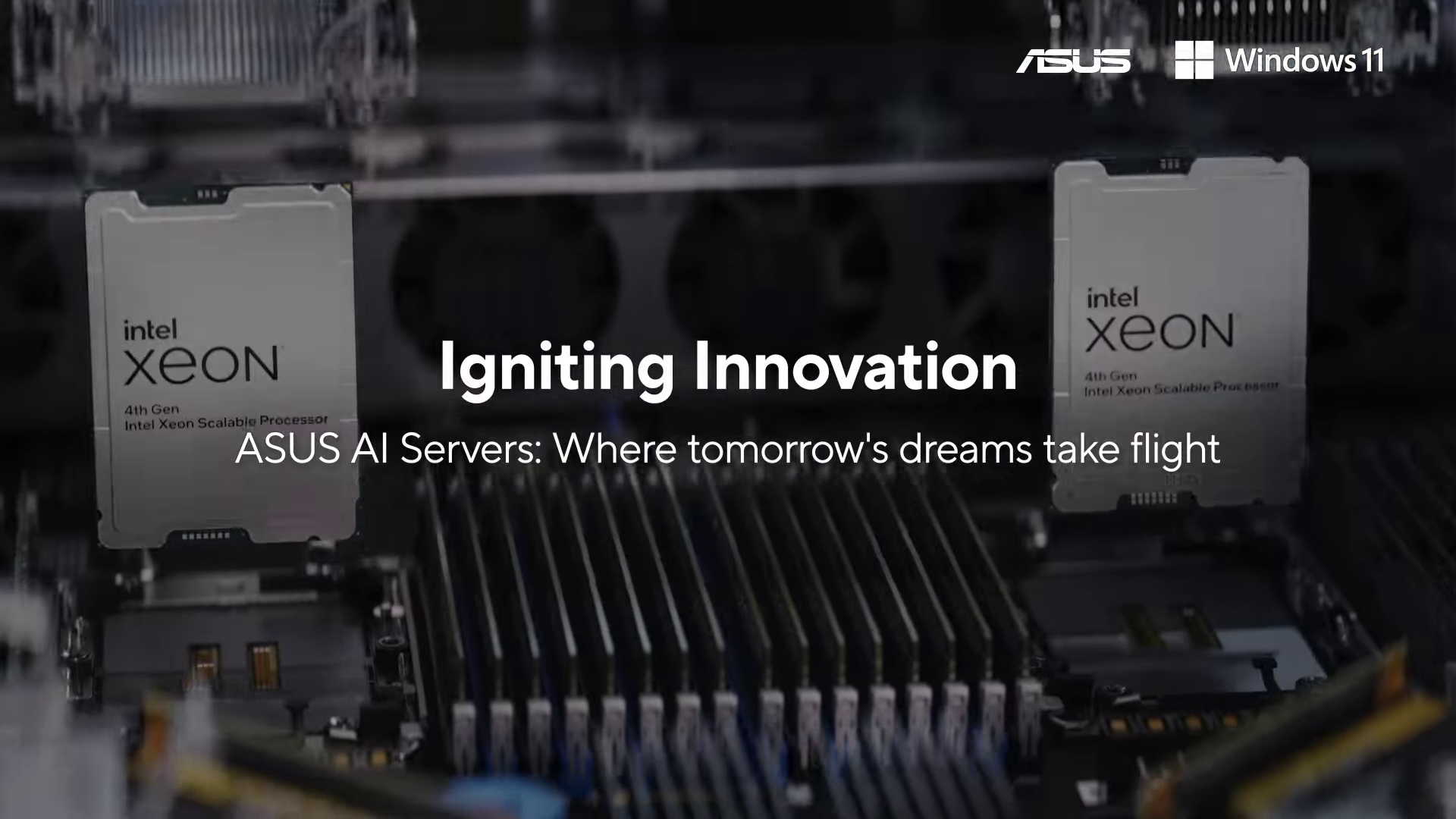 | 00:09 | Precision Engineering: This close-up demonstrates the high-fidelity retopology and texturing of the server rack, a key outcome of the Data Ingestion phase. | Look Development Section |
| 02 |
| 00:09 | Precision Engineering: This close-up demonstrates the high-fidelity retopology and texturing of the server rack, a key outcome of the Data Ingestion phase. | Look Development Section |
| 02 | 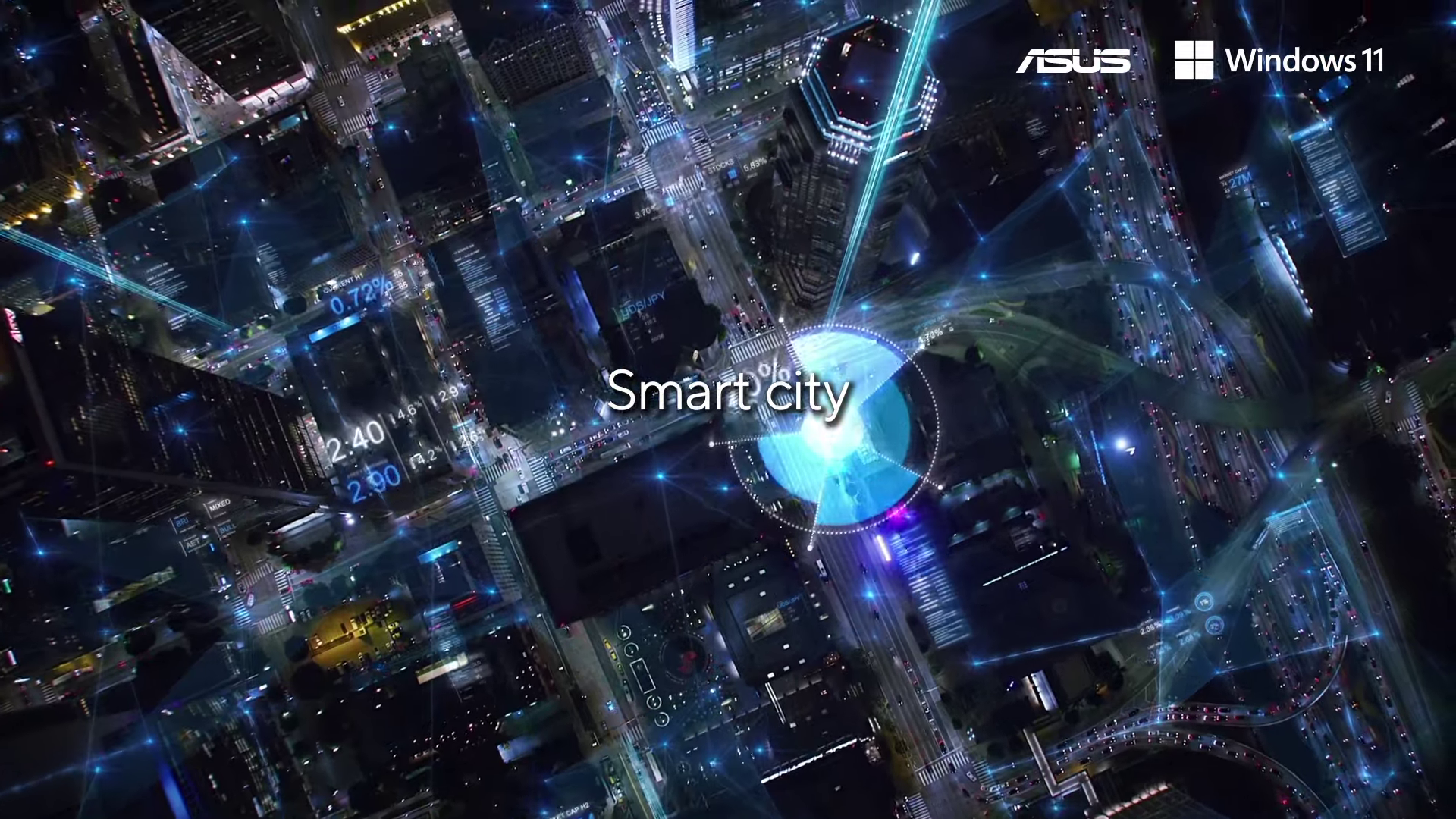 | 00:34 | The Digital Twin: Visualizes the "Smart City" aesthetic, showcasing the successful integration of wireframe shaders and environment modeling discussed in the feedback loop. | Feedback Loop Section |
| 03 |
| 00:34 | The Digital Twin: Visualizes the "Smart City" aesthetic, showcasing the successful integration of wireframe shaders and environment modeling discussed in the feedback loop. | Feedback Loop Section |
| 03 |  | 00:06 | Particle Architecture: Illustrates the "Critical Juncture" solution, where particle streams flow intelligently around the geological forms, representing the underlying data. | Critical Juncture Section |
| 04 | [IMG ASSET 4] | 00:49 | Fluid Dynamics: Highlights the "liquid intelligence" simulation, demonstrating the successful adjustment of viscosity and timing to match the premium product feel. | Production Deep Dive |
Synergy Analysis: Human Expertise vs. TechnologyThis project exemplified the synergy between raw computing power and artistic intent. While the Physically Based Rendering engines and Particle Simulators handled the heavy lifting of calculating light bounces and fluid dynamics, the success of the video relied on the human decisions made by the Advids team. It was the decision to apply a "magnetic flow" to the particles (not a default software setting) and the artistic choice to stylize the city as a "digital twin" that transformed a standard technical demo into a compelling brand story.
Outcomes and Strategic LearningsThe final campaign video successfully launched the client's new "Always Incredible" positioning. The ability to seamlessly visualize the connection between backend server infrastructure and frontend consumer experiences resonated strongly with the target audience.
- Strategic Learning: For hardware campaigns, "invisible" features like speed or connectivity must be given a consistent visual form (in this case, the luminous particle stream) to create a tangible emotional connection.
- Future Application: The "Digital Twin" asset library created for the city sequence has been archived and optimized, allowing for rapid deployment in future vertical-specific marketing materials for the client.
Would you like me to detail the specific rendering settings used for the "anodized aluminum" shader mentioned in the Look Development phase?
Final Video
Author & Editor Bio