
1. Summary
In the heavy industrial sector, conveying the intricacy of internal technological advancements without physical prototypes is a significant challenge. For this project, the client required a photorealistic visualization of the Komatsu 930E electric drive truck to demonstrate its new hydrogen fuel cell integration. Advids was tasked with creating a high-fidelity 3D simulation that seamlessly transitions between a realistic exterior and a technical "X-ray" internal view. By leveraging the Advids Precision Visualization Workflow, we transformed complex engineering data into a dynamic narrative, highlighting the modularity, sustainability, and efficiency of the new system while maintaining the visual weight and authority of the iconic 930E chassis.
2. The Challenge: revealing the "Invisible" Engine
The core challenge lay in the nature of the innovation: the value proposition of the 930E model is entirely internal. The client possessed highly detailed Computer-Aided Design data of the new hydrogen fuel cells and battery packs, but this raw engineering data was far too dense for standard video rendering. Furthermore, simply removing the truck's exterior would eliminate the context of the machine's durability. The objective was to create a visual language that allowed viewers to see through the massive steel chassis to understand the layout and accessibility of the new components, without the vehicle appearing fragile or weightless.
3. The Advids Solution: Precision Visualization Workflow
Advids deployed a specialized 3D pipeline designed for industrial technical animation. This approach prioritized data accuracy and photorealism. We utilized a "Digital Twin" methodology, optimizing the client's manufacturing data for cinematic rendering. The solution involved a sophisticated "Ghost" or X-ray shader technique, allowing us to selectively fade the opacity of external panels while retaining their specular highlights, effectively creating a glass-like shell that revealed the hydrogen technology within.
4. Client Profile
- Industry: Heavy Industrial Equipment & Mining
- Focus: Manufacturing of construction, mining, forestry, and military equipment.
- Key Product: Komatsu 930E Electric Drive Truck.
5. Objectives
- Visualize Integration: Clearly demonstrate how hydrogen fuel cells fit into the existing 930E frame.
- Highlight Accessibility: Show the modular nature of the components for maintenance (uptime).
- Maintain Brand Gravity: Ensure the visual output conveys the robustness and scale of the machinery.
6. The Advids Branded Workflow: Precision Visualization
Our approach was structured around converting raw technical data into emotive visual assets.
- Data Ingestion & Optimization: Converting high-density Computer-Aided Design assemblies into render-ready polygonal meshes.
- Look Development: Creating Physically Based Rendering materials for industrial paint, rubber, and sand.
- Technical Animation: Rigging the truck for accurate suspension and dumping mechanics.
- Simulation & Lighting: Developing the X-ray transition effects and setting up Image-Based Lighting for outdoor and studio environments.
7. Project at a Glance
| Category | Details |
|---|---|
| Project Type | Advanced CGI Simulation Video |
| Primary Workflow | 3D Industrial/Technical Animation |
| Core Software | Cinema 4D, Redshift, Houdini (Simulation), After Effects |
| Deliverables | 45-Second Technical Showcase (1080p High Definition) |
| Collaboration Stack | Slack (Communication), Google Drive (Asset Management), Vimeo Review (Feedback) |
| Est. Turnaround | 8 Weeks |
8. Project Timeline & Milestones
- Week 1: Data Ingestion & Proxy Setup
- Activity: Received
Komatsu_930E_Master_Assembly.stepfiles. Advids technical artists began retopology to reduce polygon count for animation. - Output: Low-poly proxy rig for animatic testing.
- Activity: Received
- Week 2: Previsualization (Animatic)
- Activity: Blocking out camera moves and key timings for the X-ray transitions.
- Output:
Animatic_Blockout_V2.mp4. - Quote: "The orbital camera move at 00:05 needs to be slower to give the viewer a sense of the sheer scale of the tires." - Client Project Lead
- Week 3-4: Look Development (Texturing)
- Activity: Applying Physically Based Rendering textures. Creating the "Brand Green" emission shader for the fuel cells.
- Output: High-fidelity Style Frames.
- Week 5: The Critical Juncture - Shader Development
- Activity: R&D on the X-ray transition effect to balance transparency with solid form.
- Challenge: Initial tests looked too "holographic."
- Solution: Advids implemented a Fresnel-based opacity mask.
- Week 6: Animation & Rendering
- Activity: Finalizing motion and sending scenes to the render farm.
- Output: Raw Render Sequences (OpenEXR format).
- Week 7: Compositing & Motion Graphics
- Activity: Tracking text overlays ("Maximize uptime") to the 3D geometry.
- Output:
Comp_Pass_01_v03.mov.
- Week 8: Final Mastering
- Activity: Color correction and sound design integration.
- Output: Final Master Deliverable.
9. The Production Deep Dive
Visualizing the Invisible: The X-Ray Shader Challenge
- Goal: To reveal the internal hydrogen tanks and battery modules (00:10) without the truck losing its visual presence in the scene.
- Process: The Advids simulation team developed a custom shader network. Instead of a simple opacity fade, which flattens the image, we used a "Fresnel" effect. This technique calculates the viewing angle relative to the surface normal.
- Action: We configured the shader to be transparent when looking directly at a panel, but opaque at the glancing angles (edges). This preserved the silhouette and the "shine" of the yellow paint, giving the illusion of a glass shell. This allowed the cyan and green internal components to glow distinctly, guiding the viewer's eye to the "Fast-track implementation" modules.
Feedback Loop: Calibrating the Brand Green
- Context: The internal components needed to represent "Green Energy" but also align with specific brand guidelines.
- Client: "The glow on the fuel cells is drifting towards a sci-fi neon. It needs to feel more industrial and match our sustainability palette."
- Advids: We adjusted the emission channel in the render settings, locking the hue to the client's provided hex code while increasing the luminance to ensure it stood out against the yellow chassis. We posted
Style_Frame_Energy_Glow_v3.jpgon Slack for immediate approval.
Engineering the Data: From Computer-Aided Design to Cinema
- Goal: To animate the massive truck assembly seamlessly.
- Process: The source files were manufacturing-grade Computer-Aided Design data, containing nuts, bolts, and internal washers not visible to the camera.
- Action: Advids technical directors performed a "Tessellation and Decimation" pass. We removed internal geometry that would never be seen and optimized the visible topology. This reduced the scene overhead by 60%, allowing for smoother camera iterations and faster render times on the farm.
10. Visual Asset Strategy
| Serial No. | Visual Asset | Timestamp | Rationale | Placement |
|---|---|---|---|---|
| 1 | 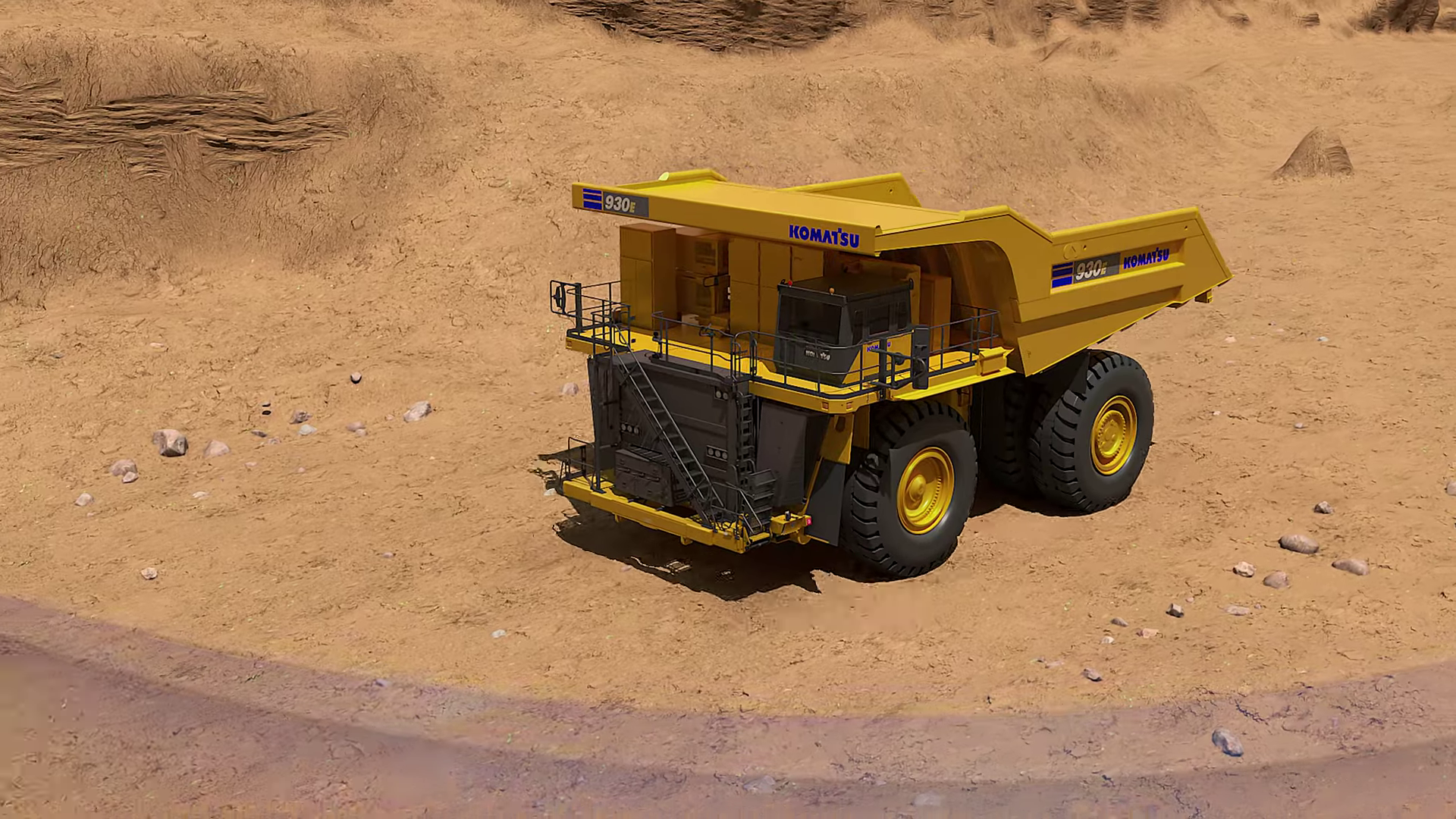 |
00:01 | The truck in a realistic mine environment establishes the baseline for photorealism and scale. | Introduction |
| 2 | 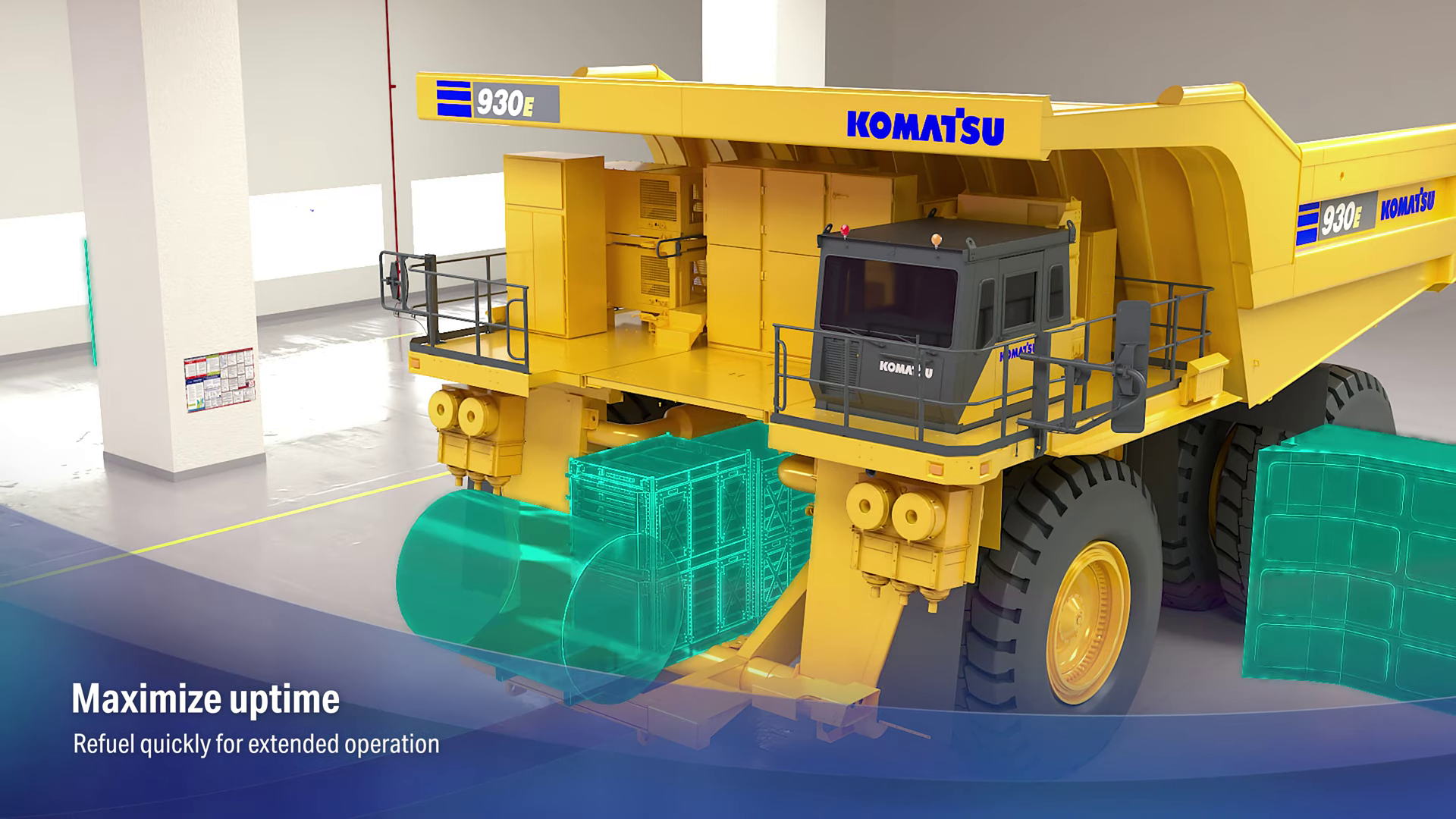 |
00:10 | The transition point where the "X-ray" shader activates, revealing the internal fuel cell arrangement. | Production Deep Dive |
| 3 | 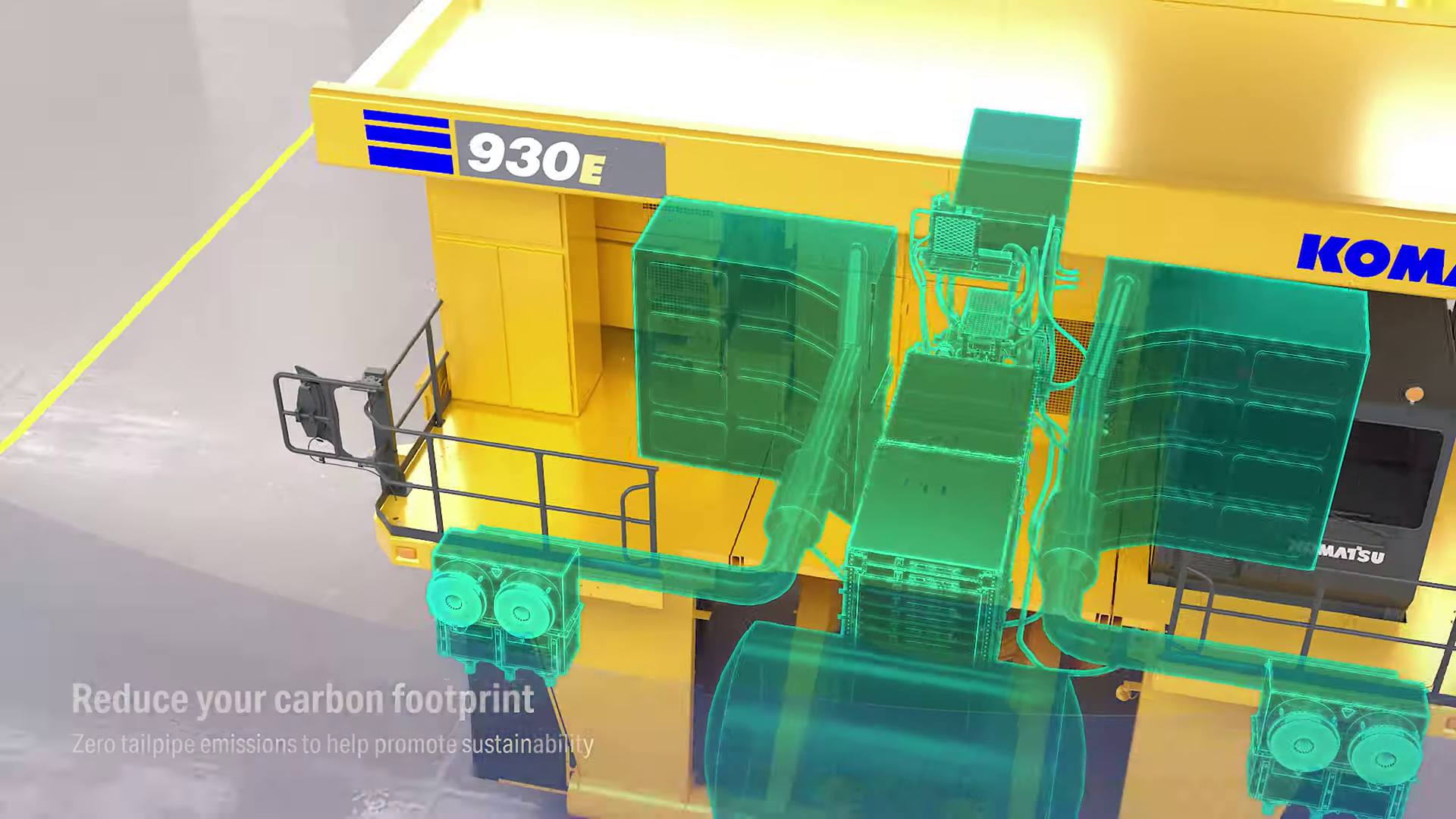 |
00:26 | Detailed rear view showing "Redundant fuel cells," highlighting the clarity of the component visualization. | Solution Section |
| 4 | [IMG ASSET 4] | 00:39 | The return to the full solid render, reinforcing the durability of the final integrated product. | Conclusion |
11. Synergy Analysis: Technology & Expertise
This project exemplifies the synergy between high-end computation and artistic direction. While the rendering engine (Redshift) provided the raw calculation power to simulate light bouncing off sand and metal, it was the Advids technical expertise in shader development that solved the narrative problem of "seeing inside." The technology allowed for the simulation, but the human decision to use a Fresnel-based transition was what maintained the cinematic weight of the vehicle.
12. Outcomes & Strategic Learnings
The final video successfully provided a "virtual prototype" of the Komatsu 930E.
- Clarity achieved: The visual distinction between the chassis (Yellow) and the new energy system (Green/Cyan) allowed for immediate comprehension by non-technical stakeholders.
- Asset Versatility: The optimized 3D assets created by Advids were subsequently re-used by the client for high-resolution print brochures and interactive web modules.
- Strategic Learning: For future heavy industry projects, the "Digital Twin" optimization phase is critical. Investing time in proper geometry cleanup upfront significantly accelerates the Look Development and Rendering phases later in the pipeline.
Next Step for You:
Would you like me to generate a specific "Scope of Work" document for a similar 3D industrial visualization project to help you define your requirements?
Final Video
Author & Editor Bio