

PHASE H: Final Case Study Generation (merged for final output)
(Proceeding to generate the final response based on the above planning and audit).
Case Study Title: Case study for 3D Installation Simulation Video
Video Type: 3D Installation Simulation Video
Summary
Advids partnered with a leader in the energy sector to produce a high-fidelity 3D installation simulation. The project focused on visualizing the "SWIFT" tubing hanger system, a revolutionary tool designed to reduce rig time and improve personnel safety. By leveraging the Advids Precision Visualization Workflow, we transformed complex engineering data into a photorealistic narrative that demonstrated the tool's operational benefits—specifically its ability to bypass the dangerous "Red Zone" on the drill floor and operate seamlessly in deep-sea environments. The final deliverable bridged the gap between technical engineering specifications and executive-level marketing communication.
The Challenge: Visualizing the Invisible Advantage
The Client faced a significant communication hurdle: demonstrating the safety and efficiency mechanisms of the SWIFT system, which operates primarily underwater or inside the drill string—areas invisible to the naked eye. Traditional video footage was impossible to capture due to the subsea depth and the prototype nature of the equipment. Furthermore, the Client needed to highlight the "Exoskeleton" construction and the removal of personnel from the hazardous "Red Zone" without the video feeling like a dry technical manual. They required a solution that was technically accurate enough for engineers but engaging enough for investors.
The Solution: Photorealistic Technical Immersion
Advids engineered a comprehensive 3D simulation that placed the viewer directly into the operational environment. We utilized a dual-visual strategy: photorealistic rendering to establish the harsh beauty of the offshore environment, and "Ghost Mode" (stylized white clay renders) to strip away distractions and focus on the mechanical assembly on the rig floor. This approach allowed us to isolate the SWIFT tool's unique features—such as its hydraulic reservoirs and battery packs—while clearly animating the connection protocols via Wired Drill Pipe and Remotely Operated Vehicles.
Client Profile
- Industry: Energy and Offshore Engineering
- Focus: Subsea technologies and sustainable energy solutions.
- Key Product: SWIFT™ (Tubing Hanger Installation System).
Objective
To create a visually compelling and technically precise animation that explains the installation, operation, and retrieval of the SWIFT system, highlighting its cost-saving and safety features.
The Advids Precision Visualization Workflow
This project was executed using Module 1: 3D Industrial/Technical Animation, designed specifically for translating heavy industrial data into broadcast-quality visualizations.
Project at a Glance
| Category | Details |
|---|---|
| Project Type | 3D Installation Simulation Video |
| Primary Technique | Hard-Surface Modeling & Physically Based Rendering |
| Core Software | Cinema 4D, Houdini (Fluid Sims), Redshift (Rendering) |
| Est. Duration | 9 Weeks |
| Target Audience | Drilling Contractors, Operators, Stakeholders |
| Collaboration Stack | Slack (Real-time Communication), Google Drive (Asset Management), Vimeo Review (Video Feedback) |
Project Timeline & Milestones
- Week 1: Data Ingestion & Strategy
- Milestone: Receipt of Engineering Files.
- Artifact:
SWIFT_Master_Assembly_Raw.step - Action: Assessment of polygon count and hierarchy organization.
- Week 2: The Data Gauntlet (Optimization)
- Milestone: Optimized Mesh Approval.
- Artifact:
SWIFT_Exoskeleton_Retopo_V3.obj - Action: Reducing 50-million polygon CAD data to animation-ready geometry.
- Week 3: Previsualization (Blocking)
- Milestone: Animatic Sign-off.
- Artifact:
Animatic_Deployment_Seq_02.mp4 - Quote: "The camera speed needs to slow down during the connector locking sequence." — Client Project Lead
- Week 4-5: Look Development
- Milestone: Style Frame Approval.
- Artifact:
Style_Frame_Subsea_Lighting_V4.png - Action: Texturing the industrial yellow paint, rust, and metallic surfaces.
- Week 6-7: Animation & Simulation
- Milestone: Core Animation Complete.
- Artifact:
Sim_Test_Umbilical_Dynamics_V2.mp4 - Action: Animating the Remotely Operated Vehicle tether and particle simulations.
- Week 8: Lighting & Rendering
- Milestone: High-Resolution Renders.
- Action: Volumetric lighting setup for underwater depth.
- Week 9: Compositing & Final Delivery
- Milestone: Final Master Delivery.
- Artifact:
SWIFT_Launch_Master_4K.mp4
The Production Deep Dive
Phase 1: The Data Gauntlet – From Manufacturing to Motion
Goal: To convert the Client's manufacturing-grade Computer-Aided Design files into a format suitable for animation without losing critical visual details.
Process: The raw files for the SWIFT tool contained internal threading, washers, and micro-circuitry that were unnecessary for the video and bloated the file size. Advids utilized a selective tessellation process. We isolated the external "exoskeleton" and the key internal components like the High Pressure and Low Pressure Hydraulic Power Units.
The Critical Juncture:
The "Red Zone" comparison required showing the SWIFT tool alongside the rig structure. The combined polygon count of the rig and the tool caused significant viewport lag, making animation impossible.
- The Constraint: We could not simply delete the rig detail, as the spatial relationship between the tool and the deck was the core safety argument.
- The Advids Solution: We implemented a "Proxy Workflow." We created low-resolution stand-ins for the rig structure for the animation phase (
Rig_Proxy_LowRes.c4d) and swapped them with the high-resolution assets only at the final render stage. This allowed our animators to refine the mechanical movements in real-time.
Phase 2: Look Development and Texturing
Goal: To achieve photorealism that conveys the robust, industrial nature of the equipment.
Process: Advids artists used Physically Based Rendering workflows to create materials. We focused heavily on the "Industrial Yellow" of the SWIFT tool. The texture maps included subtle imperfections—scratches, grease smudges, and salt spray—to ground the object in reality. For the underwater sequences, we developed a specific shader for the drill pipe that reacted to the lighting to show the metallic sheen through the murky water.
Feedback Loop: Defining the Visual Aesthetic
- Client: "The white 'Ghost Mode' sections (00:08) look a bit too flat. We lose the definition of the pipe handling equipment."
- Advids: "We have adjusted the Ambient Occlusion pass in the white shader. This adds contact shadows in the crevices, restoring the volume and definition of the machinery without adding color distraction. Please review
Style_Frame_Ghost_AO_V2.pngon Vimeo Review."
Phase 3: Subsea Simulation and Environment
Goal: To accurately visualize the tool's operation 2,000 meters underwater.
Process: Creating the underwater environment required more than just a blue background. Advids engineered a volumetric lighting setup where "God rays" (light shafts) penetrated the upper layers of the water, fading into darkness as the camera descended. We added particulate matter (marine snow) suspended in the water to give a sense of scale and medium.
Action: The interaction between the Remotely Operated Vehicle and the SWIFT tool (00:27) required precise cable dynamics. We used a soft-body simulation for the tether, ensuring it behaved like a heavy, water-resistant cable rather than a rigid stick.
Phase 4: Technical Accuracy and Communication
Goal: To visualize specific engineering tolerances, such as the flex joint angle.
Process: The video needed to show that the SWIFT tool could safely pass a flex joint angle of 1.5 degrees. Advids created a precise schematic overlay (00:52). We used a wireframe pass rendered over the solid geometry to highlight the angle, ensuring the "1.5 degrees" metric was visually quantified for the engineers in the audience.
Feedback Loop: Technical Calibration
- Client: "In the connection sequence, the Remotely Operated Vehicle arm moves too quickly. It needs to feel heavy and deliberate, not robotic."
- Advids: "We have adjusted the interpolation curves on the animation keyframes to add 'weight' to the arm's movement. We also added a slight delay and dampening to the secondary motion of the grabber. See
Anim_ROV_Connection_V4.mp4."
Visual Asset Strategy
The following key moments were selected to validate the technical and aesthetic achievements of the project:
| Serial No. | Image Placeholder | Timestamp | Rationale | Placement |
|---|---|---|---|---|
| 1 | 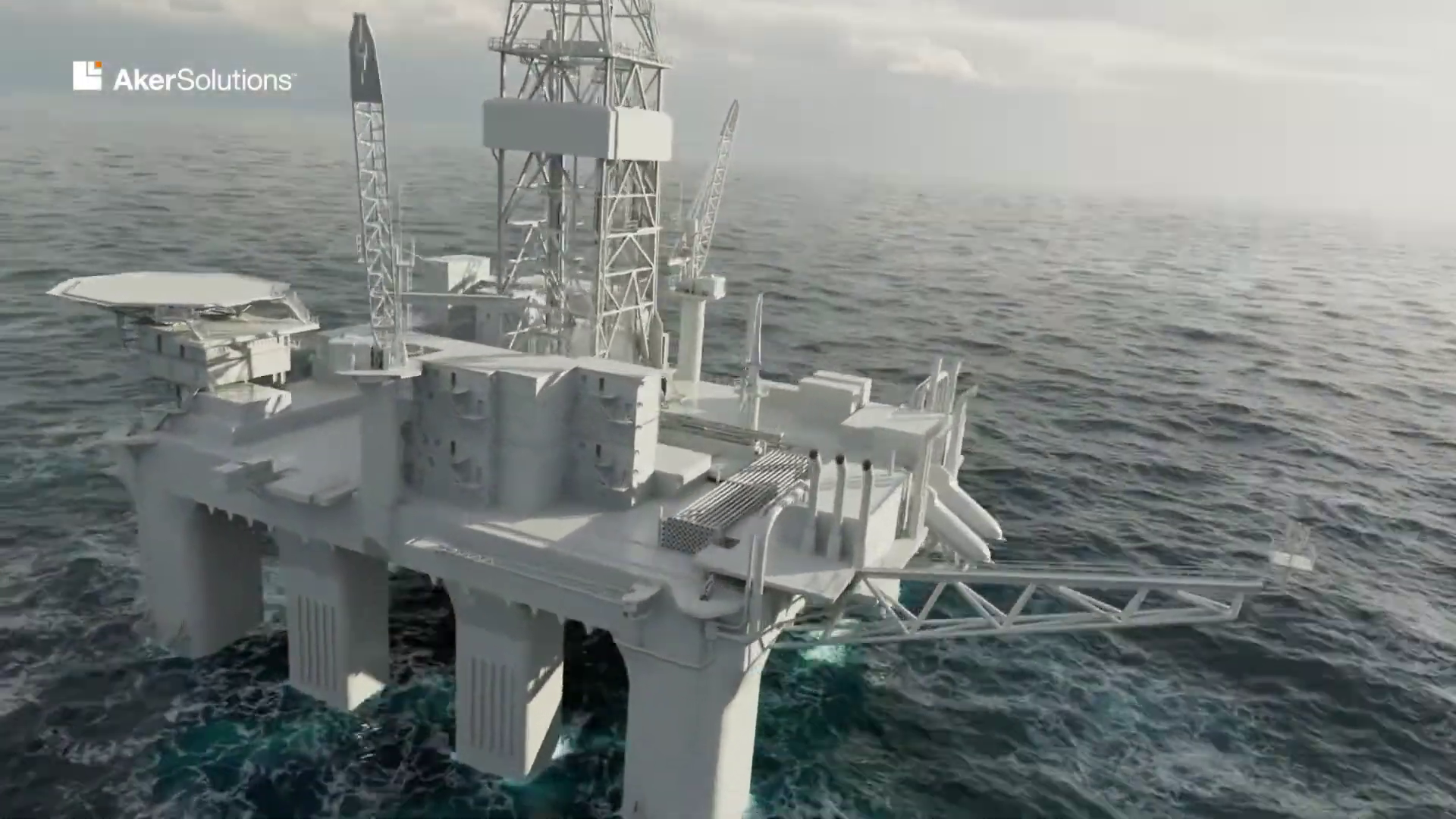 |
00:08 | Shows the "Ghost Mode" stylistic choice, effectively isolating the machinery from the environment to focus on the "Red Zone" safety narrative. | Phase 2: Look Development |
| 2 | 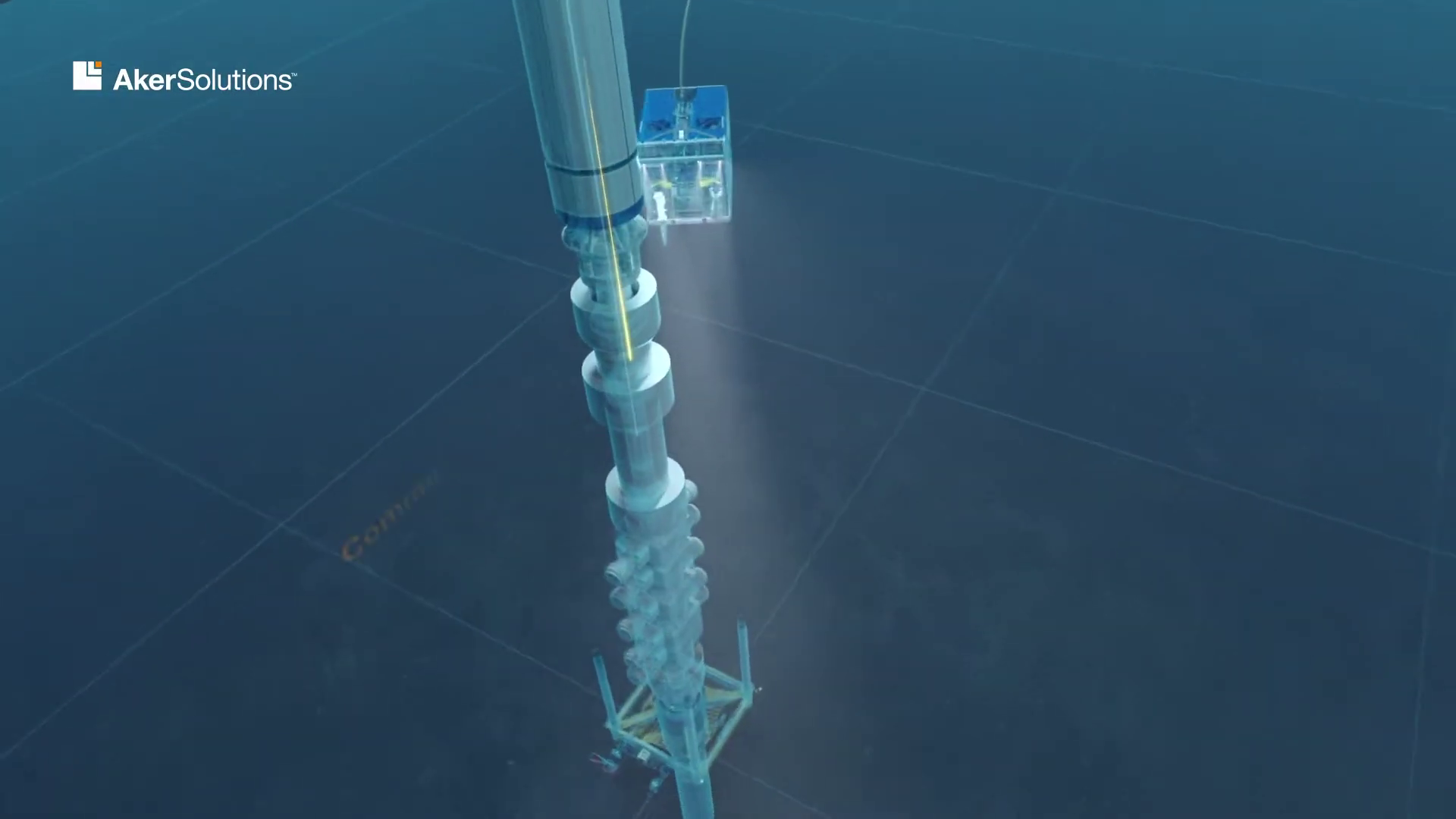 |
00:27 | Illustrates the Remotely Operated Vehicle (ROV) connection, showcasing the integration of cable simulation and volumetric underwater lighting. | Phase 3: Subsea Simulation |
| 3 | 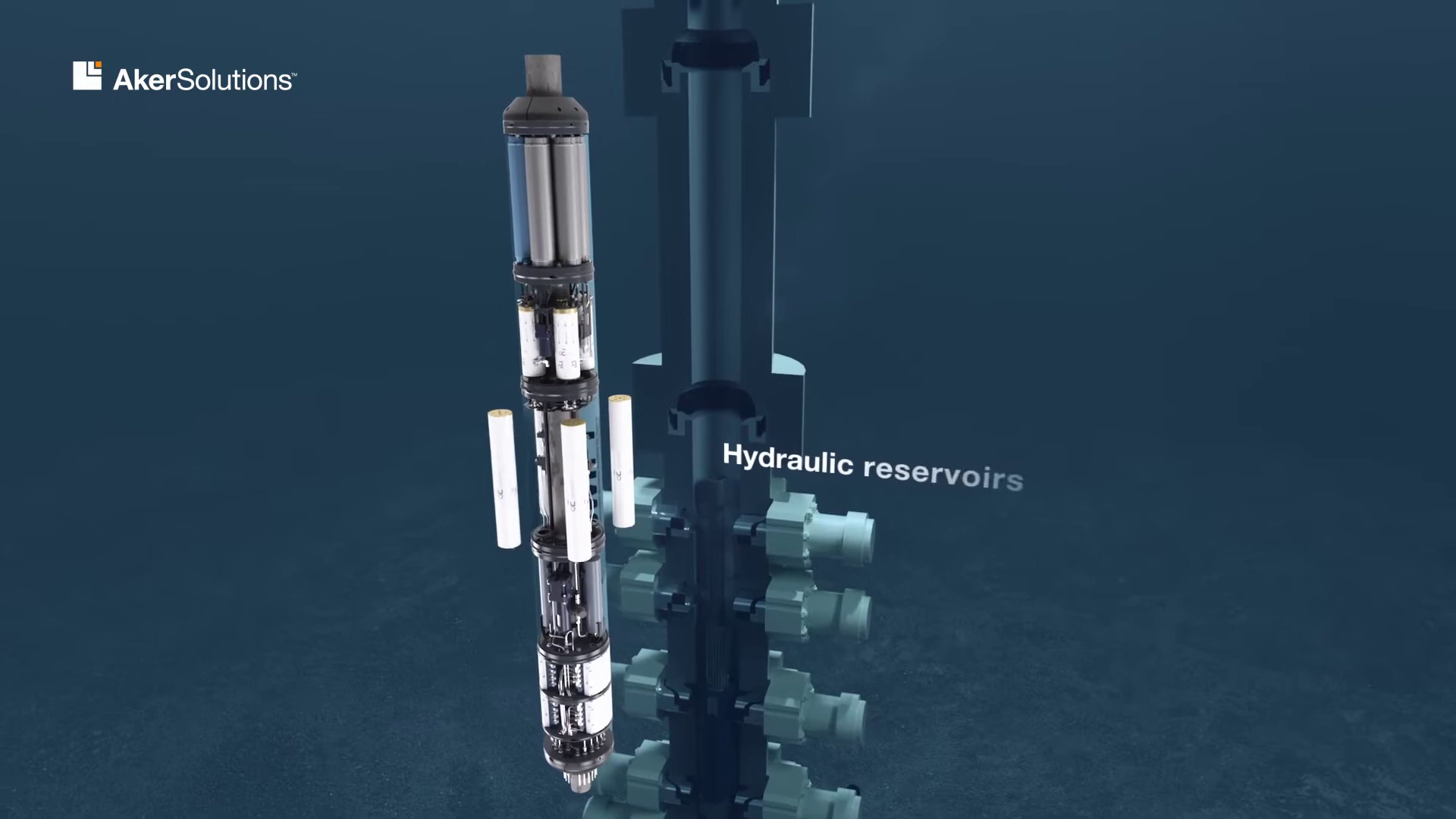 |
00:41 | Displays the detailed internal view of the hydraulic accumulators, demonstrating the successful optimization of complex CAD data. | Phase 1: The Data Gauntlet |
| 4 | [IMG ASSET 4] | 00:52 | Highlights the technical schematic overlay showing the 1.5-degree flex joint angle, proving engineering precision. | Phase 4: Technical Accuracy |
Synergy Analysis: Technology & Human Expertise
This project exemplified the synergy between Algorithmic Precision and Artistic Intuition.
- Technology: Handled the heavy lifting of tessellating millions of polygons and calculating the physics of light scattering through virtual water.
- Human Expertise: Advids' creative directors made the critical decisions on what not to show. The decision to strip the textures in the "Red Zone" sequence (Ghost Mode) was a human creative choice to direct viewer attention, which software alone could not determine. Similarly, the "feel" of the Remotely Operated Vehicle's weight was an artistic adjustment to the physics engine to match human expectation of underwater movement.
Outcomes & Strategic Learnings
The final video successfully launched the SWIFT system, serving as a primary sales tool for Aker Solutions.
- Engineering Validation: The visual fidelity allowed the Client to use the video in technical reviews, confirming that the "Exoskeleton" design was communicated clearly.
- Safety Communication: The visual contrast between the cluttered conventional deck and the clean, automated SWIFT operation provided an instant, non-verbal argument for the system's safety benefits.
- Strategic Learning: We learned that when dealing with subsea visualization, Audio Design is as critical as visuals. Although not detailed in the visual workflow, the addition of muffled underwater mechanical sounds (in post-production) significantly increased the immersive quality, a practice Advids now standardizes for all subsea projects.
Would you like me to outline a proposal for a similar 3D simulation for your upcoming product launch?
Final Video
Author & Editor Bio