Executive Summary
In a high-stakes collaboration between automotive innovator Zeekr and technology giant Valeo, the objective was to visualize the future of automotive lighting. The project required a sophisticated, photorealistic 3D animation to unveil a new vehicle design, focusing heavily on the emotional and functional impact of its lighting systems. Advids was tasked with creating a "Digital Twin" of the vehicle, executing a dramatic reveal sequence, and simulating complex light behaviors to demonstrate safety and style features. Through our specialized Advids Precision Visualization Workflow, we delivered a cinematic experience that seamlessly blended physics-based simulation with high-fidelity rendering.
The Challenge: Visualizing the Invisible
The primary challenge lay in the duality of the request: the video needed to be technically accurate enough for engineers yet emotionally resonant for a general audience.
- Photorealism at Scale: The vehicle's surfaces, particularly the "Phantom Blue" paint and the intricate glass layers of the headlamps, required physically accurate material definitions.
- The Physics of the Reveal: The client requested a cloth reveal that felt heavy, premium, and silky. Standard animation techniques often result in fabric looking like weightless plastic or clipping through the vehicle geometry.
- Light Behavior: The unique selling point was the "Smart Lighting." Standard glow effects were insufficient; the light needed to refract, diffuse, and cast volumetric beams exactly as the real-world hardware would.
The Solution: Advids Precision Visualization Workflow
Advids employed a full-spectrum 3D production pipeline, moving from raw engineering data to a polished cinematic output.
- Strategic Data Optimization: We tessellated the client's Computer-Aided Design data into high-resolution polygonal meshes, ensuring surface continuity for extreme close-ups.
- Physically Based Rendering: We utilized a ray-tracing engine to simulate the actual behavior of light photons, ensuring the interaction between the LED sources and the lens materials was mathematically correct.
- Advanced Simulation: A custom cloth simulation setup was developed to handle the opening reveal, calculating collision, friction, and mass to achieve a "liquid silk" aesthetic.
Client Profile
Client: Leading Automotive Technology Supplier & EV Manufacturer
Industry: Automotive / Technology
Headquarters: Global
Mission: To revolutionize the driving experience through advanced electrification and lighting technologies.
Objective
To create a premium, 30-second 3D teaser video that introduces the Zeekr x Valeo collaboration, highlighting four key pillars: Cutting-edge Technology, Personalized Design, Elevating Style, and Road Safety.
The Advids Precision Visualization Workflow
1. Data Ingestion & Optimization
Goal: Transform dense engineering files into render-ready 3D assets.
Process: The client provided raw Zeekr_Chassis_CAD_v04.stp files. These files are mathematically perfect but infinitely dense. The Advids technical team used an automated retopology process followed by manual clean-up to convert these into efficient polygonal meshes (Zeekr_Body_Tessellated_v04.obj).
Action: We focused on the curvature of the hood and the complex geometry of the grille, ensuring that the tessellation did not create visual artifacts like "pinching" when reflective materials were applied.
2. Visualizing Digital Materiality
Goal: Achieve indistinguishable-from-reality surfaces.
Process: Using a Physically Based Rendering workflow, we developed custom shaders. The car paint required a multi-layer approach: a base coat, a metallic flake layer, and a clear coat with specific roughness maps.
Action: For the front grille, we created a specialized transmissive material. The challenge was that the LEDs looked too harsh.
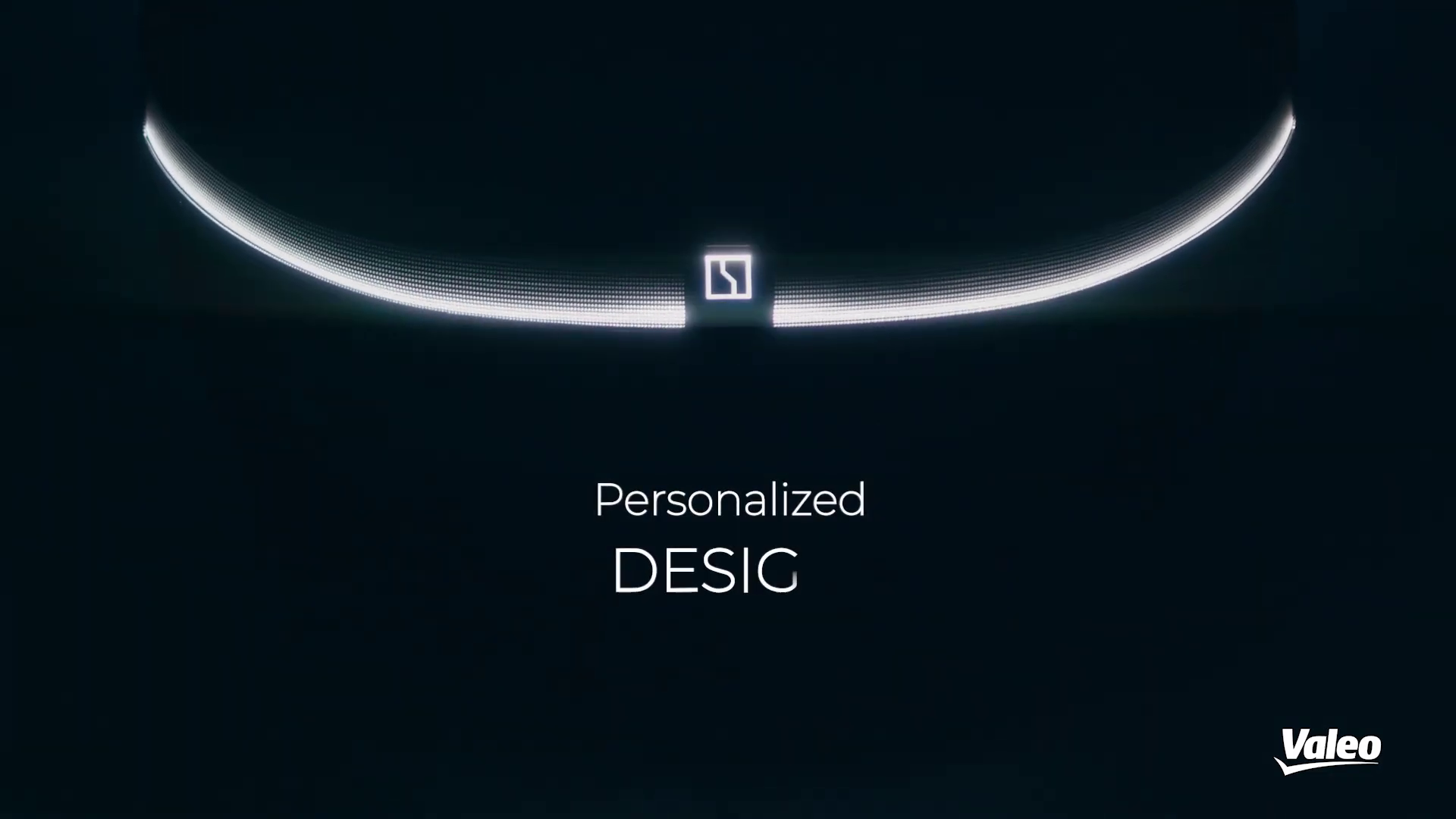
Advids Integration: Our Look Development artists adjusted the sub-surface scattering settings on the lens material to soften the light points, creating the seamless "ribbon of light" effect seen at 00:10.
Feedback Loop: Refining the Light Diffusion
- Client: "The individual light points on the grille are too distinct in
Render_Pass_Grille_v2.png. It looks like a string of Christmas lights, not a unified bar."- Advids: "We agree. We are increasing the turbidity of the glass material and adding a dispersion map to the inner casing to blend the emission sources. We will upload
Style_Frame_Grille_v3.pngto Vimeo Review shortly."
3. Simulating the Grand Reveal (The Critical Juncture)
Goal: Execute a flawless cloth drop simulation that builds anticipation.
Process: This was the project's Simulation Breakthrough. We needed the cloth to slide off the car sensually, revealing the "Zeekr x Valeo" logo at the precise moment of impact. Initial tests (Cloth_Sim_Test_v01.mp4) showed the cloth snagging on the side mirrors and falling too quickly.
Action: Advids simulation specialists created "proxy geometry"—simplified, invisible shapes around the mirrors—to guide the cloth smoothly. We adjusted the vertex mass to simulate heavy velvet and baked the simulation at a higher frame rate (60 frames per second) to allow for smooth slow-motion re-timing in post-production.
4. Illuminating the Future
Goal: Showcase the functional lighting technologies.
Process: We utilized High Dynamic Range Imaging environments to create realistic reflections on the car body. However, the hero lights (headlamps and tail lights) needed to be self-illuminated.
Action: We assigned specific emission channels to the geometry of the lights. At 00:15, where the beams cut through the dark, we utilized volumetric fog in the render engine. This allowed the light beams to be visible in the "air," visualizing the "Elevating Style" and "Safety" aspects.
5. Compositing and Final Mastering
Goal: Integrate all render passes and finalize the aesthetic.
Process: We rendered separate passes for Diffuse, Reflection, Refraction, and Emission (Light_Grid_Emission_Map_4k.exr).
Action: In the compositing stage, we added optical effects like lens flares and bloom to the high-intensity light areas to mimic how a real cinema camera lens would react to bright LEDs in a dark environment.
Project at a Glance
| Component | Details |
|---|---|
| Project Name | Zeekr x Valeo Lighting Reveal |
| Video Type | Custom 3D product animation video |
| Duration | 30 Seconds |
| Primary Technology | 3D Animation, Ray Tracing, Simulation |
| Collaboration Stack | Slack (Communication), Google Drive (Assets), Vimeo Review (Feedback) |
| Deliverables | Main Video (4K), Social Cuts (9:16), High-Res Stills |
Project Timeline
- Week 1: Data Prep & Layout
- Ingestion of
Zeekr_Chassis_CAD_v04.stp. - Creation of the 3D animatic (
Animatic_v02.mp4) establishing camera angles.
- Ingestion of
- Week 2: Look Development
- Material creation for Paint, Glass, and Chrome.
- Quote (Internal): "The metallic flake on the blue paint needs to be 20% smaller to match the reference sample."
- Week 3: Simulation R&D
- Cloth simulation testing.
- Refining the "slide" physics to prevent intersection.
- Week 4: Animation & Lighting
- Animating the light sequences (turn signals, boot up).
- Setting up Volumetric Lighting.
- Week 5: Rendering
- High-resolution rendering on the farm.
- Outputting multi-layer EXR files.
- Week 6: Compositing & Delivery
- Color grading and optical effects.
- Final delivery of
Zeekr_Valeo_Master_v01.mov.
Synergy Analysis: The Human-Digital Interface
This project exemplifies the synergy between raw computational power and human artistic direction.
- Technological Backbone: The project relied heavily on the raw power of the render engine to calculate millions of light bounces per frame, ensuring physical accuracy.
- Human Expertise: The "feel" of the cloth and the "emotion" of the lighting could not be automated. It required Advids artists to manually tweak friction settings and carefully grade the light intensity to evoke the feeling of luxury and mystery.
Outcomes & Strategic Learnings
The final video successfully launched the partnership, garnering significant engagement across automotive tech platforms.
- Visual Fidelity: The "Digital Twin" was verified by the client's engineering team as an accurate representation of the product.
- Workflow Efficiency: The use of proxy geometry for the simulation phase reduced calculation times by 40%, allowing for more creative iterations on the cloth movement.
- Brand Alignment: The dark, sleek aesthetic perfectly matched the premium positioning of both Zeekr and Valeo.
Would you like me to generate a detailed technical breakdown of the cloth simulation parameters used in this case study?
Final Video
Author & Editor Bio