[ 2019 — 2026 ]
Visualizing the Compute Continuum.
Enterprise IT infrastructure is moving from standard silicon to photonics, bare-metal orchestration, and edge compute. Evaluators cannot buy what they cannot see. Over the past seven years, we have visualized 370+ hardware architectures, bridging the gap between deep-tech silicon engineering and data center procurement. Here is how our bare-metal and SaaS visualization expertise evolved alongside the hyperscale pioneers who trusted us.
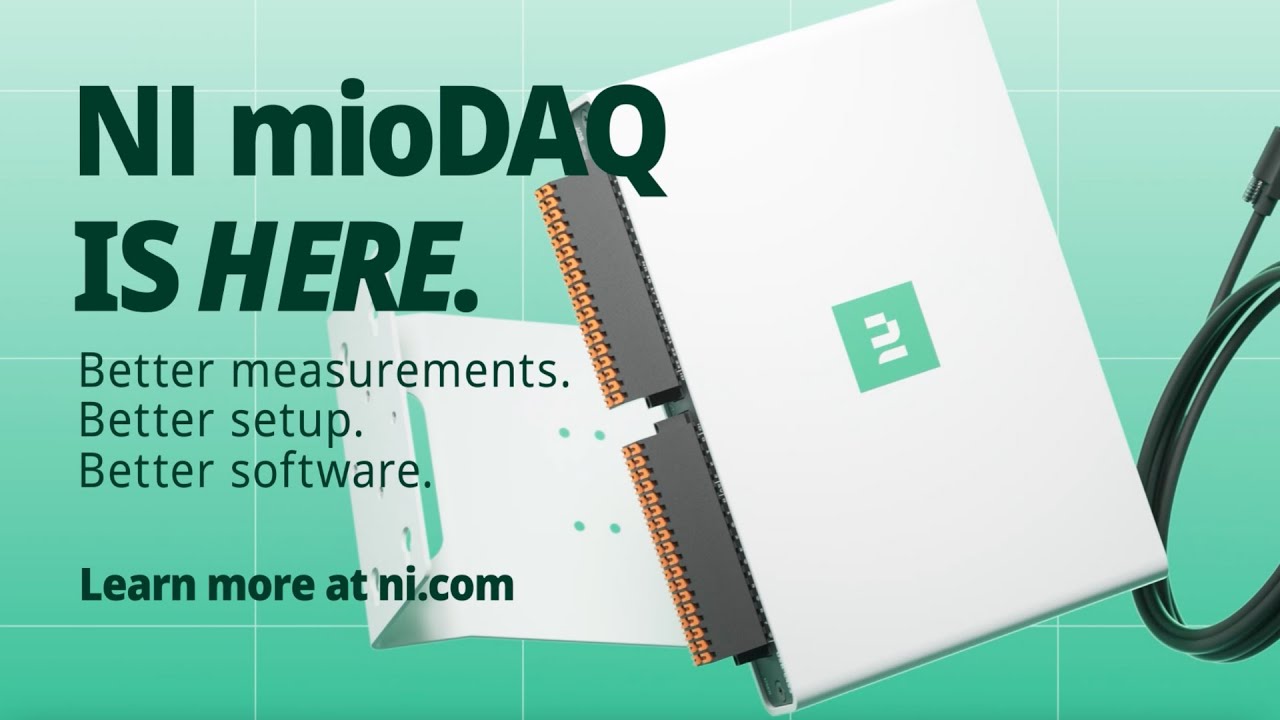






Overcoming Thermal Silicon Constraints.
As compute density skyrocketed, traditional cooling failed. Innovators re-engineered active cooling directly at the silicon level. We partnered with hardware founders to map extreme Thermal Design Power (TDP) constraints, rendering exact thermodynamic heat dissipation to prove their microjet and solid-state cooling efficiency to global foundry partners.
Embedded Edge Telemetry.
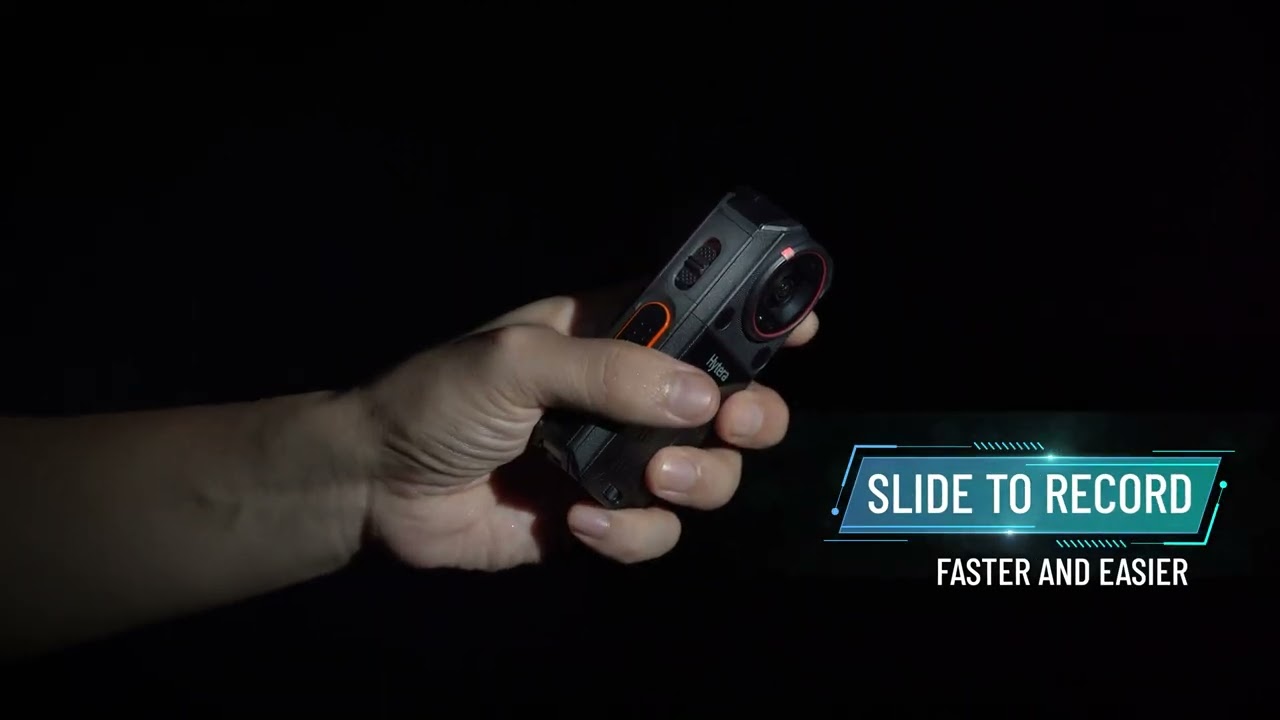
Deploying physical hardware to the edge requires flawless software observability. We worked with embedded software developers to abstract their complex IoT debugging and machine learning training workflows, building clean UI dashboards that visually tracked device health telemetry for systems engineers.
Composable PCIe Fabrics & Bare-Metal Cloud.
When legacy server topologies couldn’t dynamically allocate resources, completely new composable racks were introduced. We ingested massive hardware CAD files to build rack-scale X-ray animations, illuminating their memory-centric routing and PCIe fabrics to data center architects without relying on dense technical manuals.
The Silicon Photonics Breakthrough.
Replacing copper interconnects with light bypasses legacy bandwidth limitations. We worked alongside optical engineers to visualize the invisible—mapping the precise routing of multi-wavelength lasers through photonic chips, providing visual proof of latency-free compute acceleration to Tier-1 integrators.
High-Density Optical Transceivers.
As the necessity to route memory optically grew, the complexity of transceivers skyrocketed. We built highly detailed component-level assembly videos for photonic fabric architectures, visualizing sub-millimeter data transmission networks to help secure integration into next-generation commercial switches.
Analog & Neuromorphic Signal Processing.
Visualizing raw physics prior to digitization required a new approach. We engineered analog signal evaluation simulations for neuromorphic processors and avalanche photodiodes, visually magnifying their infrared sensitivity and raw compute efficiency to equip their industrial technical sales floors.
Edge AI PCIe Compute.
Accelerating computer vision natively at the edge requires purpose-built PCIe cards. We deployed spatial edge architecture renders, visually breaking down complex system-on-chip (SoC) logic gates and data pathways to prove high-performance compute density to hyperscale cloud operators.
Distributed Node Orchestration SaaS.
Managing thousands of physical grid endpoints dictates ultimate operational scalability. We transitioned to the software layer, deploying node-mapping orchestration demos that visually translated lightweight edge hypervisor management and localized visibility into actionable enterprise UI.
Solid-State Acoustics & Lasers.
Replacing legacy mechanics with monolithic chips requires extreme sub-surface visualization. We navigated sub-millimeter tolerances to visualize their multi-color laser arrays and micro-speaker architectures, providing technical validation of their efficiency and integration footprint for mass-market OEMs.
Neutral Atom Quantum Arrays.
Quantum computing cannot look like sci-fi; it must be grounded in physical constraints. We worked alongside quantum physicists to map neutral atom arrays and single-photon manipulation, translating complex microscopic phenomena into volumetric 3D processing units for boardroom capital raises.
Quantum Logic & Algorithmic Synthesis.
Quantum hardware is useless without software to synthesize the logic. We translated high-level algorithmic circuit conversions into clean, kinetic UI abstractions, equipping deep-tech sales floors with the visual tools to actually demonstrate algorithmic synthesis without overwhelming the buyer.
Immersion Cooling & Datacenter Scale.
High-density servers required a shift to liquid chassis cooling. Rendering fluid dynamically without it looking like plain water is a massive technical hurdle. We engineered precise dielectric fluid flow renders, visually validating how their SmartPods completely isolate hardware for maximum energy efficiency.
Next-Gen Electrochemical Storage.
Crucial for long-duration IT backup and portable electronics, alternative battery chemistries rewrote the standards for grid-scale storage. By rendering 3D silicon architectures and reversible rusting mechanics, we translated complex electrochemical behaviors into structural 3D animations, equipping their commercial teams with highly technical procurement assets.
[ The Evolution-Forged Production Process ]
We didn’t invent our 7-Phase video production process in a vacuum. It was forged under the extreme IP security constraints of unreleased silicon tape-outs and the physical limits of hyperscale data centers. Here is the IT architecture visualization process we use today, and the pioneers who taught us why it matters.
Pre-Tape-Out IP Ingestion.
Forged by Lightmatter & EdgeImpulse.
Working with unreleased silicon and proprietary SaaS taught us that standard agency onboarding is a liability. Phase 1 is executed under airtight, zero-trust NDAs. We securely ingest your Gerber files, EDA designs, massive STEP assemblies, and API documentation before a single frame is mapped.
Architectural Blueprinting.
Forged by Oxide Computer Company & Zededa.
Bare-metal cloud racks and orchestration UI are incredibly dense. In Phase 2, our directors sit with your Hardware Architects and Product Managers to map a precise visual blueprint. We aggressively strip away UX clutter and unnecessary chassis panels to ensure the core routing and compute logic is instantly clear to a CTO.
The Silicon & Optics Protocol.
Forged by Ayar Labs & Pasqal.
Standard 3D modeling makes a $10,000 compute card look like cheap plastic. In Phase 3, we deploy Physically Based Rendering (PBR). We meticulously assign material physics to silicon wafers, copper interconnects, brushed aluminum heat sinks, and fiber optics, ensuring your hardware looks flawlessly authentic.
Thermal & Sub-Nanometer Kinematics.
Forged by Submer & JetCool Technologies.
Visualizing heat dissipation and invisible light taught us how to model the unseen. In Phase 4, we rig the digital twin of your tech. We simulate accurate dielectric fluid dynamics, laser-driven photonic routing, and thermal displacement, ensuring the visual physics reflect the true resilience of your hardware.
The Hyperscale Truth Audit.
Forged by Celestial AI & SiMa.ai.
Data center hardware must adhere strictly to physical form factors. Phase 5 is our strict internal QA checkpoint. Our technical leads audit the renders to ensure PCIe lane accuracy, rack-scale sizing constraints, and UI latency visualizations are mathematically and structurally perfect.
Asynchronous Engineering Alignment.
Forged by Frore Systems & Classiq.
Lead hardware engineers and CTOs have zero tolerance for 2-hour marketing meetings. In Phase 6, we utilize encrypted, frame-accurate review portals. Your network architects and software developers can validate topological layouts and algorithm accuracy asynchronously, entirely on their own schedule.
Form Factor & Tape-Out Modularity.
Forged by the IT Infrastructure Lifecycle.
Hardware iterates from 2U to 1U; orchestration dashboards update every sprint. If your form factor or chip node changes, your marketing shouldn’t have to start over. We deliver Phase 7 using layered, modular master files. When your chassis or UI evolves, we seamlessly swap the specific CAD or UI layer, keeping your GTM library perpetually accurate.
[ Next Steps ]
We Have You Covered.
Having visualized 370+ hardware architectures, our baseline knowledge compounds. We don’t have to spend weeks learning the difference between a PCIe fabric and an optical transceiver, or why thermal design power matters—we already know. We operate as a quiet, secure extension of your engineering team. Let’s look at your CAD assemblies or UI architecture and get to work.
Talk with our Creative Directors →