[ 2014 — 2026 ]
Visualizing the Clinical Tech Stack.
Translating clinical breakthroughs into enterprise adoption requires uncompromising precision. Over the last twelve years, we have visualized 240+ healthcare innovations, bridging the gap between advanced medical hardware and complex clinical SaaS. From decentralized trial software to sub-millimeter surgical robotics, here is how our biomedical and UI visualization expertise evolved alongside the pioneers who trusted us.



Clinical EDC & Surgical Robotics.
Digitizing clinical trials and introducing single-incision robotics required breaking entrenched hospital mindsets. We partnered with these pioneers to abstract their Electronic Data Capture (EDC) platforms into clean UI workflows, while generating highly precise kinematic renders to prove the safety and articulation of their surgical robotic arms.
Remote Monitoring & Micro-Ultrasound.
Visualizing predictive care meant structuring massive amounts of remote patient data, while handheld diagnostics required absolute spatial precision. We built high-fidelity UI abstractions of post-acute care dashboards alongside 3D micro-mechanics animations of piezoelectric ultrasound transducers.
Brain-Computer Interfaces & Mental Health SaaS.
When physiological tracking moved to wearable helmets, devices required undeniable visual safety profiles. We delivered sterile 3D device animations for Kernel’s neuroimaging hardware and intuitive clinical workflow abstractions for Spring Health’s B2B mental health routing network.
Genomic Sequencing & Lab Automation.
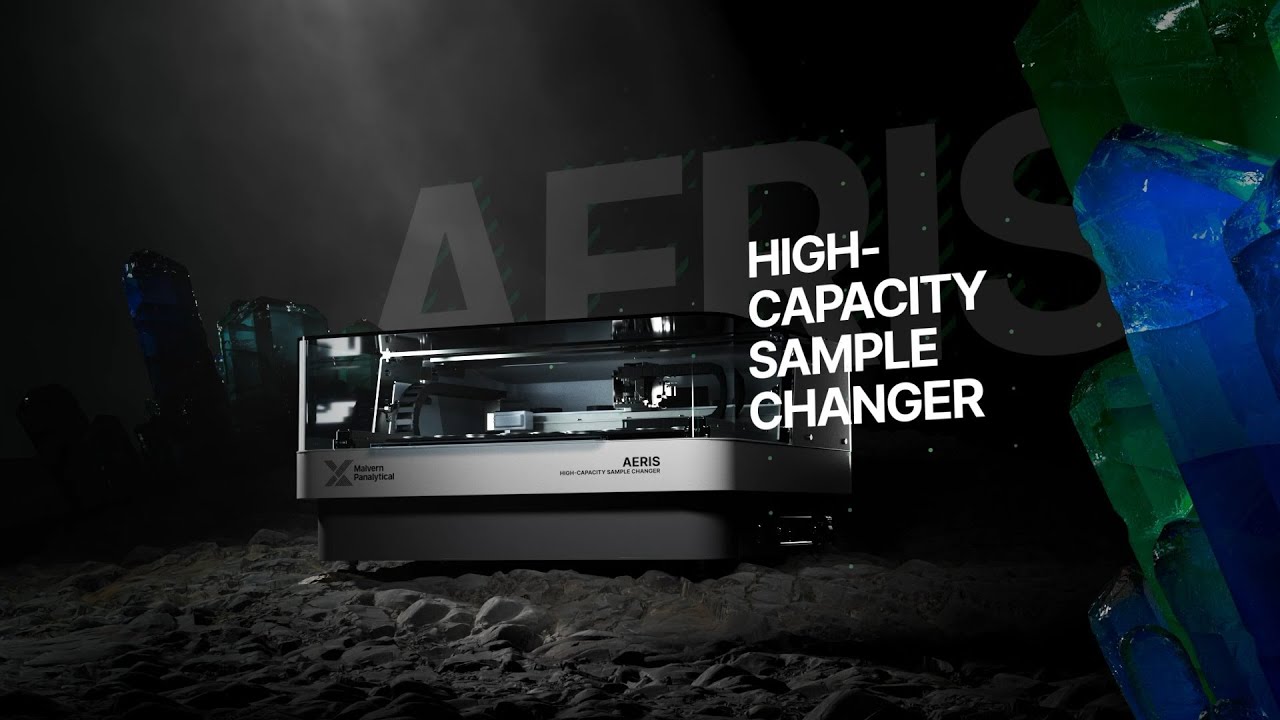
Benchtop DNA sequencers and liquid handlers look like simple enclosures from the outside. To prove their efficacy to clinical lab directors, we built 3D X-ray animations that revealed their precise internal optical arrays and automated nano-liter dispensing systems.
Clinical-Grade Wearables.
Translating patient telemetry to physicians requires absolute data integrity. Signos and Levels trusted us to visualize their continuous glucose monitoring and biometric biosensors. We built visual pipelines connecting their physical wearable hardware directly to their cloud-based metabolic dashboards.
Synthetic Biology & Organ-on-a-Chip.
Visualizing next-generation gene editing and microfluidics taught us how to rethink Mechanism of Action (MoA). Emulate and Prime Medicine challenged us to visualize physical fluid dynamics and molecular payloads without relying on anatomical graphics. We built rigorous, scientifically accurate animations focusing strictly on the chemistry and hardware.
Automated Biomanufacturing & Portable Dialysis.
Scaling from clinical trials to commercialization requires visualizing massive throughput. We transitioned from desktop devices to macro-systems, building 3D digital twins of Cellares’ closed-system CAR-T bioreactors and Quanta’s portable hemodialysis hardware to support their global commercial rollouts.
Precision Radiopharmaceuticals & Bioelectronic Implants.
Visualizing targeted therapies and implantable stimulators requires extreme regulatory caution. We modeled pristine MoA videos for radiopharmaceuticals and 3D biomedical renders for vagus nerve implants, clearly decoding their precision mechanics for clinical evaluators without overpromising medical outcomes.
Decentralized Trials & Smart Orthopedics.
As clinical trials shifted to decentralized hybrid models, software platforms had to prove their architecture was seamlessly unified with smart implants. We constructed comprehensive UI abstractions for Medable’s trial software, while mapping the secure kinematic data transmission of Canary’s sensor-equipped knee implants.
Neural Prosthetics & Ophthalmic Lasers.
Visualizing implants that interface with the human eye requires an incredibly delicate visual balance. We built precise 3D kinematic renders of neural prosthetics and femtosecond lasers, focusing strictly on their mechanical deployment, medical-grade materials, and laser guidance systems.
The AI Radiology Co-Pilot.
As AI officially entered FDA-cleared clinical workflows, doctors needed visual reassurance that algorithms were tools, not replacements. We partnered with these pioneers to overlay bounding boxes onto clinical interfaces, visually translating how deep learning safely coordinates stroke care and flags anomalies in digital pathology.
Generative Protein Design & Automated Coding.
Visualizing generative biology and revenue cycle management requires projecting invisible computational logic into a tangible format. We constructed intuitive dashboard walkthroughs, visualizing how their platforms engineer proteins and automate medical coding without ever exposing proprietary backend code.
Diagnostic Software & Synthetic Data.
Today, heavy diagnostic computing is moving toward automated screening and statistically accurate synthetic healthcare records. We are currently building visual assets that abstract how comprehensive AI models process real-time data, equipping clinical sales teams to pitch the absolute edge of healthcare computing.
[ The Evolution-Forged Production Process ]
We didn’t invent our 7-Phase video production process in a vacuum. It was forged under the extreme regulatory scrutiny of Medical Legal Review (MLR) and the sub-millimeter tolerances of clinical engineering. Here is the biomedical visualization process we use today, and the pioneers who taught us why it matters.
Pre-Patent IP & HIPAA Ingestion.
Forged by Kernel & Syntegra.
Working with unreleased neuroimaging hardware and synthetic patient data taught us that standard agency onboarding is a massive liability. Phase 1 is executed under airtight, zero-trust NDAs. We safely ingest your SolidWorks assemblies, PCB schematics, and UI design files before a single frame is drawn.
MLR & Clinical Blueprinting.
Forged by Castor & Spring Health.
Marketing wants it fast; hospital compliance needs it accurate. In Phase 2, our directors sit with your Product Managers and Key Opinion Leaders (KOLs) to map a precise visual blueprint. We aggressively strip away UX clutter and unverified claims to ensure your video easily passes Medical Legal Review (MLR).
The Sterile Materiality Protocol.
Forged by Cellares & Element Biosciences.
Standard 3D lighting makes sophisticated diagnostic devices look like cheap plastic toys. In Phase 3, we deploy physically based rendering (PBR). We construct pristine, ISO-certified 3D cleanroom environments, ensuring your medical-grade polymers, surgical steel, and sterile glass look flawlessly authentic.
Biomedical Rigging & Interoperability.
Forged by Vicarious Surgical & Signos.
Visualizing surgical robotics and continuous glucose monitors taught us that sub-millimeter accuracy matters. In Phase 4, we rig your digital twin. We simulate accurate microfluidic dispensing, laser alignment, and the exact data-telemetry handshake between your physical hardware and cloud SaaS dashboard.
The Clinical Truth Audit.
Forged by Quanta Dialysis & Exo Imaging.
Medical robotics and infusion pumps cannot look "weightless." Phase 5 is our strict internal QA checkpoint. Our technical leads audit the renders to ensure joint kinematics, optical arrays, and clinical acoustic design (the exact UI alert tones or precise click of a dosing syringe) perfectly reflect your device’s operation.
Asynchronous Compliance Alignment.
Forged by Viz.ai & Biofourmis.
Chief Medical Officers, Principal Investigators, and clinical IT architects hate 2-hour marketing meetings. In Phase 6, we utilize encrypted, frame-accurate review portals. Your clinical experts can validate hardware tolerances and UI abstractions asynchronously, entirely on their own schedule.
FDA / Trial Iteration Modularity.
Forged by the MedDevice & Clinical Trial Lifecycle.
Clinical hardware and SaaS platforms undergo rigorous iteration during FDA Phase II/III trials. If a physical sensor or UI dashboard changes, your marketing shouldn’t have to start over. We deliver Phase 7 using layered, modular master files. When your tech iterates, we seamlessly swap the specific CAD or UI layers, keeping your GTM library perpetually accurate.
[ Next Steps ]
We Have You Covered.
Having visualized 240+ healthcare innovations, our baseline knowledge compounds. We don’t have to spend weeks learning the difference between an in vitro assay and Electronic Data Capture, or why FDA constraints matter—we already know. We operate as a quiet, secure extension of your clinical engineering team. Let’s look at your CAD files or UI architecture and get to work.
Talk with our Creative Directors →