
Nobel Biocare · Dental implants · 3D product video
B2B Video Content for Nobel Biocare TiUltra: A Surface Claim You Watch Happen
Nobel Biocare needed implant clinicians to see that the TiUltra surface is "ultra-hydrophilic", a property no photo of an implant can show. This B2B video content answers without a single caption: 3D scenes unpack the NobelParallel CC TiUltra implant and split the vial into its parts, then a live-action close-up lowers an implant into a red liquid and lets the liquid climb the threads.
Last updated
Nobel Biocare · NobelParallel CC TiUltra
- Client
- Nobel Biocare
- Product
- NobelParallel CC dental implant with the TiUltra surface
- Made for
- Dental professionals who place implants
- Format
- 3D product reveal cut with a live-action wetting test video
- Style
- White-on-white 3D packaging scenes, then a live-action macro close-up of the wetting test in red liquid
- Length
- 0:44
- Production timeline
- 3 to 4 weeks
- Budget
- $1,200 to $2,000
The problem: "ultra-hydrophilic" is invisible on a still implant
Nobel Biocare's YouTube description calls TiUltra "an ultra-hydrophilic, multizone, anodized implant surface with a gradual topography from collar to apex", and argues that tissue integration is "about how every surface reacts with the tissue around it". That is a claim about behavior. A product shot of a titanium implant looks the same whether its surface attracts liquid or not.
A surface claim in print asks the clinician to take it on trust. The quickest way to make it believable is to show the surface reacting. So the video had to put the implant in contact with a liquid, close enough to watch the liquid move.
How the TiUltra video gets from the box to the wetting test, scene by scene
There are no titles or captions. The only text is on the packaging and in the closing legal line, so the pictures carry the claim. Select a time to play that scene above.
| Time | On screen | What it does |
|---|---|---|
| A sealed implant box drifts into an empty white space. Its face reads "13", "RP", "Ø4.3", "NobelParallel™ CC" and "TiUltra™". | Starts where a clinician starts: with the box, and names the exact implant without a title card. | |
| The box stands upright and opens, and the blister holding the implant vial rises out. | Shows the product as it arrives in the clinic. | |
| The blister turns to show its label, "NobelParallel™ Conical Connection TiUltra™ RP 4.3 x 13 mm" and "Rx only", then the vial slides out of the tray. | Gives the full product name and size the box only abbreviates. | |
| The vial stands beside the box, then splits in an exploded view: white cap, a clear ring, a yellow part, the implant, a metal holder and a clear vial with a spring. | Shows where the implant sits inside the package before the close-up. | |
| The video cuts from 3D to a live-action macro close-up: an implant on a thin rod is lowered to a dish of red liquid, the liquid climbs from the apex up the threads toward the collar, then the frame washes red. | Turns "ultra-hydrophilic" into something the viewer watches happen on a real implant. | |
| On a red screen the white strokes of the Nobel Biocare mark fly in, the mark lands in red on light gray at 0:37, the "Nobel Biocare™" wordmark joins it, and from 0:40 a legal line runs along the bottom. | Signs the test with the brand and carries the regulatory small print. |
Storyboard: the frames that carry the Nobel Biocare B2B video content
Key frames from the finished video, in order. Select a time to play that moment above.
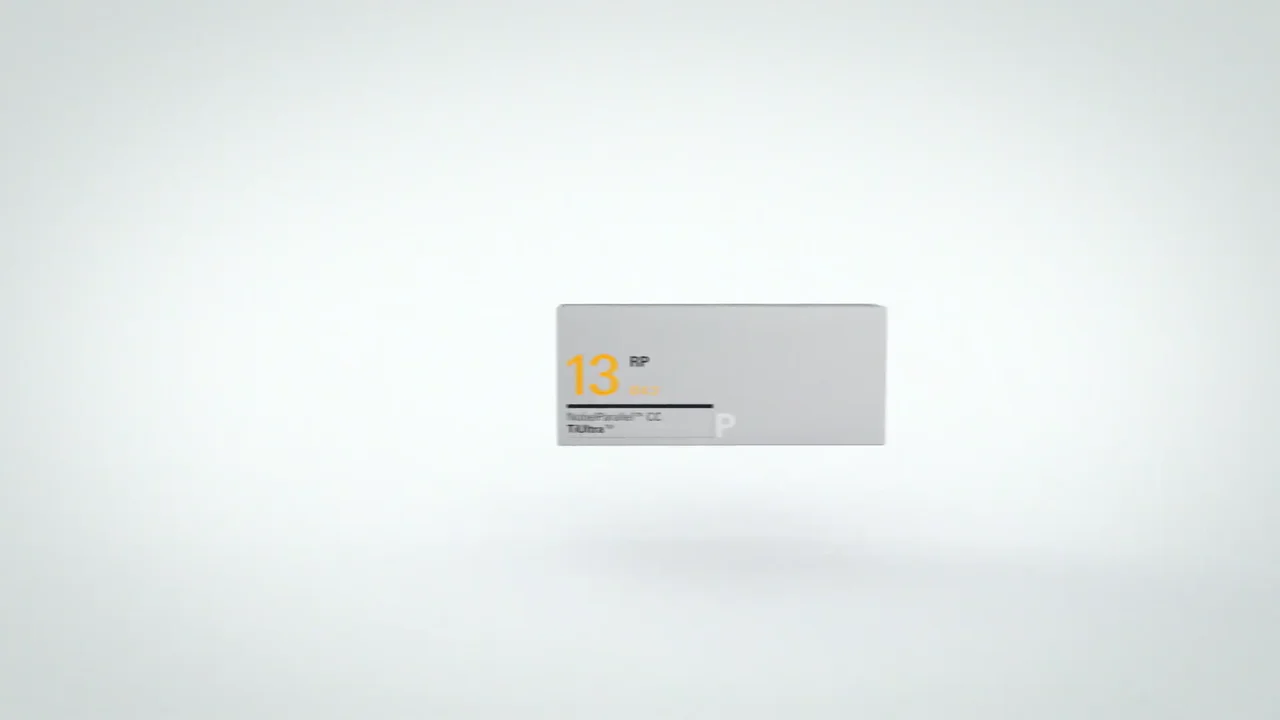
The box face names the implant, so no title card is needed. 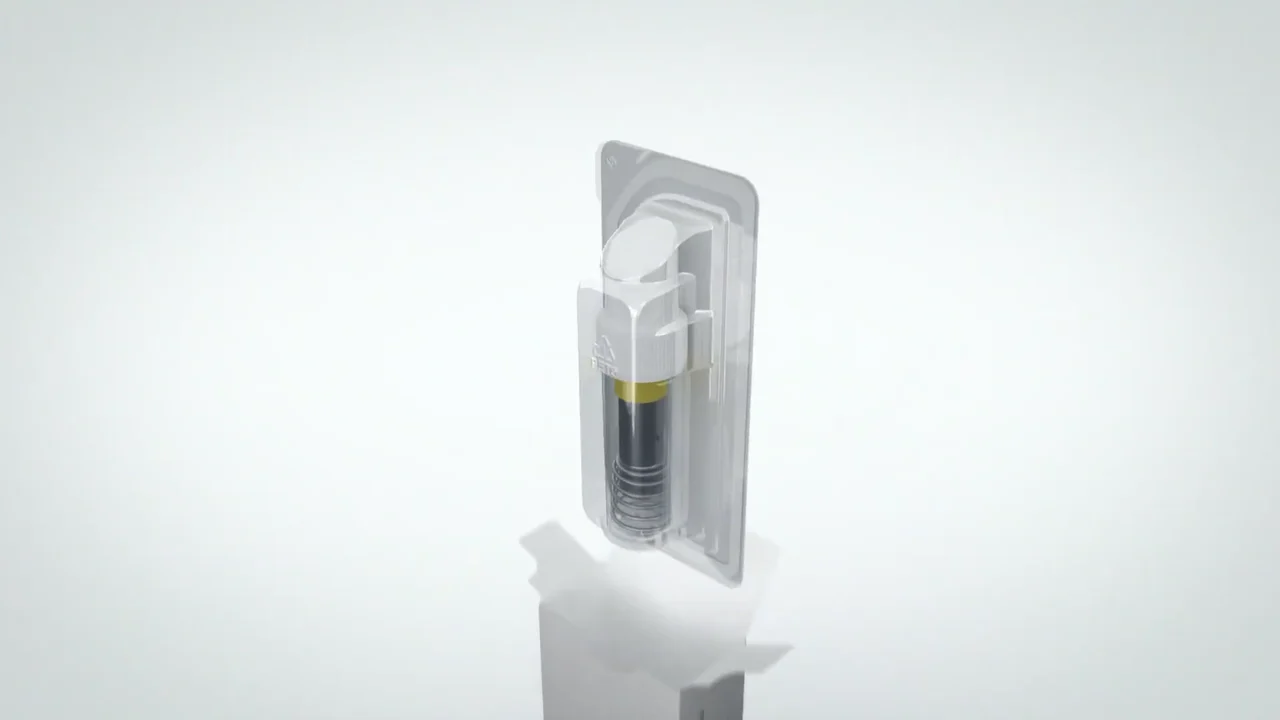
The blister rises out of the open box, the way the implant reaches a clinic. 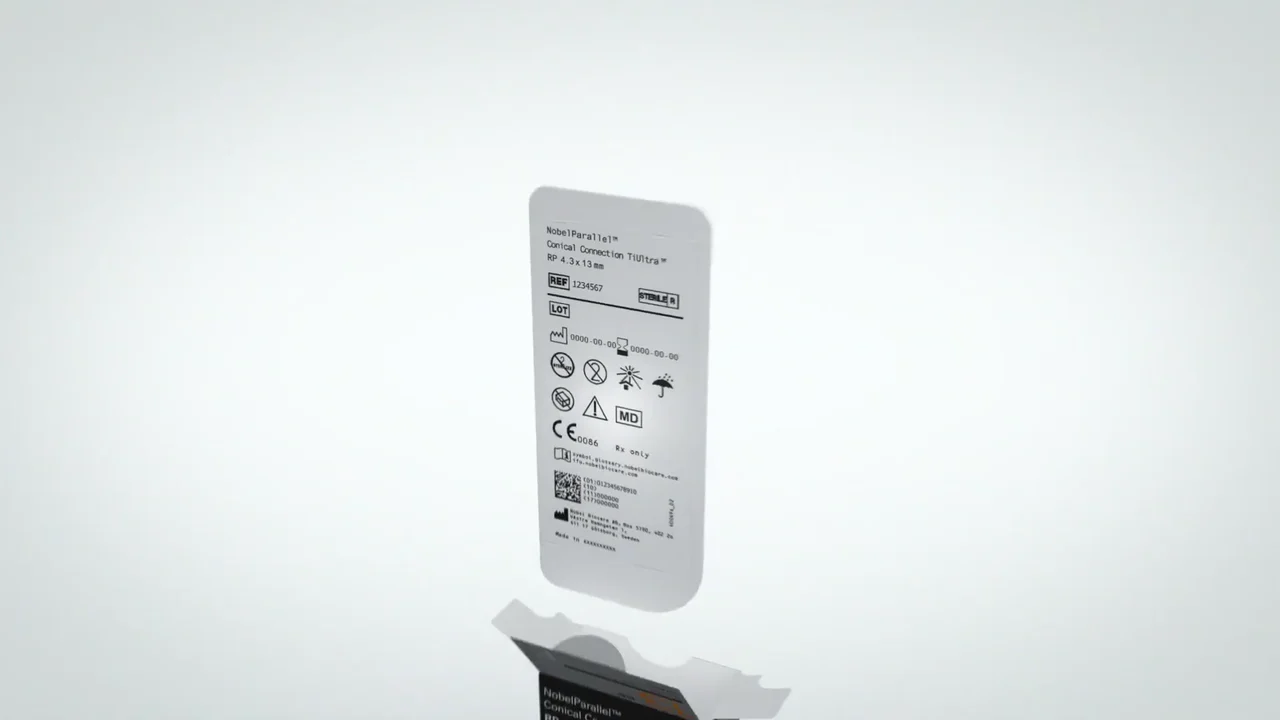
The blister label spells out the full product name and size. 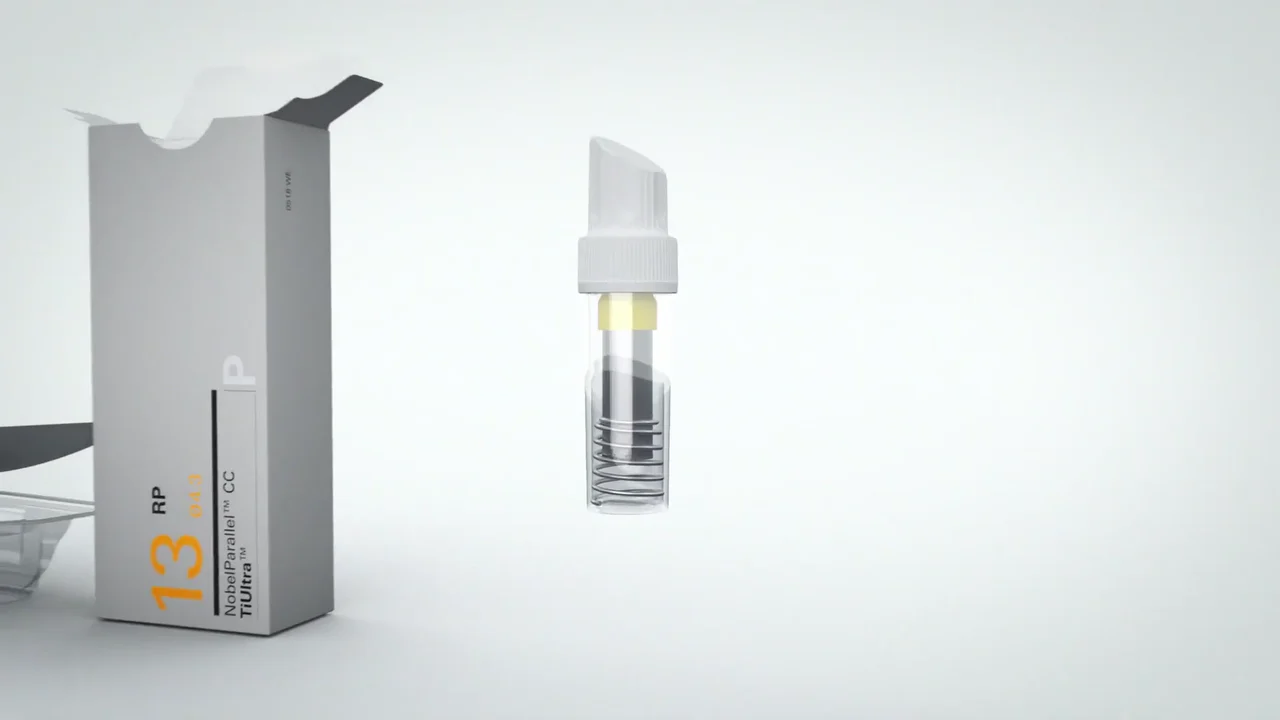
The vial stands beside its box before it is taken apart. 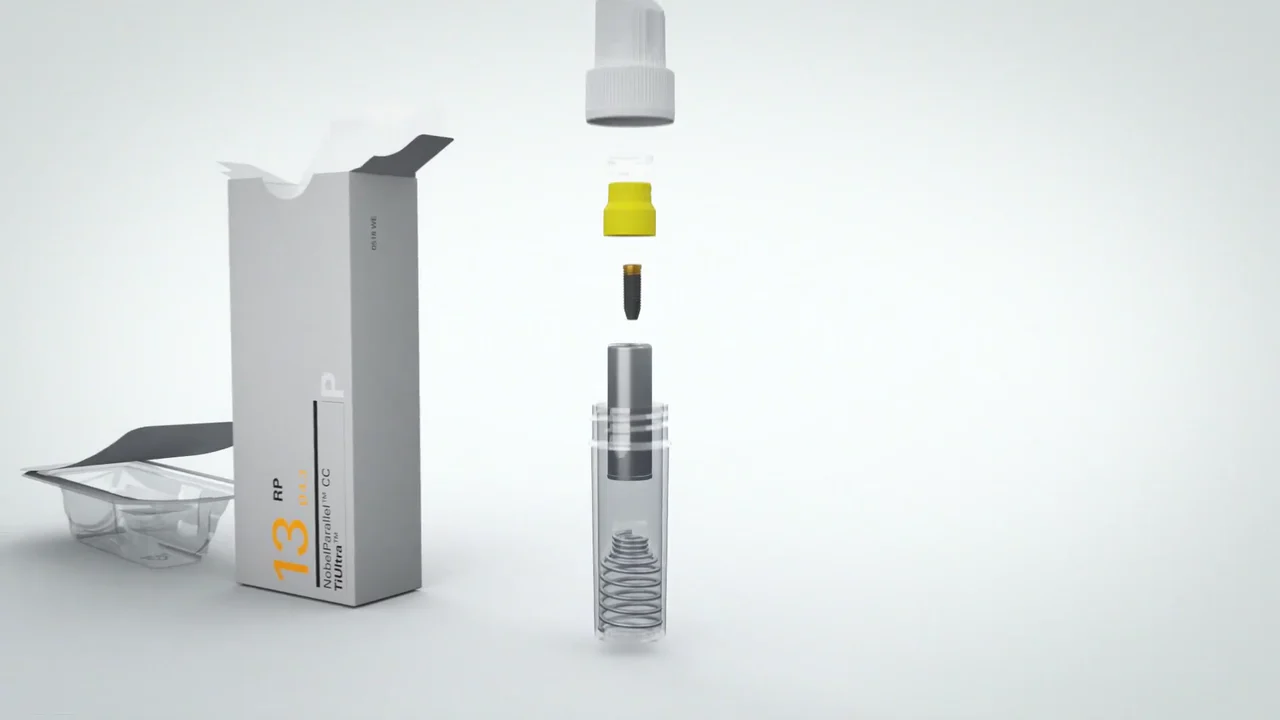
The exploded view places the small implant inside its package. 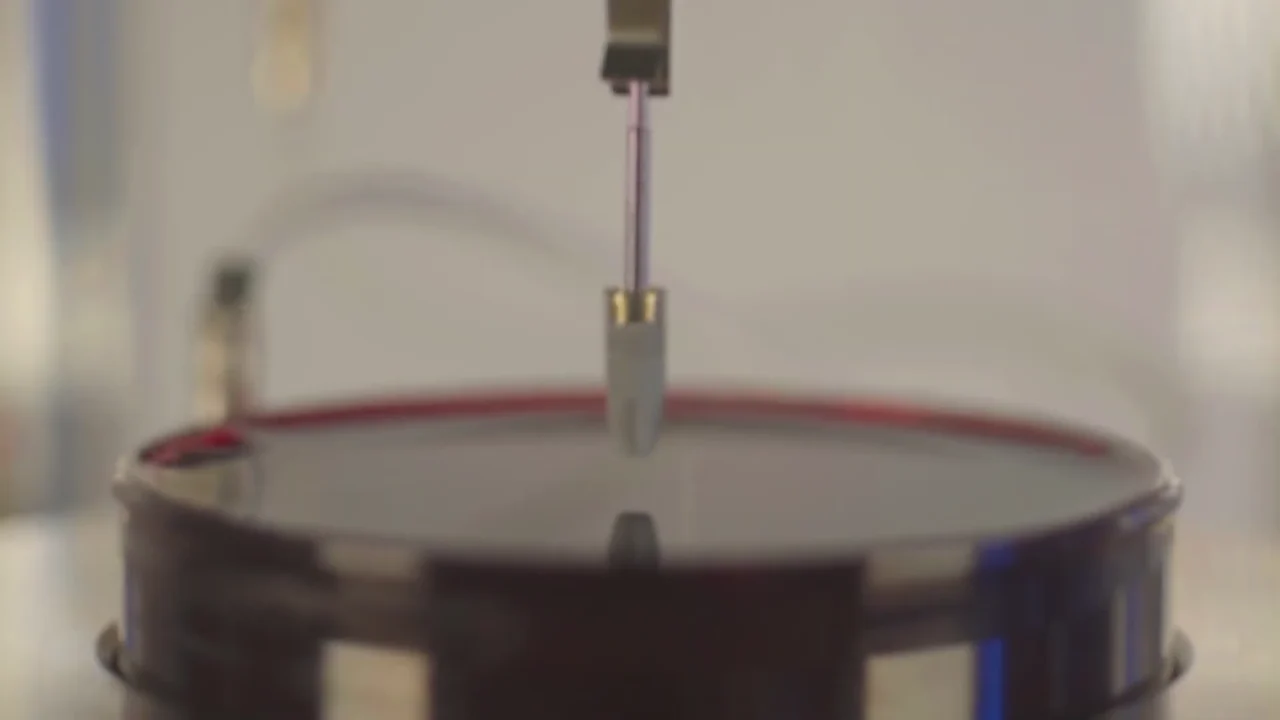
The cut to a live-action close-up starts the proof on a real implant. 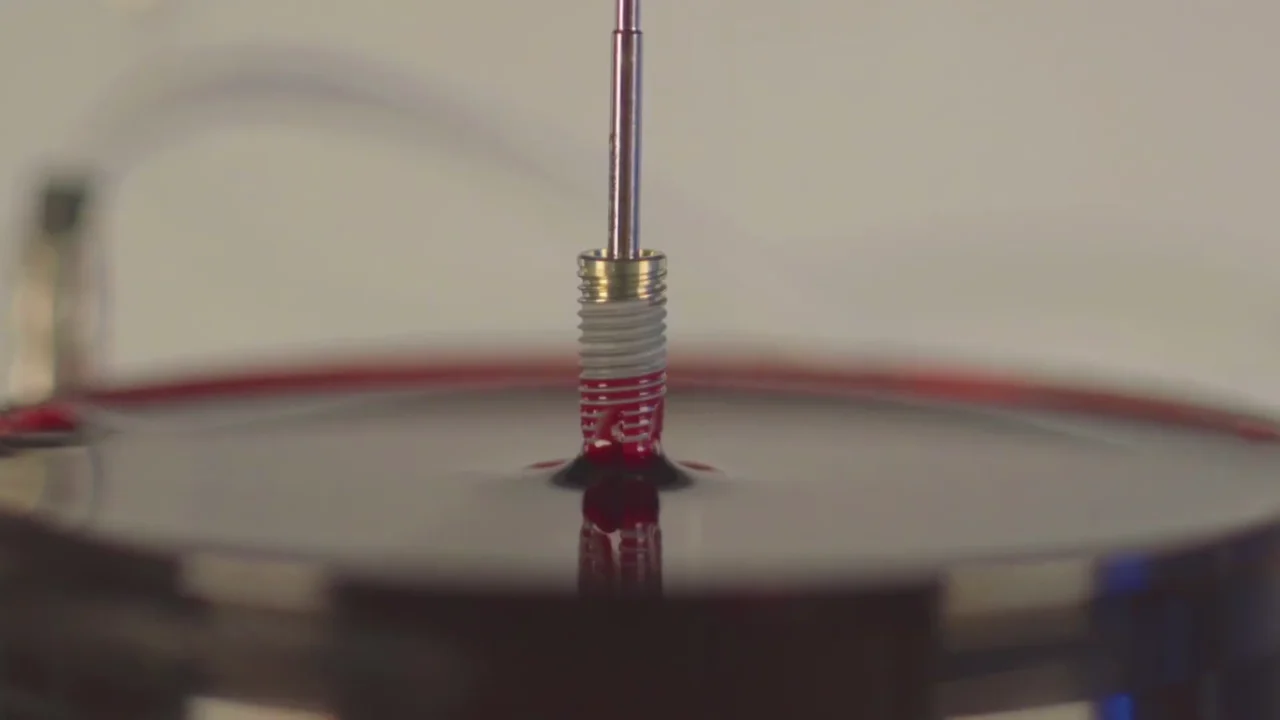
The liquid starts climbing the threads as soon as the apex touches it. 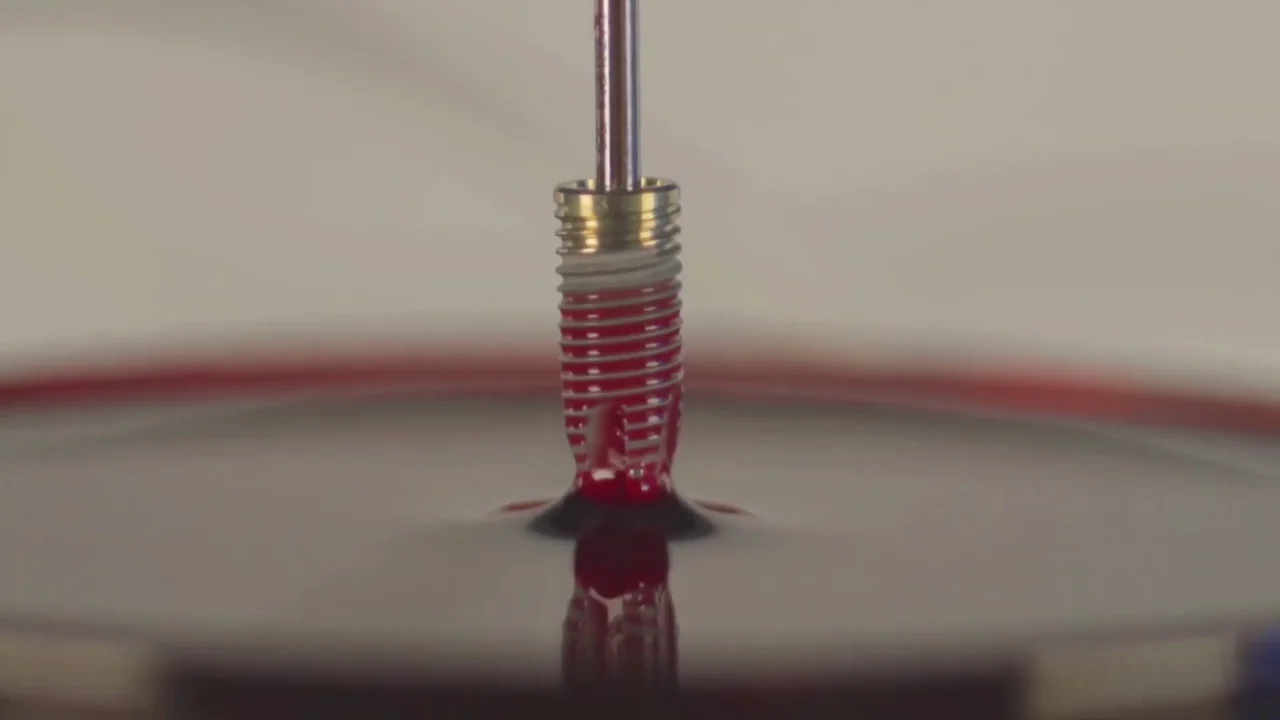
Most of the threads are wet: the surface claim, shown without a word. 
The brand signs the test on a clean end card. 
The end card carries the regulatory line a dental device needs.
4 decisions behind the Nobel Biocare B2B video content
Decision 1
Let the liquid make the claim
From 0:19 to 0:32 the implant touches a dish of red liquid and the liquid runs up the threads. The word "hydrophilic" never appears on screen.
Copy it: If your claim is a material property, find the test that shows it and show it in close-up.
Decision 2
Switch to a real shot for the proof
The box, blister and exploded vial are 3D renders, but at 0:19 the video cuts to a live-action macro close-up of the wetting test.
Copy it: Render the product, but show a performance claim on a real sample so no one can say it was animated.
Decision 3
Explode the vial before the test
At 0:16 the cap, a yellow part, the implant, its holder and the vial separate in one line, so the implant is placed before the close-up starts.
Copy it: Before a tight demo shot, give one wide shot that shows where the part sits.
Decision 4
Leave the words to the packaging and the post
The only readable text is the box at 0:02, the blister label at 0:10 and the legal line from 0:40. The claim itself is in the YouTube description.
Copy it: For a short clip with one claim, keep the screen clean and put the claim in the post text beside it.
From implant CAD files to the wetting test close-up
- CAD conversion. Engineering files for the implant, vial and parts were converted into 3D models.
- Packaging models. The box, blister and label were modeled so "NobelParallel™ CC", "TiUltra™" and the blister label read clearly.
- White-on-white lighting. Titanium threads, clear plastic and a white box were textured and lit on a white set without losing their edges.
- Animation. The box flight, the opening, the blister turn and the exploded view of the vial were animated.
- Render and compositing. Shots were rendered and composited, and the live-action wetting close-up was cut in from 0:19.
- Grade and sound. The color grade carries the red of the liquid into the red logo screen at 0:33, and sound design was added last.
Scope of work:
Production took 3 to 4 weeks on a budget of $1,200 to $2,000. See the 3D video production service for how a project like this is scoped.
Questions about the Nobel Biocare B2B video content
Why does the Nobel Biocare video lower the implant into a red liquid?
Nobel Biocare describes TiUltra as "ultra-hydrophilic". From 0:19 to 0:32 the implant meets a dish of red liquid and the liquid climbs the threads, which shows the property instead of naming it.
Is the wetting test in the TiUltra video 3D or real?
The box, blister and exploded vial from 0:00 to 0:18 are 3D renders. At 0:19 the video cuts to a live-action macro close-up of an implant in red liquid, so the proof is shown on a real sample.
Why does the TiUltra video open on a sealed box?
From 0:00 to 0:09 the box arrives, stands up and opens, and the blister rises out. It starts from the object a clinician actually receives.
What text appears on screen in the TiUltra video?
Only the packaging and the end card: "NobelParallel™ CC", "TiUltra™", "13", "RP" and "Ø4.3" on the box from 0:02, "NobelParallel™ Conical Connection TiUltra™ RP 4.3 x 13 mm" on the blister at 0:10, then the Nobel Biocare logo and a legal line that includes "For prescription use only."
How does the Nobel Biocare video end?
At 0:32 the wetting close-up washes red, the Nobel Biocare mark flies in on a red screen, and from 0:37 the logo holds on light gray with the legal line to the end at 0:44.
What did the TiUltra video take to make?
CAD conversion, 3D modeling, texturing, lighting, animation, rendering, compositing, effects, sound design and color grading. Production took 3 to 4 weeks on a budget of $1,200 to $2,000.
What Advids clients say
"We had a great experience with ADVIDS. We required a technical 3D video to be produced. The project ran smoothly with excellent communication."Emily Gray, Quality Manager at Pacific Hoseflex


Need clinicians to see a property your product photos can't show?
Talk to Advids