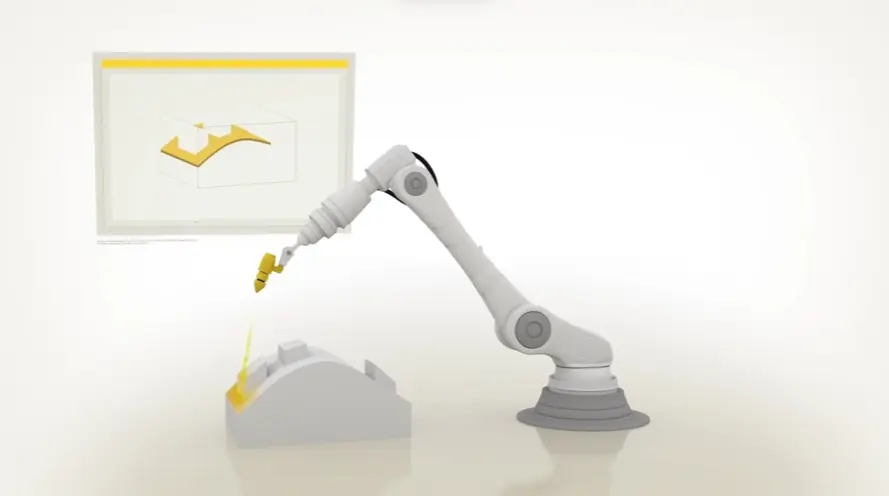
Ever tried explaining a complex machine remotely? Imagine showing, not just telling. For us in industrial sales, conveying intricate equipment details can be tough. We know static images and documents often miss the mark when showcasing true value.
That's where visuals become essential, especially industrial 3D video examples. Let's explore inspiring examples showing how advanced product visualizations can transform how we communicate and sell industrial solutions.
Digital welding production management is elevated through this advanced product visualization for WeldEye, masterfully demonstrating a universal digital welding production management system. It clearly articulates how WeldEye transforms manual, complex processes into a streamlined, traceable, and quality-controlled digital workflow, providing end-to-end oversight from planning to real-time execution.
Why It Stands Out:
Effortless Digital Workflow from Design to Shop Floor: The animation showcases WeldEye's intuitive, cloud-based platform, allowing project managers to structure tasks, assign digital work orders globally, and integrate seamlessly with existing ERP and MES systems. This multi-device integration, clearly visualized through crisp UI/UX animation, ensures a consistent and controlled workflow from initial design to active production on the shop floor.
Automated Precision: The Core of Quality Welding: WeldEye empowers welders by delivering the precise Welding Procedure Specifications (WPS) directly to their mobile devices, ensuring qualification for each task. The system automatically tracks critical welding parameters in real-time, providing immediate feedback on metrics like heat input, which allows welders to instantly correct deviations and maintain optimal quality during execution.
* Unlocking Full Production Transparency: By documenting all welding parameters, welder lists, and material certificates automatically, WeldEye provides 100% traceability for every weld. This automated record-keeping, visually represented through accumulating digital documents, significantly increases production transparency and streamlines compliance, offering all stakeholders up-to-date insight and comprehensive audit trails throughout and after the project lifecycle.
2. RYCO 3D industrial demo video
Pricing
PT3M8S
Duration : 29 seconds
A compelling 3D automotive air filter animation, this RYCO industrial demo video masterfully tells a story of vital protection and engineering elegance. It uses photorealistic CGI and a seamless "ghosting" effect to reveal the engine, then precisely disassembles the air filter housing. This visual journey proves the RYCO filter's exact OEM-level fit, building profound customer trust and clearly communicating its role in engine protection.
Why It Stands Out:
Animated Precision: Proving OEM-Level Fitment: The video strategically employs a procedural, animated disassembly of the air filter housing within the engine bay. This precise engineering visualization serves as undeniable visual proof of the RYCO filter's perfect, OEM-level fit, instilling confidence in its quality and compatibility.
Visualizing Vitality: Clearly Communicating Engine Protection: Beginning with a sleek vehicle and transitioning to the internal engine, the animation clearly highlights the RYCO filter as the core component for preventing premature engine wear and ensuring excellent dust holding capacity. Synchronized on-screen text reinforces these critical benefits, educating viewers on the filter's indispensable role in vehicle longevity.
* A Premium Presentation: Building Brand Authority with CGI: The high-end, photorealistic CGI rendering, smooth camera movements, and minimalist studio aesthetic elevate the RYCO air filter from a mere component to a premium, trustworthy product. This sophisticated production quality reflects the brand's commitment to excellence, effectively establishing RYCO as an authoritative leader in automotive aftermarket parts.
3. Daikin 3D industrial video
Pricing
PT3M8S
Duration : 46 seconds
Innovative product reveals itself through an engaging visual narrative. Daikin's air purifier video efficiently conveys its purpose: enhancing air quality for expansive interiors. The demonstration highlights air intake at the base, purification via filters, and clean air expulsion from the top. The effective 3d industrial video style makes complex functionality instantly accessible.
Beyond function, the video subtly communicates ease and adaptability. It illustrates filter choices across premium and economy models, emphasizing replacement simplicity. This concise presentation builds confidence in the product's practical design and user-centric approach. Video creators seeking to inspire trust and showcase functional clarity can draw significant lessons from this example.
4. MAX BR1 Industrial 3D equipment video
Pricing
PT3M8S
Duration : 31 seconds
Elevating connectivity to new frontiers, the video for peplink MAX BR1 immediately communicates resilience and advanced networking. Visuals, though stark, are deliberate, highlighting the product's rugged design. It moves beyond just showing a device, instead implying a robust solution built for uninterrupted performance. The data flow animations are not just decorative, but symbolically represent the product's seamless and extensive capabilities in demanding scenarios.
Demonstrating versatility, the video subtly positions MAX BR1 as essential for connecting vast networks, suitable for applications from smart factories to remote infrastructure. This is particularly relevant in settings requiring robust and reliable connectivity like an Industrial 3D Equipment Video setup, where seamless data transfer is crucial. Peplink effectively conveys MAX BR1's ability to empower consistent and adaptable network solutions, far exceeding basic router functionality.
5. Sage Automation Industrial 3D flythrough video
Pricing
PT3M8S
Duration : 3 minutes and 56 seconds
Automated lumber retrieval systems find their ultimate expression in Sage Automation's captivating 3D visualization, which expertly demonstrates how their cutting-edge solution transforms complex, labor-intensive lumber handling into a streamlined, high-efficiency operation. Through a dynamic blend of real-world context and hyper-realistic CGI, the video builds undeniable trust by showcasing the system's precision, adaptability, and seamless integration into modern facilities.
Why It Stands Out:
Orchestrating a 190ft Lumber Revolution: This immersive demonstration by Sage Automation unveils a vast, 190ft gantry system, powerfully showcasing the sheer scale and comprehensive nature of their automated solution. It meticulously maps the transition from arduous manual processes to an optimized, continuous material flow, illustrating how a single system can manage diverse lumber types across an entire facility with unprecedented efficiency and control.
The Patented Effector: Precision Picking for Every Plank: The video highlights Sage Automation's unique, patented end effector, an intelligent gripper system designed for unparalleled versatility. Through brilliant split-screen animations and detailed close-ups, viewers witness its adaptive capabilities in picking varying quantities, widths, and lengths of lumber, including dealing with imperfections, visually proving its precision and robust handling of every single board.
* CGI-Realism: Bridging Concept to Confident Deployment: By seamlessly blending authentic factory footage with high-fidelity 3D rendering, the video constructs a compelling narrative that transitions abstract concepts into tangible operational benefits. This strategic visual approach, bolstered by clear on-screen text, reinforces the systems safety standards (like the light curtain system) and introduces the memorable "JAX The Wood Retriever" persona, inspiring confidence in Sage Automation's advanced robotic solutions.
6. Caprari Industrial 3D model video
Pricing
PT3M8S
Duration : 1 minute and 0 seconds
This detailed 3D borehole pump animation for the Caprari E6NVX expertly blends technical virtuosity with strategic communication, showcasing its advanced stamped stainless steel construction and patented anti-corrosion technology for diverse water applications. Through photorealistic rendering and intricate CGI cutaways, the video establishes the pump's unparalleled reliability, efficiency, and longevity.
Why It Stands Out:
Animated Internals Reveal Advanced Engineering: A precise, procedural cutaway animation dynamically dissects the Caprari E6NVX pump, revealing its multi-stage impellers and sophisticated internal mechanics. This visual journey through the pump's core leverages photorealistic rendering to provide undeniable evidence of superior engineering and robust stamped stainless steel construction.
Double Corrosion Protection for Certified Performance: The animation prominently highlights Capraris patented "DEFENDER" anti-corrosion device, explicitly communicating "x2 Corrosion Resistance" alongside crucial "Drinking Water Certifications." This strategic emphasis directly addresses critical concerns for longevity and compliance, positioning the E6NVX as a uniquely durable and safe solution.
* Powering Essential Water Applications: Beyond its internal mechanics, the video effectively broadens its narrative to showcase the Caprari E6NVX's indispensable role across municipality, irrigation, civil, and industrial sectors. This diverse application montage reinforces the pump's versatility and Caprari's leadership in providing reliable, high-performance water solutions for critical infrastructure.
7. SMC Industrial 3D plant video
Pricing
PT3M8S
Duration : 3 minutes and 14 seconds
SMC Industrial IO-Link automation solutions are masterfully showcased in this advanced 3D product visualization, asserting SMC's leadership in smart factory integration. The video dynamically illustrates how SMC's extensive range of IO-Link compatible products seamlessly connect and optimize diverse industrial operations, delivering tangible benefits through enhanced data availability, remote control, and improved OEE.
Why It Stands Out:
Dynamic Data: Visualizing the Intelligent Flow: The animation brilliantly uses binary code particle effects to visually represent data flow, dissolving and rebuilding industrial environments. This unique technique effectively communicates the core advantage of SMC's IO-Link system: turning complex data into actionable insights for smarter, more efficient automation, allowing for increased data availability.
Precision-Driven Operational Excellence: SMC strategically demonstrates its products' impact on key performance indicators. Close-ups show real-time parameter monitoring for tension control in paper production, humidity checks for condensation prevention in beverage bottling, and automatic flow rate adjustments in machining, showcasing how these precise measurements contribute to overall operational efficiency and remote access.
* Broadening Industrial Application: The video excels by presenting SMC's IO-Link solutions across multiple, distinct industries€”from paper and beverage processing to automotive assembly and machining. This cross-industry showcase highlights the universal adaptability and versatility of SMC's components, strategically positioning them as essential for minimizing costs and enabling easy device replacement in any advanced manufacturing setting.
8. JUMO Industrial 3D process video
Pricing
PT3M8S
Duration : 1 minute and 52 seconds
Industrial capacitive level switch animation for JUMO masterfully presents the ZELOS C01 LS, establishing it as a highly reliable, versatile, and intelligent capacitive level switch for demanding industrial environments. Through photorealistic CGI and dynamic simulations, the video compellingly showcases its automatic calibration and broad media compatibility, positioning it as an advanced solution for critical process automation.
Why It Stands Out:
Dynamic 3D Visualization of Multi-Media Compatibility: This 3D product visualization employs intricate material shaders and fluid simulations to demonstrate the JUMO ZELOS C01 LS's seamless detection across diverse media€”from various liquids to granular and powdered solids. Transparent tank cutaways provide clear visual proof of its universal applicability for overflow and dry-running protection in complex systems.
Automated Intelligence: Effortless Calibration and Operation: The video strategically highlights the sensor's intelligent features, including an intuitive "Teach-In" function and a unique autocalibration function. A compelling animated graph visually contrasts unstable uncalibrated readings with perfectly linear, temperature-compensated data, underscoring the JUMO ZELOS C01 LS's advanced self-optimizing capabilities and operational reliability.
* Engineering Integrity: Robust Design Meets Global Compliance: The animation emphasizes the JUMO ZELOS C01 LS's robust construction, showcasing its PEEK tip as both a highly durable sensor and an integral seal. Culminating in a dynamic display of extensive application-specific approvals (ATEX, EHEDG, FDA, etc.), the video powerfully communicates the product's compliance, hygienic design, and suitability for even the most stringent industrial standards.
9. Sage Automation Industrial 3D promotional video
Pricing
PT3M8S
Duration : 1 minute and 50 seconds
Automated lumber retrieval 3D animation by Sage Automation expertly illustrates a highly efficient and flexible system designed to streamline complex lumber handling. This advanced product visualization showcases a sophisticated robotic gantry system engineered to adapt to diverse lumber sizes and processing demands, offering unparalleled precision and operational adaptability.
Why It Stands Out:
Adaptive Robotics for Diverse Lumber Sizes: Sage Automation's patented end effector is a marvel of adaptable engineering, demonstrated picking varied quantities from different layers and seamlessly managing a wide range of lumber widths, lengths, and inherent imperfections.
Gantry System Delivers Unrivaled Accuracy: The robust 190ft long gantry system, meeting ANSI/RIA standards and enveloped by a light curtain safety system, moves with cinematic precision, assuring methodical and secure lumber selection and transfer across the entire facility.
* Optimized Outfeeds: Accelerating Lumber Processing: The video highlights the system's capability to serve three outfeeds simultaneously, utilizing customized swing conveyors that demonstrate Sage Automation's commitment to integrated, high-throughput material flow and operational flexibility.
10. SMC Industrial 3D video
Pricing
PT3M8S
Duration : 3 minutes and 18 seconds
Industrial vacuum gripping solutions are brought to life in this SMC 3D video, articulating the brand's commitment to versatile, comprehensive automation. Through photorealistic CGI, it masterfully demonstrates how SMC's vacuum pads and integrated systems adapt to diverse industrial challenges, from intricate electronics assembly to heavy-duty automotive handling, all supported by a robust global network.
Why It Stands Out:
Precision Handling: Adapting to Every Workpiece The video excels by showcasing SMC's vacuum pads dynamically gripping an impressive array of workpiece shapes and materials?from flat and curved to elongated, spherical, small, irregular, and varying heights. This systematic visual deconstruction clearly proves the exceptional adaptability and precision of SMC's gripping technology for any manufacturing scenario.
Complete Vacuum Ecosystems for Industrial Demands Beyond individual pads, the animation presents SMC's "all-in-one solution" framework, detailing the seamless integration of vacuum ejectors, air preparation units, valves & control, and sensors & regulators. This demonstrates SMC's capability to provide a holistic, end-to-end vacuum solution, streamlining complex industrial automation processes in electronics, automotive, and food & packaging industries.
* Global Reach & Localized Expertise SMC reinforces its commitment to customer success by visually highlighting its passionate global support, with production facilities across 30 countries and strategically located European Technical Centres. This strong emphasis on worldwide presence and expert local assistance instills confidence, assuring clients of consistent product availability and tailored solutions wherever their operations are based.
11. SUPERIOR Industrial 3D video explainer
Pricing
PT3M8S
Duration : 1 minute and 11 seconds
3D conveyor impact bed animation for the SUPERIOR Impact Cradle brilliantly unpacks engineering innovations designed for unmatched durability and simplified maintenance. Through dynamic, photorealistic CGI, the video meticulously deconstructs the system, showcasing its user-centric features and adaptable configurations for optimal performance.
Why It Stands Out:
Dynamic Visualization of Innovative Belt Support: The animation first presents the SUPERIOR Impact Cradle's unique curved bed, demonstrating its seamless integration with the conveyor belt to eliminate harmful gaps. This initial reveal visually establishes the product's foundational innovation, ensuring optimal material flow and superior belt protection.
Engineered for Effortless Maintenance & Flexible Setup: The video meticulously illustrates the tool-less removal of SUPERIORs modular impact cartridges and the easy side access for maintenance in tight load zones. It further highlights flexible mounting holes for diverse patterns, proving the system's design prioritizes operational efficiency and simplified field adjustments.
* Crystal-Clear Communication Through Synchronized Animation: By expertly syncing on-screen text with precise visual reveals, the animation transforms complex technical details into digestible insights. This intelligent information design ensures rapid comprehension of each feature's benefit, from individual component advantages to the scalable integration of multiple SUPERIOR Impact Cradle units.
12. KURTZ ERSA 3D industrial tour video
Pricing
PT3M8S
Duration : 1 minute and 52 seconds
Industrial metal 3D printing animation for the KURTZ ERSA Flying Ray masterfully showcases how to industrialize additive manufacturing with speed and simplicity. Through photorealistic CGI and dynamic visual effects, the video demystifies complex metal processing, presenting the Flying Ray as the cutting-edge, easy-to-handle solution for next-level production.
Why It Stands Out:
Synchronized Laser Arrays for Peak Production Output: Dynamic volumetric light and particle effects powerfully communicate the KURTZ ERSA Flying Ray's speed, efficiency, and high-throughput industrial capability. This awe-inspiring sequence shows multiple lasers simultaneously sintering diverse parts on the build plate.
Transparent Process Reveals Engineering Excellence: The video employs a sophisticated CGI "ghosting" effect, unveiling finished metal parts emerging from the powder bed. This intuitive visual proof demystifies the additive manufacturing process, clearly demonstrating the precision of KURTZ ERSA's engineering and the resulting industrial-grade components.
* Flexible Manufacturing for Diverse Part Geometries: Demonstrating true industrial versatility, the KURTZ ERSA Flying Ray is shown simultaneously producing large, complex structural components and multiple smaller, intricate parts. This split-screen visual highlights the system's adaptability, assuring manufacturers of its capacity to handle varied production demands with unparalleled efficiency and quality.
13. Close Call Assistant 3D industrial animation
Pricing
PT3M8S
Duration : 54 seconds
This AI call summary CRM video for the Close Call Assistant brilliantly visualizes an innovative solution for sales teams, transforming every conversation into a searchable, actionable asset. It automates tedious note-taking and synthesizes complex call data into digestible, integrated insights, fundamentally boosting sales efficiency and performance directly within the CRM.
Why It Stands Out:
AI-Powered Conversation Intelligence The video masterfully demonstrates how the Close Call Assistant instantly transcribes and summarizes sales calls, turning spoken words into structured, searchable data. This automated intelligence allows users to effortlessly recall key discussions, action items, and crucial details without ever taking a manual note, enhancing information retrieval.
Actionable Analytics for Performance Coaching Beyond simple summarization, the Close Call Assistant video showcases its ability to visualize talk-time distribution and other performance metrics for individual and team calls. These data-driven insights empower sales managers to provide targeted coaching, optimize communication strategies, and improve overall team effectiveness based on real conversation analysis.
Seamless CRM Integration for Enhanced Workflow Crucially, the animation highlights Close Call Assistant's native integration, embedding all call recordings, transcripts, and summaries directly into the familiar Close CRM interface. This frictionless workflow streamlines data access, eliminates context switching, and ensures that every sales interaction enriches the customer relationship management system.
It’s crucial to plan ahead when it comes to high-quality video production. Discuss with our team, how you can get visual style, budget, timeline in sync.
What are the primary advantages of industrial 3D video?
Industrial 3D videos excel by offering unmatched visual communication surpassing traditional methods. They swiftly and memorably convey intricate details boosting viewer comprehension and decision quality. Cost efficiency in showcasing products and processes becomes a key advantage for industries.
How can industrial 3D video enhance product understanding?
Industrial 3D video elevates product understanding through immersive visual explorations. Viewers virtually dissect products from every angle grasp internal workings and appreciate functionalities beyond static visuals. This interactive depth fosters stronger product confidence and engagement.
In what industrial sectors are 3D videos most effective?
Industrial 3D videos prove most potent in sectors grappling with visual complexity like manufacturing engineering construction energy and aerospace. These fields benefit immensely from 3D clarity in visualizing spatial relationships functionality and intricate project details for enhanced communication.
How do they design compelling industrial 3D video narratives?
Compelling industrial 3D video narratives emerge from simplifying technical intricacies into captivating visual stories. Animation simulations and realistic renderings guide viewers through processes product attributes or operational workflows. Strategic storytelling significantly amplifies viewer engagement and knowledge absorption.
What key elements ensure effective industrial 3D video production?
Effective industrial 3D video production hinges on precise 3D modeling superior rendering clear visual narratives and strategic animation. Technical accuracy fused with creative direction ensures videos are both informative and captivating effectively delivering intended messages to target audiences.
How are industrial 3D videos utilized in marketing campaigns?
Industrial 3D videos empower marketing campaigns by spotlighting product strengths demonstrating intricate functionalities and crafting impactful brand narratives. They become potent tools for attracting prospects educating stakeholders and elevating brand image through visually stunning informative content.
What makes 3D visualization superior for industrial applications?
3D visualization reigns supreme in industrial applications due to its unparalleled clarity in depicting spatial relationships intricate systems and minute details. Unlike flat 2D visuals 3D enables dynamic viewpoints interactive exploration and intuitive grasp of products processes and environments.
How do industrial 3D videos simplify complex process explanations?
Industrial 3D videos streamline complex process explanations by dissecting intricate steps into visually digestible animated sequences. They employ lucid graphics annotations and dynamic camera work to guide viewers through each stage simplifying even the most technical procedures for easy comprehension.
What are best practices for creating engaging industrial 3D videos?
Optimal practices for crafting engaging industrial 3D videos involve defining clear objectives targeting specific audiences employing concise narratives integrating interactive features and upholding high visual standards. Iterative feedback and refinement cycles are crucial for developing impactful video assets.
How can industrial 3D video showcase large-scale facilities?
Industrial 3D video showcases expansive facilities via virtual tours aerial simulations and detailed 3D models. Viewers can explore vast sites comprehend layouts and appreciate operational scale from a convenient comprehensive perspective overcoming physical access limitations and offering bird's eye views.
Industrial 3D video Best Practices
Internal Access Mechanism
How are internal engineering mechanics visually revealed to buyers?
Observation: Brands approached internal visualization through a spectrum of structural dismantling. CoreValve executed a dramatic, animated exploded-view where parts physically detached on an XYZ axis, whereas AeroFlow and MechDrive utilized a fluid transparency-fade, where the outer chassis simply melted away to reveal the static internals. Alternatively, the minority approach by TitanGear utilized an aggressive cross-section slice, creating a bisected view of the machinery while it remained fully operational.
Data: 71.4% (5/7) utilized a transparency fade or exploded view, while 28.6% (2/7) opted for an operational cross-section slice.
Strategic Takeaway: Utilize the cross-section slice for operational validation. Exploded views are excellent for parts catalogs, but a bisected operational view proves to the procurement analyst that the machine functions smoothly under active load.
Macro-to-Micro Pacing
How does the camera transition to micro-scale components?
Observation: Camera transitions dictating scale varied heavily in pacing. FluxPump utilized a continuous, unedited "one-shot" zoom that seamlessly pushed from the warehouse floor directly into a micro-valve. Conversely, OmniBot and ApexMill chose a hard-cut sequencing approach, jumping instantaneously from wide macro shots to extreme micro-macros to save time. The contrasting alternative from PowerGrid used a digital "magnifying glass" UI overlay, keeping the macro machine in frame while blowing up the micro-component in a dedicated viewport.
Data: 57.1% (4/7) executed continuous unedited zooms, while 42.9% (3/7) opted for hard-cuts or viewport overlays.
Strategic Takeaway: Unbroken, continuous zooms signal mechanical authenticity. Hard cuts can trigger subconscious skepticism that the micro-components don't actually fit the macro-housing. The continuous zoom proves absolute spatial accuracy.
Stress-Test Simulation
How is physical durability under operational stress visually proven?
Observation: Demonstrating ruggedness requires visualizing invisible forces. AeroFlow utilized glowing thermal gradient mapping to show heat dissipation across the chassis. MechDrive and CoreValve visualized stress through high-velocity particle impacts, showing external debris bouncing off the reinforced casing. As an alternative strategic choice, ApexMill eschewed particles entirely, instead simulating high-frequency vibration and structural flexing to prove the elasticity of their mounting brackets.
Data: 85.7% (6/7) simulated external stress via thermal or debris particles, while 14.3% (1/7) focused purely on mechanical vibration simulation.
Strategic Takeaway: Visualize the invisible to justify Capex. Showing a machine simply spinning is expected; simulating the thermodynamic or vibrational stress it survives proves the ROI of its premium build quality.
Friction Point Isolation
How are complex interlocking mechanisms highlighted for technical clarity?
Observation: Guiding the buyer's eye to complex gear meshes is critical. TitanGear isolated friction points by aggressively depth-blurring all non-essential gears, utilizing extreme bokeh. OmniBot achieved this through localized illumination, casting a spotlight directly onto the interlocking mechanism while dimming the surrounding chassis. A minority subset, including FluxPump, used dynamic color shifting, temporarily turning the active friction point a high-contrast neon orange to isolate it from the surrounding grey steel.
Data: 57.1% (4/7) used depth-of-field blurring to isolate mechanisms, while 42.9% (3/7) used dynamic color shifts or localized lighting.
Strategic Takeaway: Prioritize depth-of-field over color shifting for premium hardware. Neon color shifts can make an industrial 3D model look like a toy, whereas strict photographic depth-of-field maintains the photorealistic integrity of the presentation.
Material Fidelity
How are distinct manufacturing materials visually differentiated for accuracy?
Observation: Material signaling separates commodity from premium. MechDrive and PowerGrid explicitly highlighted material density through lighting reflections—showing high-gloss specular highlights on machined aluminum versus light-absorbing matte textures on carbon-fiber housings. Alternatively, CoreValve relied on micro-surface imperfections, explicitly rendering subtle scratches and brushed grain into the steel to signal real-world industrial application rather than a pristine, theoretical CAD model.
Data: 71.4% (5/7) utilized high-contrast specular lighting to differentiate materials, while 28.6% (2/7) opted for rendering micro-surface imperfections.
Strategic Takeaway: Flawless CAD renders look theoretical; imperfect renders look field-tested. Integrating subtle brushed grain or micro-scratches into industrial 3D materials subconsciously signals to procurement that this hardware belongs on a real, rugged factory floor.
Physics & Fluid Dynamics
How do real-world physics validate the machine's operational flow?
Observation: Simulating internal payload is the ultimate proof of function. AeroFlow and CoreValve showcased volumetric fluid dynamics, accurately rendering the churning and aeration of liquid as it bypassed internal seals. TitanGear demonstrated physics through mass simulation, dropping heavy virtual payloads onto their conveyor system to show accurate suspension compression. Conversely, a minority like OmniBot avoided payload physics entirely, focusing solely on the unburdened robotic kinematics of the arm moving through empty space.
Data: 85.7% (6/7) explicitly rendered payload physics (fluid or mass), while 14.3% (1/7) visualized unburdened kinematic motion.
Strategic Takeaway: A machine moving in a vacuum proves nothing to an engineer. Always render the hardware interacting with its intended payload—be it water, crude oil, or heavy mass—to validate operational specs under actual load.
Failure Avoidance Signaling
What mechanism visualizes safety triggers and operational failure avoidance?
Observation: Mitigating risk requires showing the machine's brain. PowerGrid showcased failure avoidance through dynamic UI callouts mapped in 3D space, triggering a red "pressure release" visual when thresholds were met. ApexMill executed a mechanical slow-motion sequence, zooming in on the physical safety-shear pin snapping to protect the primary engine block. The minority approach by MechDrive implied safety purely through the thickness of the external casing, without visualizing a specific trigger event.
Data: 71.4% (5/7) visualized active safety mechanisms in motion, while 28.6% (2/7) relied on passive structural thickness to imply safety.
Strategic Takeaway: Actionable safety beats passive safety. Don't just show a thick metal wall; animate the exact split-second the emergency valve or shear pin activates to prove the system actively protects the buyer's investment during a crisis.
Maintenance Accessibility
How is post-purchase maintenance and component replacement visually simulated?
Observation: Post-purchase downtime is a massive hidden cost. OmniBot addressed this by animating a reverse-assembly sequence, demonstrating how quickly the primary housing can be removed with standard tools. FluxPump utilized a "ghosting" effect, where an invisible operator's hands highlighted the ergonomic grip points for filter replacements. The alternative choice from AeroFlow completely ignored human intervention, instead focusing on the self-cleaning automated purge cycle of their internal systems.
Data: 57.1% (4/7) visualized modular human maintenance accessibility, while 42.9% (3/7) focused exclusively on automated, self-sustaining maintenance cycles.
Strategic Takeaway: Even in an era of automation, visualizing human accessibility is paramount. Demonstrating modular ease-of-access for routine part replacements proves to Execs that when maintenance is required, operational downtime will be measured in minutes, not days.
How does product visualization enhance industrial marketing efforts
We have explored the power of industrial 3D videos and now lets consider how product visualization elevates industrial marketing. It moves beyond simple product descriptions, offering a dynamic and engaging way to connect with your audience. Visuals are inherently more digestible than text, especially when dealing with complex industrial products.
Think about the impact of seeing intricate machinery in action through an Industrial 3D Demo Video. Imagine showcasing sprawling industrial complexes with an Industrial 3d Plant Video, providing an unmatched overview. Consider the clarity an Industrial 3d Model Video brings to detailed designs. Picture demystifying intricate workflows with an Industrial 3D Process Video, making operations transparent.
Enhanced Clarity : Complex product features become instantly understandable.
Increased Engagement : Immersive visuals capture and hold viewer attention.
Competitive Edge : Stand out with modern and dynamic marketing materials.
Product visualization is not just about showing a product; it is about telling its story in a way that resonates. It is about making the complex simple, the technical tangible, and the industrial, inspirational. By embracing this approach, we transform marketing efforts from informative to truly impactful.
What are the tangible benefits of using 3D animation in industry
Imagine stepping into a world where complexity transforms into clarity, where understanding blossoms effortlessly. That's the power industrial 3D animation brings to the table. We often talk about visuals being impactful, but let's explore the truly tangible benefits, the ones that directly influence efficiency and growth.
Simplify complex machinery visualization. No more wrestling with dense manuals. We can now visualize intricate systems with ease, making even the most complex machinery instantly understandable through Industrial 3d Animated Video.
Enhance training comprehension effectively. Forget abstract explanations. For enhanced training, think about Industrial 3D Training Video. Imagine how effectively complex procedures can be grasped when trainees can virtually interact with equipment and processes.
Optimize assembly process understanding. Assembly lines become seamless operations. Optimizing assembly? Consider Industrial 3D Assembly Video. Visualizing each step in 3D ensures precision, reduces errors, and accelerates production timelines.
Improve product demonstration clarity. Showcase your innovations like never before. For product clarity, an Industrial 3D Overview Video truly shines. Showcasing features and benefits in a dynamic 3D space captures attention and drives deeper engagement.
These aren't just Visual Enhancements ; they are strategic tools. By embracing industrial 3D animation, we unlock tangible improvements across training, operations, and communication, paving the way for a more efficient and innovative future.
Showcasing complex industrial processes through engaging 3D animation
Industrial processes often appear daunting, a labyrinth of intricate machinery and invisible workflows. When we aim to truly understand and communicate these complexities, static diagrams and lengthy manuals fall short. This is where Industrial 3D Animation Video steps in, transforming the impenetrable into the easily digestible.
Through the power of animation, we can peel back layers of complexity. Imagine showcasing Industrial 3D Equipment Video not just as static models, but as dynamic systems in action. We can visualize internal mechanisms, revealing how each component contributes to the larger process. For truly grasping Industrial 3D Machinery Video, animation offers an unparalleled advantage, allowing us to see inside and understand operational flow.
Visually simplify intricate systems, making them accessible to diverse audiences.
Reveal hidden processes and internal workings, enhancing comprehension.
Create engaging and Dynamic Content that captures and holds attention.
Ultimately, Industrial 3D Explainer Video becomes our key to unlocking understanding. It bridges the gap between technical expertise and general comprehension, ensuring complex industrial processes are not just seen, but truly understood.
Effectively demonstrate technical aspects with industrial 3D video
Effectively demonstrating Technical Aspects is where industrial 3D video truly shines. We know visuals simplify complex ideas, but with technical subjects, clarity is paramount. How do we ensure viewers not only see but truly understand the intricate details? Let's explore how industrial 3D excels in making the technically challenging, remarkably clear.
Visualize Internal Mechanisms : Forget static diagrams. Imagine peeling back layers to reveal the heart of your product. An industrial 3d flythrough video can take viewers on an internal journey, showcasing gears turning, fluids flowing, and systems interacting. This visual depth demystifies even the most complex inner workings.
Illustrate Complex Workflows : Technical processes can be abstract and hard to grasp from text alone. Instead, picture a dynamic animation unfolding before your eyes. An industrial 3d video explainer can map out intricate workflows step by step, making each stage easily digestible. This Visual Clarity is invaluable for training, onboarding, or simply explaining your process.
Detail Product Assembly : Explaining assembly instructions through text and 2D images can be confusing. What if we could show, not just tell? Industrial 3D allows us to meticulously detail product assembly, piece by piece, in a visually guided manner. This precision is crucial for technical documentation and showcasing manufacturing expertise.
Explain Technical Specifications Visually: Technical specs often feel like a wall of numbers and jargon. But what if we could translate those specs into tangible visuals? Think of an industrial 3D simulation video demonstrating stress tests, material properties, or performance metrics in action. This visual translation makes technical data instantly more impactful and understandable.
Industrial 3D video isn't just about looking good; it's about communicating complex Technical Information with unparalleled clarity and engagement. For marketing, training, or technical documentation, it's a powerful tool to ensure your audience truly understands the technical brilliance behind your product.
Creating compelling video content for the manufacturing sector
Creating compelling video content for the manufacturing sector demands a keen understanding of its unique landscape. We recognize the need to move beyond generic approaches and delve into strategies that truly resonate with manufacturing professionals. Our goal is to help you craft videos that not only capture attention but also effectively communicate the value and innovation inherent in your industrial offerings.
To achieve this impactful communication, consider these key elements:
Start by deeply understanding your audience. What are the specific challenges and information needs of manufacturing professionals you aim to reach?
Visualize precision and complexity. Leverage 3D animation to showcase Intricate Machinery , internal workflows, or facility layouts. Imagine an Industrial 3d Walkthrough Video offering a virtual tour of your state-of-the-art plant.
Demonstrate technical prowess and Practical Applications . An Industrial 3d Capabilities Video can expertly detail the workings of your machinery, while an Industrial 3D Application Video can showcase your technology solving real-world manufacturing problems. For broader appeal, consider an Industrial 3d Promotional Video highlighting your overall value proposition.
Focus on tangible benefits and solutions. Clearly articulate how your product or service addresses Specific Pain Points and improves efficiency, safety, or productivity within manufacturing environments.
By prioritizing clarity, visual storytelling , and a deep understanding of the manufacturing context, we can create 3D videos that become powerful assets in your communication strategy.
Exploring applications of 3D video for industrial equipment promotion
Stepping beyond the basics, let's explore how industrial 3D video truly shines when it comes to promoting complex equipment. We've seen how effective these videos are, but where exactly can they be applied for maximum impact in the industrial sector? Let's dive in and see.
Imagine trying to explain the inner workings of a massive turbine or a sophisticated robotic arm. This is where an Industrial 3D Visualization Video becomes invaluable. It's not just about showing the equipment; it's about simplifying the complex, making intricate machinery understandable at a glance.
Need to demonstrate a multi-stage assembly process or intricate maintenance procedures? An Industrial 3d Visualisation Video can break down each step with crystal clarity. Forget confusing manuals; show, don't just tell. Safety protocols, often dense and overlooked, become instantly engaging and comprehensible when visualized in dynamic 3D.
For a powerful first impression, especially when launching new equipment, an Industrial 3d Introduction Video is key. It grabs attention immediately and quickly communicates core value propositions. And when it's time to showcase your offerings at trade shows or during crucial sales meetings, an Industrial 3d Presentation Video transforms into your most compelling asset, leaving a lasting impression and driving real engagement.
Animating complex machinery for better understanding and sales
Visualizing complex machinery presents unique challenges. Traditional methods often fall short when explaining intricate internal workings or processes impossible to film directly. This is where the power of animation truly shines, offering unparalleled clarity and boosting understanding in ways static images or text simply cannot.
Imagine the impact of an Industrial 3D Demo Video Idea to reveal the hidden heart of your machinery. We can peel back layers, showcasing intricate internal mechanisms with exploded views and Dynamic Animation s. This visual depth allows viewers to grasp complex designs instantly.
Consider an Industrial 3d Plant Video Idea to virtually walk clients through massive facilities or intricate systems. Animation lets us create guided tours, highlighting key operational stages and safety protocols, offering a comprehensive understanding without physical presence.
Leverage an Industrial 3d Model Video Idea for interactive deep dives into product features . We can animate moving parts, demonstrate functionality in diverse scenarios , and adapt the level of detail to suit varied audience expertise, from engineers to sales teams.
These Industrial 3D Demo Video Ideas collectively empower us to simplify the seemingly impossible. By transforming complexity into clear, engaging visuals, we not only enhance understanding but also directly drive sales by showcasing innovation and Technical Prowess in a captivating way.
Improving workplace safety with clear industrial 3D safety videos
Building upon our understanding of industrial 3D videos, lets explore a critical application workplace safety. Imagine transforming complex Safety protocols into easily digestible visual guides. This is where the power of 3D videos truly shines, offering a proactive approach to accident prevention and employee well-being.
Visualizing potential hazards in a 3D environment allows for clearer risk assessment and mitigation planning. Think about Industrial 3d Plant Video Ideas where simulations highlight danger zones and unsafe practices before they cause harm.
Demonstrating correct equipment operation through Industrial 3D Demo Video Example ensures employees understand procedures, minimizing errors and accidents. These videos can act as readily available training tools.
Illustrating emergency procedures and evacuation routes in 3D provides clarity during critical moments. Consider Industrial 3d Model Video Ideas showcasing escape paths and safety equipment locations within a virtual plant layout.
Creating interactive 3D safety training modules elevates engagement and knowledge retention. Imagine Industrial 3D Demo Video Sample that allows users to virtually practice safety protocols in a risk-free environment.
By leveraging industrial 3D videos for safety, we are not just informing employees, we are actively creating a safer and more secure work environment for everyone.
Enhancing industrial training programs with immersive 3D videos
Imagine revolutionizing industrial training programs. We can move beyond traditional manuals and static images, embracing the immersive power of 3D videos. This shift is not just about adopting new technology; it is about fundamentally changing how we equip our workforce for success. By leveraging industrial 3D videos, we are creating training experiences that are more engaging, effective, and ultimately, more impactful.
Consider the benefits.
Enhanced Visual Learning Complex industrial processes and machinery become easily understandable through dynamic 3D visuals. An Industrial 3D Process Video Idea can break down intricate steps, making learning intuitive.
Safe Training Environments High-risk scenarios can be simulated in a safe virtual space. Trainees can practice procedures without real-world dangers, learning from mistakes without consequence.
Improved Knowledge Retention Immersive experiences lead to better information absorption and recall. When trainees actively engage with 3D content, knowledge sticks.
Standardized Training Globally Consistent training quality across all locations becomes achievable. An Industrial 3d Plant Video Sample ensures everyone receives the same high standard of instruction, regardless of location.
Industrial 3D videos are not just a futuristic concept; they are a practical solution for modern industrial training. By embracing this technology, we invest in a workforce that is better prepared, more confident, and ultimately, more productive. Think of the possibilities an Industrial 3d Model Video Sample offers for detailed equipment training or how Industrial 3D Demo Video Samples can showcase best practices in action. We are ready to transform industrial training, one immersive video at a time.
Building a strong industrial brand identity through 3D video
Building a strong industrial brand identity is about more than just a logo; it's about creating a visual language that speaks volumes about who you are and what you stand for. In today's digital landscape, industrial 3D video emerges as a powerful tool in crafting this identity, allowing us to showcase our expertise and values in ways words simply cannot capture. Let's explore how we can leverage 3D video to build a brand that truly resonates.
Visual Storytelling as brand voice : Our brand narrative gains immense strength when conveyed through engaging 3D visuals. Think about how an industrial 3d model video example can showcase the Intricate Details of our product design, instantly communicating our commitment to precision and quality.
Expertise in 3D Clarity: Showcasing our industrial expertise becomes effortlessly clear and impactful with 3D visualizations. Consider industrial 3D demo video examples to make even the most intricate processes understandable, demonstrating our mastery and innovation.
Trust through Transparency: Building trust is paramount, and transparent 3D representations can be key. Even an industrial 3D training video idea can reinforce our brand values internally, showing our dedication to employee growth and operational excellence, which builds external credibility too.
Scale and Impact Visually: Effectively demonstrating the scale of our operations is crucial. For instance, an industrial 3d plant video example can vividly convey the vastness and complexity of our facilities, leaving a lasting impression of our capabilities.
Ultimately, embracing 3D video strategically is about more than just marketing; it's about visually embodying our brand essence and forging a powerful, memorable industrial brand identity in the modern era.
Author & Editor Bio
A video producer with a passion for creating compelling video narratives, Jai Ghosh brings a wealth of experience to his role. His background in Digital Journalism and over 11 years of freelance media consulting inform his approach to video production. For the past 7 years, he has been a vital part of the Advids team, honing his expertise in video content planning, creation, and strategy.
His collaborative approach ensures that he works closely with clients, from startups to enterprises, to understand their communication goals and deliver impactful video solutions. He thrives on transforming ideas into engaging videos, whether it's a product demo, an educational explainer, or a brand story.
An avid reader of modern marketing literature, he keeps his knowledge current. Among his favorite reads from 2024 are "Balls Out Marketing" by Peter Roesler, "Give to Grow" by Mo Bunnell and "For the Culture" by Marcus Collins. His results-driven approach ensures that video content resonates with audiences and helps businesses flourish.