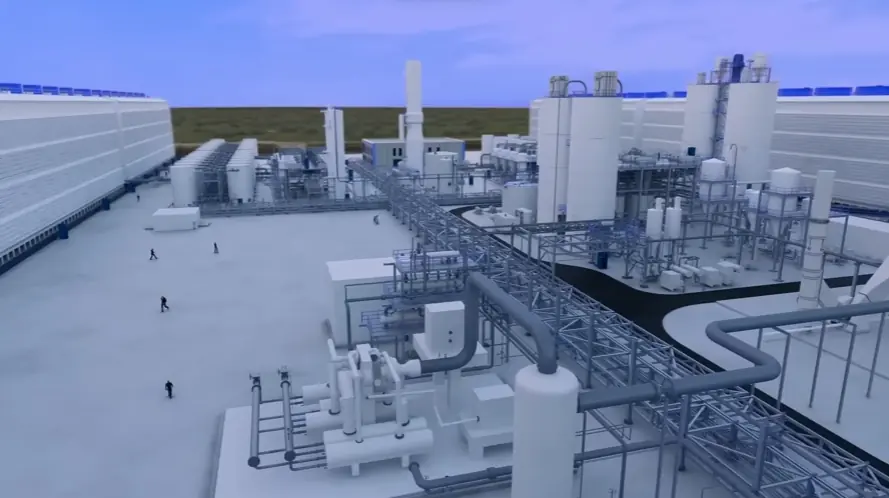
We navigate complex processes daily, don't we? Imagine truly seeing every detail? Effectively communicating the intricate workings of manufacturing or the sophistication embedded within machinery to partners and clients remotely presents a unique challenge, demanding a clarity that transcends simple description and evokes a sense of tangible understanding.
That precise need for immersive clarity is why exploring 3D animated manufacturing walkthrough video examples becomes essential; they provide the visual key allowing viewers to virtually step inside, decode complexity, and fully appreciate the depth of your innovation, ultimately driving engagement and accelerating crucial decision-making.
It’s crucial to plan ahead when it comes to high-quality video production. Discuss with our team, how you can get visual style, budget, timeline in sync.
Jai Ghosh
Video Producer at Advids
Let's talk

How does 3D animation improve manufacturing training?
3D animation improves manufacturing training by providing clear visual steps, allowing safe practice of hazardous tasks, reducing training time and costs, improving knowledge retention through engagement, and standardizing content delivery across locations for consistent instruction.
What are the benefits of a virtual factory walkthrough?
A virtual factory walkthrough offers immersive remote viewing for global access, aids space and workflow planning, serves as a virtual site visit for clients, helps new employees understand the environment, and facilitates safety training by highlighting hazards and routes within the facility.
What is industrial machinery assembly animation used for?
Industrial machinery assembly animation is used to demonstrate precise step-by-step assembly/disassembly, reduces installation errors, creates clear technical guides, trains maintenance staff effectively, and can showcase product features during sales presentations by visualizing component fit.
Can 3D animation explain manufacturing workflows effectively?
Yes, 3D animation effectively explains manufacturing workflows by breaking down complex steps, showing material/equipment movement visually, helping identify bottlenecks or inefficiencies, facilitating communication between departments, and serving as an excellent tool for training on standard procedures.
How can 3D animation improve understanding of equipment operation?
3D animation improves equipment operation understanding by showing internal workings, illustrating proper sequences and safety, allowing virtual cause-and-effect visualization, reducing reliance on text manuals, and making training on new or complex equipment faster and clearer for operators.
How can 3D animation visualize complex machinery operations?
3D animation visualizes complex machinery operations by revealing hidden internal mechanisms, animating intricate movements and interactions, demonstrating precise operational cycles, helping troubleshoot by visualizing failure points, and facilitating understanding of highly technical processes.
How does 3D animation aid in production line visualization?
3D animation aids production line visualization by providing a dynamic overview, visualizing material and product flow between stations, helping identify bottlenecks and layout improvements, aiding planning for reconfigurations, and clearly communicating the line structure and process to teams.
How is technical processes in manufacturing communicated through animation?
Technical processes in manufacturing are communicated through animation by simplifying complex procedures visually, overcoming language barriers, ensuring consistent understanding of standard operations, being ideal for assembly/maintenance/quality checks, and making information more accessible and engaging.
How does 3D manufacturing simulation help optimize processes?
3D manufacturing simulation helps optimize processes by allowing virtual testing of scenarios, identifying bottlenecks and resource issues, predicting the impact of changes, optimizing workflows and layouts for efficiency, and providing data-driven insights for continuous improvement analysis.
What are the benefits of visualizing machinery function with 3D animation?
Visualizing machinery function with 3D animation makes complex principles easy to grasp, highlights unique features, is effective in sales to showcase innovation, facilitates internal communication between teams, and provides a clear visual reference for maintenance and troubleshooting tasks.
How to optimize 3D geometry for manufacturing walkthroughs
Elevating a 3D animated manufacturing walkthrough video from informative visualization to a powerful business tool requires focused optimization. Teams must move beyond simple creation towards strategic refinement, ensuring each viewing experience actively contributes to desired outcomes. This involves deliberate choices about call to action effectiveness and how success metrics guide future iterations.
Making the content resonate involves anchoring it in reality. Demonstrating machinery or processes within real-world scenarios helps viewers envision applicability. Showing integration points or problem-solving context increases perceived value . Understanding viewer behavior , perhaps through analytics tools , provides crucial data on engagement and comprehension points.
Success also hinges on adapting the message and format for intended distribution channels. A video for a product page differs significantly from content optimized for social feeds, requiring a distinct platform strategy . Utilizing a 3D factory video effectively means tailoring its length and style, often incorporating elements like text overlays for sound-off viewing on certain platforms.
- Craft precise, action-oriented calls to action aligning with the viewer's journey stage.
- Quantify return by tracking production cost versus gains in qualified leads or reduced support volume.
- Analyze heatmaps and attention data to identify segments needing clarification or greater impact.
- Integrate social proof , like client logos or user statistics, to build instant credibility.
Optimizing these visual assets is an ongoing process, emphasizing continuous improvement based on performance data and audience insights.
Designing the virtual camera path for facility walkthroughs
Designing the virtual camera path for facility walkthroughs orchestrates the viewer experience, directing their attention to critical aspects. This meticulous process crafts a narrative flow, revealing the operational heart of a business and showcasing its capabilities. A thoughtfully planned route ensures they witness the scale and sophistication, making complex processes accessible.
They immerse potential buyers, illustrating how workflows integrate and problems find solutions within a realistic context. The camera's perspective can reveal the intricate dance of automated systems or highlight key features in an animated equipment video, providing tangible proof of precision. Every angle and movement aims to build confidence and understanding, moving beyond a simple visual tour to a persuasive demonstration of value.
Crafting this visual journey involves anticipating viewer engagement and strategic objectives. Consider how the path guides the eye towards clear calls to action at the video's conclusion, prompting the desired next step. Analyzing viewer behavior through tools like heatmaps reveals points of interest or confusion, offering data-driven insights for refinement and optimization. Incorporating subtle social proof, such as glimpses of recognized certifications or awards, along the route enhances credibility without disrupting the flow.
- Plan transitions carefully for a seamless and immersive experience.
- Frame shots that emphasize key operational benefits.
- Design the final viewpoint to reinforce the main message.
- Leverage the path to strategically place elements for A/B testing variations.
Understanding the impact on return on investment stems directly from how effectively this designed path engages viewers and drives conversion. Optimizing the 3D manufacturing video for different platforms means adjusting the camera's pace and focus to suit varying viewer intent and viewing environments. A carefully designed virtual journey effectively communicates value and helps achieve strategic goals.
Rigging complex machinery for animated demonstrations
Rigging complex machinery provides the essential framework enabling realistic movement and interaction within animated demonstrations. This intricate technical process ensures that every gear turn and panel shift is accurately portrayed, forming the backbone for clear visual communication . Getting this foundation right is crucial; it dictates how effectively complex operational sequences or internal workings can be shown. Leveraging this capability to create a detailed assembly process video showing machinery come together in a relevant setting significantly enhances viewer relatability.
Building upon this technical base, strategies for maximizing the animation's strategic impact come into focus. Demonstrating features using real-world scenarios deepens audience connection and increases perceived value. Clear, action-oriented calls to action prove vital for guiding viewer engagement toward desired outcomes. Generic prompts simply do not perform as well as specific invitations aligned with the viewer's likely stage in their journey.
Measuring the return on investment involves assessing production costs against tangible value generated. This value might appear as an increase in qualified leads, a reduction in the sales cycle due to better-informed prospects, or even a decrease in support inquiries because users better understood features from watching. Analyzing viewer behavior provides critical insights. Tools like heatmaps reveal exactly which parts hold attention or where interest drops, invaluable data for refining content. Incorporating social proof subtly builds immediate credibility.
- Viewer behavior analysis using attention tracking informs content refinement.
- A/B testing video elements optimizes resonance with the target audience.
- Optimizing content for different platforms considers varied viewer intent.
- This technical foundation is vital for producing a compelling assembly animation video, allowing viewers to grasp the intricate steps involved in constructing complex equipment.
Ensuring manufacturing accuracy in 3D animations
Ensuring manufacturing accuracy in 3D animations means focusing beyond just visual representation to drive tangible results. Effective animations translate complex processes into clear visuals, but their true power emerges when they are optimized for specific business outcomes. Crafting compelling calls to action proves essential. Moving beyond generic prompts, employ specific, action-oriented text like " Request a Demo " or "Download the Report," carefully aligning the request with the video's purpose and where viewers are in their engagement journey.
Quantifying the return on investment from these animations is vital. This requires meticulously tracking production costs against the value they generate. Measure success by noting increases in qualified leads, observing shorter sales cycles enabled by better-informed prospects, or recognizing a reduction in support requests from users who gained clear understanding of features through the animation. Incorporating real-world scenarios significantly boosts engagement. Showing features within relevant operational contexts makes the content more relatable and believable. Demonstrate how an equipment animation video integrates into existing workflows or directly solves problems specific to a user's industry; this greatly increases its perceived value.
Analyzing viewer behavior provides invaluable data for refinement. Tools like heatmaps and attention-tracking reveal precisely which parts of a video viewers watch closely, rewatch, or skip. This granular insight helps pinpoint confusing segments or moments where interest drops. Building trust quickly involves incorporating social proof; briefly displaying logos of recognized client companies or sharing statistics about satisfied users adds credibility. Regularly conducting A/B testing on various video elements – such as the thumbnail, the opening seconds, the CTA's wording, or even subtle script nuances – yields significant insights into what resonates most effectively with the target audience and drives higher conversions. Consider the platform too; short, sound-optional clips for social feeds differ from a detailed factory walkthrough animation embedded on a product page, where greater viewer intent allows for richer content.
- Tailor calls to action to match video goals and viewer journey stage.
- Diligently track production costs against value generated for a clear ROI picture.
- Utilize heatmaps and attention tracking to refine content based on actual viewer behavior.
- Implement A/B testing on video elements to identify what drives conversions.
By focusing on these strategic elements, manufacturing animations evolve from simple visual aids into powerful tools for achieving measurable business objectives.
Simplifying complex manufacturing processes through animation
Building upon animation's power to clarify intricate operations, maximizing video impact requires strategic focus beyond creation. They must guide viewers effectively toward desired actions.
Clear, specific calls are paramount at a video's conclusion. Generic prompts lack direction. Action-oriented text aligns with objectives, directing viewers toward next steps relevant to their journey.
Demonstrating product features within relatable, real-world scenarios makes a product tour believable. Showing seamless integration into existing workflows or how they solve industry-specific problems increases perceived value for potential customers. Crafting a compelling process animation video illustrates functionality with precision.
- Track production costs versus value generated.
- Measure increases in qualified leads or shorter sales cycles.
- Analyze viewer behavior with heatmaps revealing engagement points.
- A/B test video elements like thumbnails or calls to action.
Incorporating social proof, such as well-known user logos or satisfaction statistics, builds trust quickly with the audience. Optimizing a manufacturing animation video involves understanding diverse platform needs; social feeds demand instant attention and sound-off capability, while product pages allow for greater detail.
Visualizing scale within a 3D manufacturing environment
Visualizing scale within a 3D manufacturing environment extends beyond depicting physical space; it involves illustrating operational impact and viewer engagement on a significant level. Maximizing the value of these sophisticated visualizations requires strategic thought about how viewers interact with content and what actions they should take. Clear calls to action serve as vital directional guides, steering viewers towards desired outcomes. Phrases such as "Request a Demonstration" provide explicit next steps, far exceeding generic prompts in effectiveness. These targeted calls align the visualization's purpose with viewer needs, moving potential clients down the engagement path efficiently. Strategic calls to action are not afterthoughts; they integrate into the narrative flow.
Measuring the return on investment derived from these animated assets provides concrete evidence of their value. Organizations meticulously track production expenditures against quantifiable benefits. This includes increases in qualified sales leads generated directly through video interactions. Reductions in the length of sales cycles occur when prospects gain deep understanding through comprehensive 3D walkthroughs. A decrease in support inquiries demonstrates users' ability to independently grasp complex product features visualized clearly. Quantifying the ROI proves the visualization investment yields tangible business results.
Showcasing products within relatable, real-world scenarios significantly boosts viewer connection and comprehension. Demonstrating how a machine integrates seamlessly into existing factory workflows or solves specific industry challenges makes its value immediately apparent. For example, analyzing data from a product assembly animation video shows exactly where users pause or rewind, indicating steps needing clarification. Viewer behavior analysis, using tools like heatmaps, reveals precise points of engagement within the visualization. This granular data identifies confusing segments or areas where viewer interest wanes, allowing for targeted refinement. Demonstrating proper emergency procedures in a safety training animation video within the actual plant layout makes the information instantly relatable and impactful for workers.
Incorporating elements of social proof builds credibility rapidly. Briefly showcasing recognizable client logos or sharing statistics about satisfied users fosters viewer trust. A/B testing various video components, from the initial thumbnail to subtle script variations, uncovers what resonates most effectively with the target audience. Optimizing content based on viewer intent and viewing environment ensures maximum reach; social media platforms require concise, attention-grabbing visuals often understandable without sound, while product pages allow for more detailed explorations. A/B testing elements drives continuous improvement and higher conversion rates.
Illustrating equipment operation with 3D animation
Illustrating intricate machinery function demands clarity. Understanding the interconnected components becomes significantly clearer with a system animation video, allowing viewers to grasp complex internal workings visually. Demonstrating how operators interact with equipment or how products move through production lines is best achieved through a workflow animation video. Showing equipment within real-world scenarios, integrated into existing operational flows, makes the demonstration relatable and highlights practical benefits immediately.
Analyzing viewer engagement provides crucial insights. Tools tracking viewer behavior analysis reveal exactly where attention is focused or lost within the video. This granular data helps pinpoint segments needing refinement to maintain interest and ensure key operational steps are understood.
Maximizing the video's effectiveness requires strategic implementation beyond creation.
- Employ specific calls to action tailored to the viewer's stage, guiding them towards the next desired interaction, such as requesting a demonstration or downloading a relevant guide.
- Actively measure the ROI by tracking tangible outcomes like generated qualified leads, reductions in sales cycle duration attributed to better-informed prospects, or a decrease in support inquiries from users who mastered functions via the animation.
- Strengthen credibility quickly by incorporating social proof, perhaps displaying logos of prominent clients utilizing the equipment or citing statistics on successful user adoption.
- Utilize A/B testing on elements like thumbnails, opening scenes, or calls to action to discover which variations resonate most powerfully with the target audience and drive higher conversion rates across different viewing platforms.
These focused strategies ensure animated equipment illustrations not only demonstrate function but also actively contribute to business objectives by informing, engaging, and prompting action from the intended audience.
Creating a smooth virtual walkthrough experience
Cultivating a seamless virtual journey for viewers elevates the impact of animated manufacturing walkthroughs. Beyond merely showcasing processes or equipment, consider how viewers engage and what actions they should take afterward. Teams find success in guiding the audience purposefully once the core demonstration concludes. This involves deliberate planning for post-viewing engagement and understanding precisely how the video influences viewer perception and decisions. Measuring effectiveness becomes paramount to refining approach and maximizing return on investment.
Teams strategically employ clear, specific calls to action at the video's conclusion. Generic prompts yield less impact than directive requests tailored to where the viewer stands in their engagement process. Guiding prospects towards precise next steps transforms passive viewing into active participation. This might involve directing them to request a personalized demonstration or download a detailed technical report relevant to the equipment shown. Analyzing viewership metrics reveals behavior patterns, showing which sequences capture attention and where viewers disengage, providing vital data for optimization. Tracking video costs against tangible results, such as an increase in qualified inquiries or a reduction in the average sales cycle length for leads who watched the video, helps demonstrate value. Lower support volumes resulting from users better understanding product features via a detailed engineering process animation also signals significant return.
- Focus calls to action on specific, actionable steps aligning with viewer intent.
- Measure success by tracking metrics like lead generation, sales cycle duration, or support query volume.
- Analyze viewer interaction data, utilizing tools to understand attention patterns and identify drop-off points.
- Implement A/B testing on video elements like thumbnails, introductions, or call to action phrasing to refine performance.
Integrating an equipment visualization video into real-world scenarios significantly enhances its perceived value. Showing how machinery operates within a familiar industrial context or demonstrating its seamless integration into existing workflows makes the abstract tangible and relatable. Including social proof, like incorporating recognizable client logos or referencing user statistics, quickly builds confidence and credibility with potential customers. Optimizing video content for different distribution platforms recognizes varied viewer contexts and consumption habits, ensuring maximum reach and impact across channels from social feeds to product specification pages. Ultimately, a smooth virtual experience is one that informs, engages, and motivates appropriate follow-up action.
Deciding on object detail level for animated walkthroughs
Deciding the appropriate level of visual fidelity for animated manufacturing walkthroughs critically impacts both production investment and the final video's persuasive power. When planning industrial equipment animation, determining the appropriate level of visual fidelity becomes a crucial early step. This choice should align directly with the video's strategic goals and its intended viewers. Highly complex machinery or internal processes benefit from greater detail to showcase intricate workings, while simpler overviews of workflow or external interaction may require less graphical intensity. The right balance ensures technical accuracy without unnecessary complexity or cost.
Ultimately, the success of these visual tools is measured by tangible outcomes. Organizations track the return on investment by comparing production expenditures against generated value. This includes quantifiable improvements like an increase in qualified sales leads, a reduction in the length of the sales cycle because prospects arrive better informed, or a decrease in support requests from users who gained clarity from the animation. The detail level chosen contributes to this by effectively communicating necessary information.
Refining the animated demonstration involves understanding how viewers interact with the content. Analyzing viewer behavior through heatmap and attention tracking tools reveals exactly which sections hold interest and which might cause confusion or drop-off. This data is invaluable for pinpointing areas needing adjustment. Similarly, for a machine operation video, showing internal mechanics requires a different detail focus than illustrating external interaction points.
- Clearly defined calls to action are essential, moving beyond generic prompts to specific requests like "Request a Demo" or "Download the Guide," tailored to the viewer's stage in the buyer journey.
- Presenting products within real-world operational scenarios makes the demonstration relatable, showing seamless integration into existing workflows and addressing industry-specific challenges.
- Incorporating social proof, such as brief mentions of satisfied client logos or user statistics, quickly builds credibility and trust with the audience.
- Employing A/B testing on elements like the video thumbnail, initial seconds, or CTA wording helps identify which variations most effectively resonate with the target audience and drive desired conversions.
Strategically chosen visual detail combined with a focus on measurable outcomes and continuous optimization based on viewer data ensures animated walkthroughs serve as powerful assets in manufacturing communication and sales efforts.
Visualizing the manufacturing plant layout effectively
Visualizing manufacturing plant layout effectively enables teams to grasp complex spatial relationships and operational flows previously difficult to convey. This type of precision storytelling transforms blueprints and schematics into dynamic representations fostering deeper understanding among stakeholders. They see how equipment placement impacts workflow or how different departments interact within the physical space making the abstract concrete.
Achieving meaningful engagement requires moving beyond simple tours. They recognize the need for clear calls to action. Generic prompts dilute impact. Instead specific action oriented directives guide viewers toward desired next steps ensuring the visualization drives actionable outcomes. Whether inviting exploration of specific equipment models requesting detailed layout schematics or prompting consultation tailored calls maximize conversion potential.
Measuring success extends beyond just viewing numbers. They track the impact on key business metrics. Teams monitor reductions in training time improved onboarding speed or increased lead quality directly attributable to the video asset. Analyzing viewer behavior provides granular insights. Heatmaps and attention tracking reveal segments capturing interest or points causing disengagement enabling data driven refinement for maximum viewer retention understanding. This kind of manufacturing technology video serves to clarify complex industrial environments.
- Applying specific calls to action guides viewer engagement efficiently.
- Tracking ROI connects video effort tangible business results.
- Analyzing viewer behavior optimizes content for maximum impact.
- Adapting content for different platforms maximizes reach relevance.
Ultimately leveraging analytics testing and strategic calls ensures this critical operational overview video delivers tangible value driving efficiency and clarity across the organization.
Author & Editor Bio
A video producer with a passion for creating compelling video narratives, Jai Ghosh brings a wealth of experience to his role. His background in Digital Journalism and over 11 years of freelance media consulting inform his approach to video production. For the past 7 years, he has been a vital part of the Advids team, honing his expertise in video content planning, creation, and strategy.
His collaborative approach ensures that he works closely with clients, from startups to enterprises, to understand their communication goals and deliver impactful video solutions. He thrives on transforming ideas into engaging videos, whether it's a product demo, an educational explainer, or a brand story.
An avid reader of modern marketing literature, he keeps his knowledge current. Among his favorite reads from 2024 are "Balls Out Marketing" by Peter Roesler, "Give to Grow" by Mo Bunnell and "For the Culture" by Marcus Collins. His results-driven approach ensures that video content resonates with audiences and helps businesses flourish.