 /home/wwwroot/advids.co/design/index.php on line 425
The mobile commerce landscape has shifted from a secondary channel to the primary battlefield of digital revenue. As we approach 2025, data confirms that mobile commerce will account for 59% of total online retail sales. For SaaS leaders and Growth Architects, this statistic is not just a projection; it is a mandate. The user is already there. The question is: Can your infrastructure keep up?
However, presence does not equal profit. The industry faces a stark "Mobile Gap." While traffic is high, mobile shopping carts currently suffer from a staggering abandonment rate of 85.65%. This failure is rarely due to a lack of product interest; it is a failure of experience. It stems from friction, cognitive overload, and the user's lack of trust in the invisible mechanisms handling their money.
To close this gap, your visual strategy must do more than "explain." It must bridge the physical/digital divide, making the invisible tangible. We must visualize the speed of an API call, the solidity of a secure gateway, and the seamlessness of an inventory sync.
This guide presents 30 distinct visual styles designed to articulate these complex value propositions. We move beyond generic marketing assets to specialized visual metaphors—from "Kinetic Typography" that signals speed, to "Glassmorphism" that clarifies data depth. These styles are engineered to reduce cognitive load and demonstrate the robust architecture behind your "Buy" button.
1. | Style 4: Bold Kinetic Typography (Visual)
TOFU | Brand Awareness

(Bold Kinetic Typography): Explosive Geometry + Amplifying Market Velocity
The Visual & Narrative Approach
This style abandons subtlety for raw, high-contrast energy. It utilizes a flat, 2D vector aesthetic where the typography itself is the hero. Words like "GROWTH" and "SCALE" are not static; they explode into the frame as geometric text blocks, driven by a kinetic rhythm. The palette is aggressive—Vivid Coral and Electric Indigo—designed to arrest attention immediately. LSI keywords like "Mobile Reach" are visualized as arrow-shaped typography shooting upwards, physically enacting the concept of market expansion against a background of radiating geometric shards.
Psychological Impact & KPI Focus
- Cognitive Agility: In a distracted mobile feed, static images are ignored. This style uses Kinetic Agility to trigger the brain's alertness system. It signals that the platform is fast, modern, and powerful—key attributes for a CTO worried about latency.
- Operational Impact: It visualizes Momentum. By turning abstract metrics (growth) into physical movement (upward arrows), it creates an immediate subconscious association between the brand and business acceleration.
Strategic Implementation & Trade-offs
- Use Case: Ideally suited for 15-second Instagram Reels or high-impact Website Hero Banners where the goal is to imprint the brand name and energy before the user scrolls.
- Trade-off: It screams "We grow!" but doesn't explain how. It lacks technical nuance and should be used strictly for awareness, not deep education.
Companies using similar video content -
Klaviyo – Streamlining lead conversion processes.
Emarsys (SAP) – Automating marketing campaign logic.
2. | Style 8: Abstract 2D Motion Graphics
TOFU | Market Education

(Abstract 2D Motion Graphics): Blueprint Schematics + Structuring Fragmented Data
The Visual & Narrative Approach
This visualization tackles the concept of "fragmentation" using a sophisticated blueprint metaphor. We see a technical, blue-line schematic where chaotic data points are magnetically pulled into a structured form. Through fluid morphing, these raw inputs transform into the wireframe outline of a dress, symbolizing the materialization of a product. It visually narrates the transformation of "messy backend data" into a "seamless frontend experience," effectively ordering the chaos of the mobile supply chain.
Psychological Impact & KPI Focus
- Cognitive Relief: The target persona fears "data silos" and disorganized stacks. This visual provides Cognitive Relief by showing order emerging from chaos. The "Blueprint" aesthetic builds trust by implying engineering precision and architectural soundness.
- Operational Impact: It visualizes Integration. It demonstrates how the platform consolidates disparate traffic sources or inventory lists into a single, manageable pipeline without needing complex flowcharts.
Strategic Implementation & Trade-offs
- Use Case: Perfect for the "Problem/Solution" section of a YouTube explainer video (30-60s) targeting technical decision-makers.
- Trade-off: The abstract nature requires a clear voiceover to anchor the visuals. Without context, the "blueprint" metaphor might be too vague for non-technical stakeholders.
Companies using similar video content -
Braintree – Securing seamless payment transactions.
Shopware – Continuous flow of e-commerce integration.
4. | Style 7: Abstract 2D Flat Vector Organic Modern
TOFU | Skippable Pre-Roll Ad

(Abstract Organic Modern): Glossy Fluidity + Softening Transaction Friction
The Visual & Narrative Approach
This style introduces a "soft" tactile quality to B2B tech. In a pristine white studio, glossy, liquid-like blobs in Pastel Pink and Mint Green merge effortlessly. They don't collide; they coalesce. These organic forms combine to form the smooth, rounded shape of a "Buy" button. The lighting is soft and diffuse, creating specular highlights that make the button look wet or jelly-like. This visual metaphor represents "frictionless" transactions—commerce that is malleable, easy, and free of hard edges.
Psychological Impact & KPI Focus
- Sensory Satisfaction: "Friction" is the enemy of conversion. By using Soft-Body Physics, the visual subconsciously communicates that the checkout process is easy, yielding, and pleasant—the opposite of a clunky, rigid form field.
- Operational Impact: It visualizes User Experience (UX). It promises a transaction flow that feels "native" and intuitive, directly addressing the anxiety of cart abandonment.
Strategic Implementation & Trade-offs
- Use Case: High-performing for Pre-Roll ads (YouTube) where visual satisfaction (ASMR-style) can prevent the "Skip" button from being pressed.
- Trade-off: It may feel "unserious" to legacy IT buyers. It works best for marketing-focused stakeholders (CMOs) rather than backend engineers.
Companies using similar video content -
Twilio Segment – Automating customer data segmentation.
Insider – Segmented order for marketing automation.
5. | Style 22: Hyper-lapse Stock Footage with Data
TOFU | Instant Gratification Hook

(Hyper-lapse Data Overlay): Urban Velocity + Tracking Real-Time Intent
The Visual & Narrative Approach
This style grounds digital analytics in the physical world. A hyper-lapse video captures a busy city street at twilight, with crowds blurring into motion. Overlaid on this chaos are crisp, neon vector lines in Red, Amber, and Green, trailing behind specific individuals like light paintings. These data streams represent real-time behavior tracking. The contrast is the story: the blurry, messy real world vs. the sharp, precise digital insight your platform provides.
Psychological Impact & KPI Focus
- Instant Gratification: Retailers feel blind to offline customer behavior. This visual triggers Omniscience by offering a "God-mode" view of the world—the ability to see the signal within the noise.
- Operational Impact: It bridges the Physical/Digital Divide. It proves the platform can track and interpret user intent in real-time, a critical capability for location-based commerce tools.
Strategic Implementation & Trade-offs
- Use Case: Vertical Social Ads (Stories/Reels) where the fast motion and vibrant overlays stop the scroll.
- Trade-off: Requires high-quality tracking. If the data lines don't "stick" perfectly to the footage, the illusion of precision is broken and the ad looks cheap.
Companies using similar video content -
Shopify Plus – Accelerating mobile commerce growth.
BigCommerce – Scaling enterprise online sales.
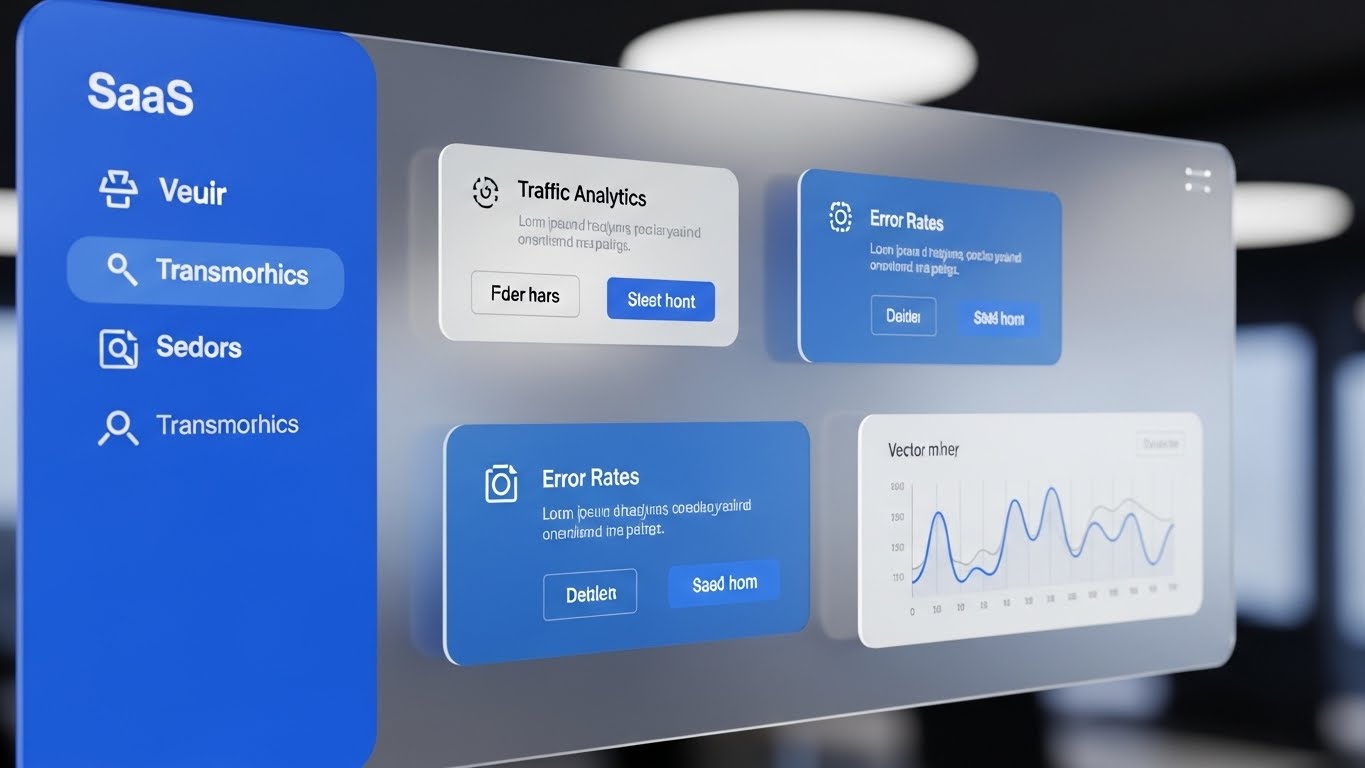
7. | Style 18: 3D Parallax UI Presentation
MOFU | Product/Solution Differentiation

(3D Parallax UI): Glassmorphic Depth + Clarifying Inventory Hierarchies
The Visual & Narrative Approach
Moving to the "Consideration" phase, this style uses Glassmorphism to showcase the user interface. Floating screens display "Inventory Sync" charts, rendered as translucent, frosted glass layers. The camera uses a shallow depth of field, focusing sharply on the frontmost data point while blurring the background layers. This parallax effect creates a sense of deep space and hierarchy, making the dashboard feel immersive rather than flat.
Psychological Impact & KPI Focus
- Perceived Value: Enterprise dashboards are often ugly and cluttered. This style uses Depth and Transparency to imply that the software is modern, clean, and easy to navigate. It reduces cognitive load by visually separating information layers.
- Operational Impact: It visualizes Data Fidelity. The "glass" look suggests transparency—that the user has a clear, unobstructed view of their inventory across all channels.
Strategic Implementation & Trade-offs
- Use Case: The "Product" page on the website. It allows the user to study the interface's logic without being overwhelmed by flat screenshots.
- Trade-off: It is a stylized representation. The actual product must have a reasonably good UI, or this video will create false expectations of the live environment.
Companies using similar video content -
WooCommerce – Humanizing the e-commerce launch journey.
PrestaShop – Relatable optimism for new merchants.
8. | Style 11: Abstract 3D AI Visualization
MOFU | Category Creation

(Abstract 3D AI Visualization): Neon Network Nodes + Visualizing Invisible Intelligence
The Visual & Narrative Approach
To visualize the "Category Creation" power of the platform, we use a high-tech abstraction. A bird's-eye view shows a vast global network of glowing Neon Blue nodes connected by Silver filaments in a deep Indigo void. The nodes pulse rhythmically, representing API endpoints firing in real-time. It looks like a digital brain or a constellation. This visualizes the "invisible" backend infrastructure that powers the mobile experience.
Psychological Impact & KPI Focus
- Authority & Scale: This appeals to the Enterprise Buyer's need for robustness. The complex, interconnected web visually proves that the system is redundant, secure, and capable of handling global traffic spikes.
- Operational Impact: It visualizes the Backend Architecture. It gives a tangible form to abstract concepts like API calls, server load balancing, and AI-driven routing.
Strategic Implementation & Trade-offs
- Use Case: LinkedIn "Thought Leadership" videos or background loops for keynote presentations on "Architecture."
- Trade-off: It is cold and impersonal. It builds authority but not emotional connection. It needs to be paired with benefit-driven copy to be effective.
Companies using similar video content -
Salesforce Commerce Cloud – Solidifying ROI claims with growth data.
Optimove – Visualizing predictive marketing impact.
9. | Style 17: Macro UI Micro-Interactions
MOFU | Feature Education & Demonstration

(Macro UI Micro-Interactions): Tactile Finger Tap + Triggering Instant Decisions
The Visual & Narrative Approach
We zoom in—extreme macro. A stylized finger hovers just above a "One-Click Checkout" button. The button is Hot Pink with a soft-touch matte silicone texture. The focus is razor-sharp on the button's edge. We see the tension and anticipation of the finger about to press. This style fetishizes the "micro-interaction," elevating a simple click into a decisive, satisfying event.
Psychological Impact & KPI Focus
- Haptic Anticipation: This triggers Sensory Desire. By simulating the texture and the physical act of pressing, we make the action of paying feel satisfying and inevitable. It taps into the dopamine loop of task completion.
- Operational Impact: It visualizes Conversion Speed. It isolates the most critical moment in commerce—the checkout—and positions it as the hero feature of the platform.
Strategic Implementation & Trade-offs
- Use Case: Feature highlight sections on landing pages (e.g., "See how fast it is").
- Trade-off: It creates tunnel vision. It sells the specific interaction effectively but doesn't show the broader context of the app or user journey.
Companies using similar video content -
Stripe – Softening transaction friction for payments.
ReCharge – Seamless subscription checkout experiences.
1.0 | Style 6: Dynamic Data Visualization
TOFU | Brand Awareness

(Dynamic Data Visualization): Isometric Growth Engines + Solidifying ROI Claims
The Visual & Narrative Approach
Here, data is given physical weight. Isometric bar graphs rise from a clean white floor like metallic pistons (Emerald Green). They don't just appear; they grow with mechanical certainty. Floating percentage signs and trend lines hover above. The aesthetic is clean, clinical, and substantial. The motion suggests that the platform is not just reporting numbers, but actively driving them upward like an engine.
Psychological Impact & KPI Focus
- Logical Validation: This appeals to the CFO Mindset. It rejects "vanity metrics" in favor of solid, structural growth. The "piston" motion suggests the platform is an engine that actively manufactures revenue.
- Operational Impact: It visualizes ROI. It makes the intangible promise of "Revenue Lift" feel concrete, measurable, and scientifically undeniable.
Strategic Implementation & Trade-offs
- Use Case: Email marketing to decision-makers or "Results" slides in sales decks.
- Trade-off: Can be boring if not animated with dynamic easing. It is purely rational, lacking the emotional hooks of the lifestyle or organic styles.
Companies using similar video content -
Twilio Segment – Structuring fragmented customer data.
Tealium – Unifying omnichannel customer data.
11. | Style 27: Split Screen: Optimized Reality and UI
MOFU | ABM Awareness
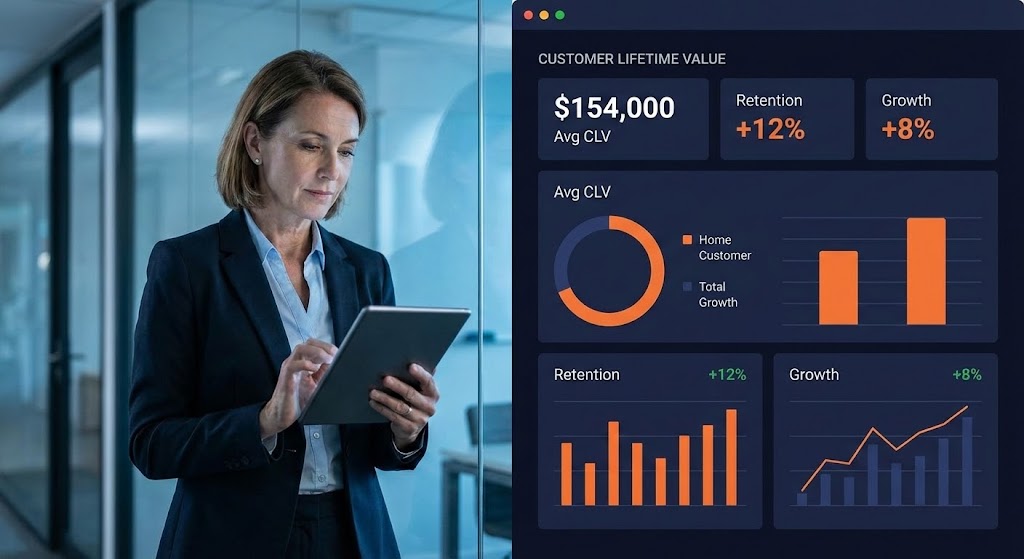
(Split Screen Reality): Executive Focus + Visualizing Lifetime Value
The Visual & Narrative Approach
This style bridges the gap between human leadership and digital intelligence. Utilizing a split-screen composition, we create a direct correlation between strategic oversight and data visibility. The left half captures a C-level executive in a flow state, working on a tablet in a modern glass-walled office. The right half mirrors this focus with a crisp, high-contrast abstract dashboard UI in Navy and Orange, highlighting "Customer Lifetime Value" (CLV) and "Retention" metrics. The lighting is matched across the divide—cool office tones bleeding into the UI’s palette—suggesting the software is a natural extension of the executive's vision.
Psychological Impact & KPI Focus
- Mirroring Effect: For Account-Based Marketing (ABM), abstract tech is often disconnected from the buyer's reality. This style uses Mirror Neurons to help the target persona (VP/CXO) see themselves in the driver's seat. It humanizes the data.
- Operational Impact: It visualizes Strategic Alignment. It moves beyond tactical metrics (clicks) to strategic intelligence (growth, retention), demonstrating that the platform provides the high-level visibility required for boardroom decisions.
Strategic Implementation & Trade-offs
- Use Case: Highly effective for Display Ads targeting specific job titles on LinkedIn (e.g., "VP of Growth"), where personal relevance drives engagement.
- Trade-off: It relies heavily on the authenticity of the stock photography. If the human element feels staged or generic, it undermines the sophistication of the UI.
Companies using similar video content -
OpenCart – Geometric safety for proactive support.
Solidus – Visualizing structured open-source help.
12. | Style 1: Minimalist Flat 2D Vector
MOFU | Demand Gen & Lead Capture

(Minimalist Flat Vector): Geometric Alchemy + Streamlining Lead Conversion
The Visual & Narrative Approach
Sometimes, clarity is the ultimate disruptor. This style strips away all texture and noise, relying on thick geometric strokes and pure color contrast to visualize process efficiency. A Yellow funnel on a Primary Blue background acts as the central machine. We watch a satisfying, looped animation where undefined "white spheres" (leads) roll in and are mechanically processed into "gold cubes" (revenue). There are no gradients, no shadows—just the pure, unadulterated logic of input and output.
Psychological Impact & KPI Focus
- Cognitive Ease: In a complex marketing stack, simplicity signals competence. By using Visual Reductionism, we communicate that the platform makes the messy process of lead conversion simple, predictable, and automatic.
- Operational Impact: It visualizes Process Optimization. It strips the commerce engine down to its core function: turning traffic into treasure, validating the "Lead Capture" value prop without needing complex charts.
Strategic Implementation & Trade-offs
- Use Case: High-frequency Retargeting Ads on Facebook/Instagram. The bright, solid colors and simple shapes stand out effectively against photographic user feeds.
- Trade-off: It is symbolic, not literal. It cannot convey specific interface details or deep technical features, so it serves best as a high-level conceptual hook.
Companies using similar video content -
NetSuite – Demystifying supply chain logistics.
Logisfashion – Visualizing end-to-end fulfillment clarity.
Deliverr – Streamlining e-commerce fulfillment operations.
13. | Style 2: 2D Line Art Animation
MOFU | LinkedIn Video Ads
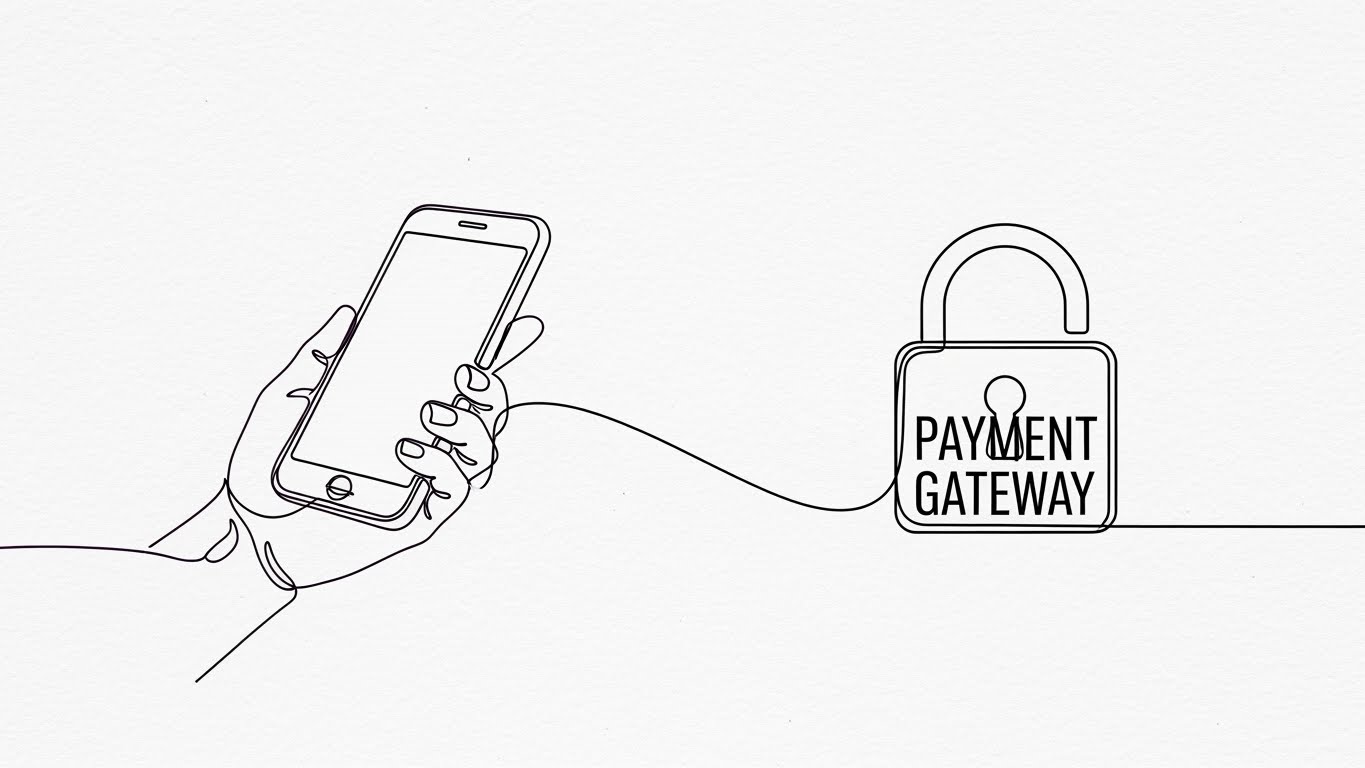
(2D Line Art): Continuous Flow + Securing the Transaction
The Visual & Narrative Approach
Elegance implies ease. This style uses a single, continuous Black ink line on a textured White paper background to tell a story of seamless integration. The line flows organically, drawing a hand holding a mobile phone, then traveling outward to loop into a secure padlock symbol representing a "Payment Gateway." The motion is fluid and unbroken, visually reinforcing the concept of "uninterrupted flow." It feels sophisticated, bespoke, and distinctly human, avoiding the aggressive "tech" aesthetic of competitors.
Psychological Impact & KPI Focus
- Trust & Sophistication: The "hand-drawn" quality appeals to a premium B2B aesthetic. It utilizes Fluid Dynamics to suggest that integrating this payment gateway is not a jarring, complex process, but a smooth, natural evolution of the current stack.
- Operational Impact: It visualizes Seamless Integration. The continuous line literally connects the user (phone) to the security (padlock), proving the connection is robust yet invisible to the end consumer.
Strategic Implementation & Trade-offs
- Use Case: LinkedIn Video Ads targeting technical decision-makers who appreciate "clean" solutions. The white background blends perfectly with the LinkedIn feed interface.
- Trade-off: It is quiet. It lacks the "shout" of bold colors, so it relies on intriguing motion to hold attention. It is not suitable for high-energy hype reels.
Companies using similar video content -
commercetools – Visualizing invisible MACH architecture intelligence.
Elastic Path – Powering headless commerce innovation.
14. | Style 26: Wireframe to Reality Transition
MOFU | Competitive Comparison
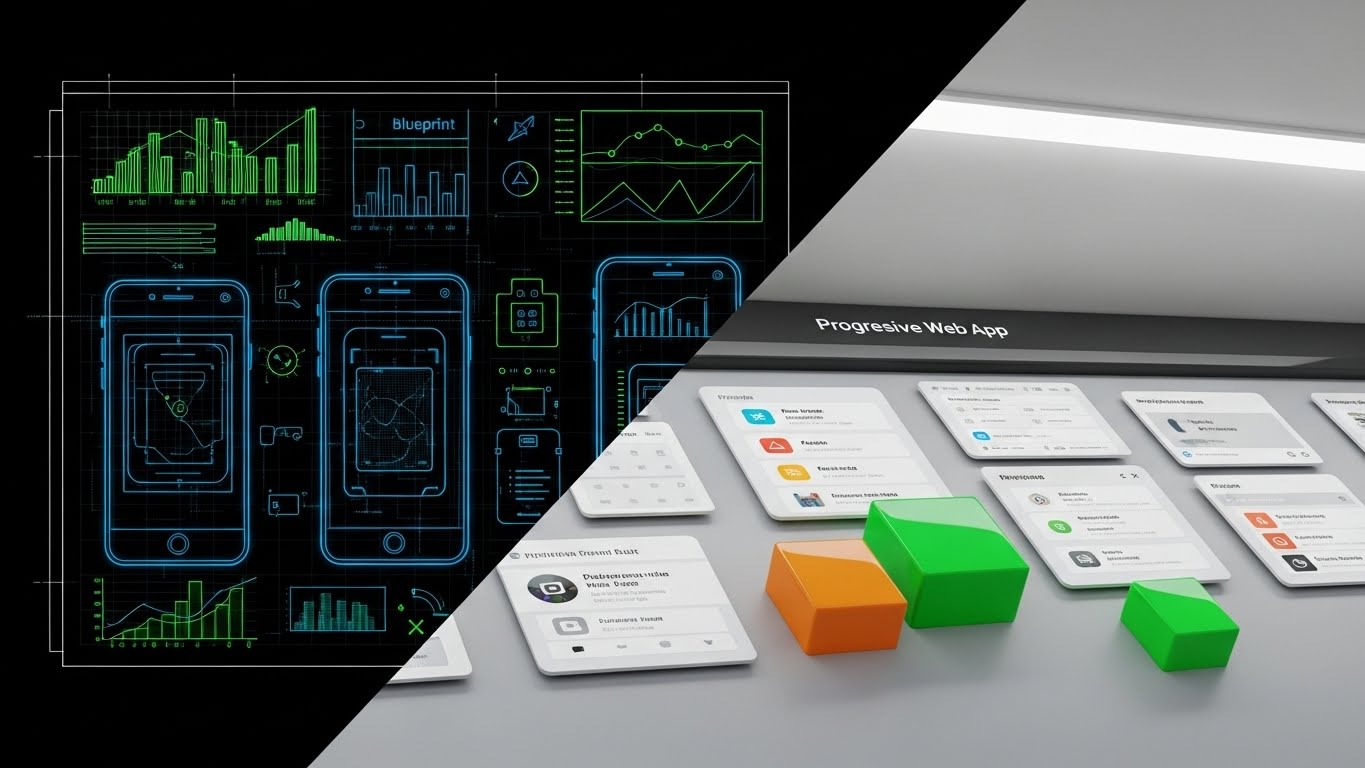
(Wireframe to Reality): Blueprint Realization + Accelerating Time-to-Market
The Visual & Narrative Approach
This visualization validates the engineering rigor behind the frontend beauty. We use a split-screen wiper effect to tell a "Before and After" story. The left side reveals the "skeleton"—a technical Blueprint Blue wireframe showing the grid structure of a mobile app. As the wiper moves, it unveils the right side: the fully rendered, glossy "Progressive Web App" interface in realistic colors. This visual metaphor represents turning complex code into a polished product instantly.
Psychological Impact & KPI Focus
- Engineering Validation: Developers and CTOs are skeptical of "vaporware." This style uses Structural Transparency to prove that the pretty interface is backed by a logical, well-architected framework.
- Operational Impact: It visualizes Development Velocity. It signifies the rapid transition from "concept" (wireframe) to "market-ready" (UI), addressing the pain point of long development cycles.
Strategic Implementation & Trade-offs
- Use Case: The "Technology" or "How it Works" section of the website. It creates a "lightbulb moment" for stakeholders comparing your tool against building it from scratch.
- Trade-off: Requires a faithful 1:1 match between the wireframe and the UI. If they don't align perfectly during the transition, the effect creates visual friction.
Companies using similar video content -
BigCommerce – Materializing digital returns and wealth.
SAP Commerce Cloud – Tangible profitability visualization.
15. | Style 12: Photorealistic 3D Renders
BOFU | ROI Justification

(Photorealistic 3D): Tangible Wealth + Materializing Digital Returns
The Visual & Narrative Approach
At the Bottom of the Funnel, abstract promises must become concrete gains. This style abandons abstraction for hyper-realism. In a cinematic studio setting, stacks of realistic Gold coins are arranged to mimic the shape of a rising bar graph. Glowing metallic data streams intertwine with the currency, suggesting that data is the binding agent of wealth. The lighting is rich and dramatic, highlighting the texture of the gold against a dark, premium background. It is a literal visualization of "Return on Investment."
Psychological Impact & KPI Focus
- Material Desire: This triggers the primal association between Visual Weight and value. By giving data the physical properties of gold, we subconsciously verify the financial worth of the software investment.
- Operational Impact: It visualizes Profitability. It moves the conversation from "cost center" (paying for software) to "profit generator" (revenue growth), essential for final CFO sign-off.
Strategic Implementation & Trade-offs
- Use Case: The "Pricing" or "ROI" slide in a Sales Deck. It creates a subconscious anchor of high value just before the price is revealed.
- Trade-off: It can appear heavy-handed or "cheesy" if the rendering quality isn't top-tier. It must look like high-end financial photography, not a clip-art render.
Companies using similar video content -
Sana Commerce Cloud – Anchoring technical trust in ERP integration.
Intershop – Backend solidity for enterprise commerce.
16. | Style 16: Dark Mode UI Showcase
BOFU | The Technical Buyer
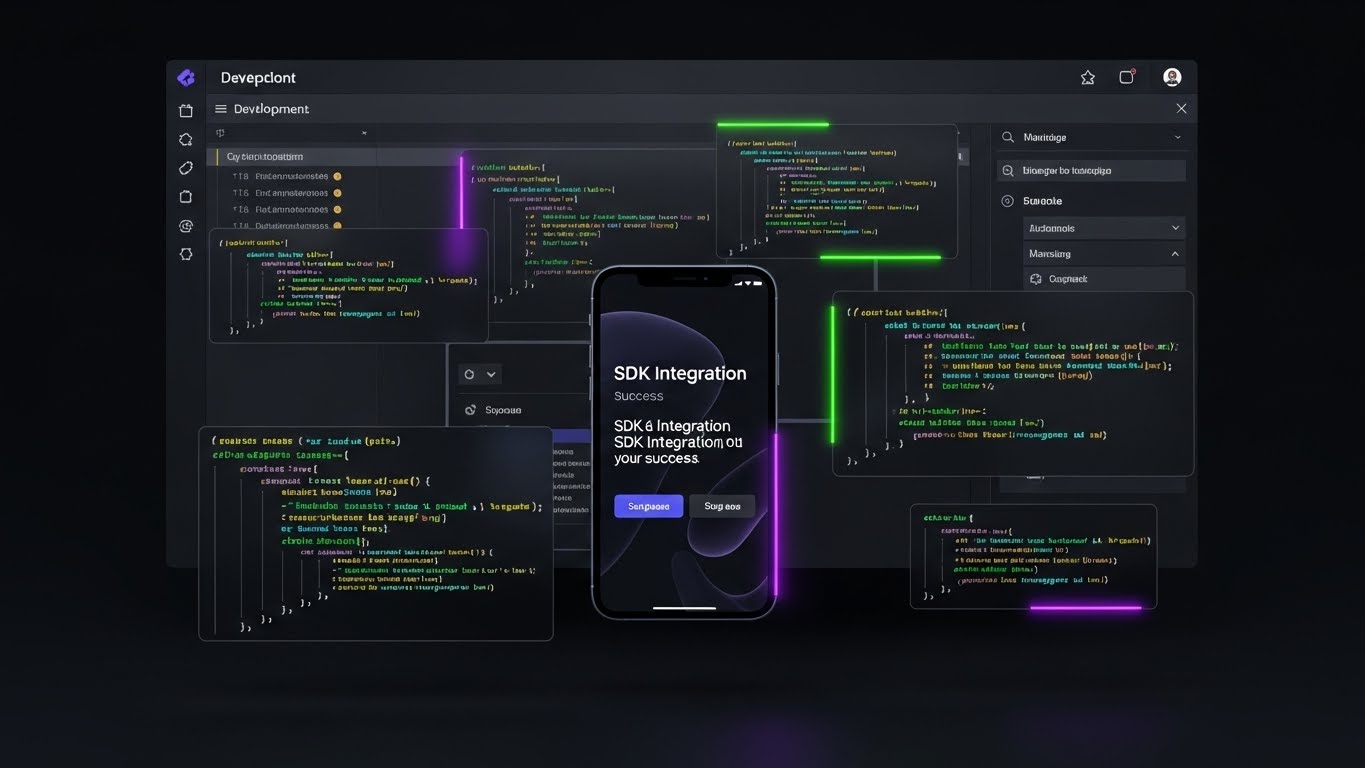
(Dark Mode UI): Cyberpunk Syntax + Validating Developer Experience
The Visual & Narrative Approach
To win the technical buyer, we must enter their habitat. This style uses a "Cyberpunk Lite" aesthetic, featuring a matte black Integrated Development Environment (IDE). Glowing syntax-highlighted code snippets in Neon Green and Purple float in 3D space alongside a dark-themed mobile simulator displaying "SDK Integration Success" messages. It eschews marketing fluff for the raw beauty of clean code and successful compile status.
Psychological Impact & KPI Focus
- Tribal Signaling: Developers prefer Dark Mode. Using this aesthetic signals Cultural Fluency—it says, "We built this for you, not just for the marketing team." It builds immediate rapport with the engineering lead.
- Operational Impact: It visualizes Ease of Implementation. By highlighting the "Success" message and clean syntax, it promises a painless integration process (low technical debt).
Strategic Implementation & Trade-offs
- Use Case: Developer Documentation portal or the "For Developers" landing page.
- Trade-off: It alienates non-technical buyers who may find the code intimidating or "too techy." It must be segmented strictly for the technical audience.
Companies using similar video content -
Shift4Shop – Mitigating security risks with transparent architecture.
Authorize.net – Visualizing robust payment encryption.
17. | Style 24: Holographic UI over 3D Render
BOFU | Competitive Displacement

(Holographic UI): Augmented Overlay + Projecting Future Capabilities
The Visual & Narrative Approach
To displace competitors, you must look like the future. This style features a realistic mobile device lying on a dark surface, illuminated by a single spotlight. Hovering above the screen is a complex, Cyan holographic projection of a shoe, representing "Augmented Reality" shopping features. The hologram utilizes scan lines and interference patterns to feel authentic and high-tech. It visually asserts that your platform enables experiences that standard 2D catalogs cannot match.
Psychological Impact & KPI Focus
- Innovation Ambition: This leverages the Cool Factor to make the competitor's static catalog look obsolete. It taps into the fear of being left behind (FOMO) regarding emerging tech like AR and VR commerce.
- Operational Impact: It visualizes Product Innovation. It demonstrates the platform's readiness for next-gen merchandising, proving future-proof capabilities.
Strategic Implementation & Trade-offs
- Use Case: A "Feature Deep Dive" video on YouTube, specifically targeting keywords like "AR commerce tools."
- Trade-off: It promises a very specific, high-tech feature. If the core product is just a basic cart tool, this visual overpromises and risks disappointment.
Companies using similar video content -
Wix eCommerce – Accelerating online store setup velocity.
Squarespace Commerce – Pristine minimalism for quick onboarding.
18. | Style 21: Aspirational Stock Montage
BOFU | Building Trust & Credibility

(Aspirational Stock): Team Celebration + Humanizing Digital Wins
The Visual & Narrative Approach
Technology ultimately serves people. This style pivots to the human outcome. We use a candid, high-quality stock photo of a diverse team in a sunlit, glass-walled office. They are gathered around a monitor, celebrating a win. A subtle, non-intrusive graphical overlay shows an upward trending green arrow representing a "Conversion Rate Win." The lighting is warm (Sunlight/Earth tones), contrasting sharply with the cold blues of the software interface.
Psychological Impact & KPI Focus
- Social Proof & Relief: The purchase decision is stressful. This visual provides Emotional Reassurance. It subconsciously tells the buyer, "This software will make you a hero to your team." It sells the feeling of success.
- Operational Impact: It visualizes Team Alignment. It suggests that the data provided by the tool is accessible and actionable enough to rally a team around, breaking down silos.
Strategic Implementation & Trade-offs
- Use Case: "Success Stories" or "Case Studies" section of the website. It humanizes the dry statistics of a case study.
- Trade-off: It can easily veer into generic "corporate stock photo" territory. The specificity of the overlay—tying the celebration to a specific metric—is critical to grounding it.
Companies using similar video content -
commercetools – Validating developer experience with API-first UI.
Elastic Path – Showcasing headless architecture for engineers.
19. | Style 14: 3D X-Ray Visualization
BOFU | Risk Mitigation

(3D X-Ray): Transparent Architecture + Mitigating Security Risks
The Visual & Narrative Approach
Security is invisible, which makes it hard to sell. This style makes it visible through "X-Ray" vision. We see a smartphone with a transparent glass casing. Inside, amidst the components, resides a glowing, solid padlock mechanism in "X-Ray Blue" and "Skeleton White." This represents "Data Encryption" at the hardware level. The sterile, clean-room grey background emphasizes clinical precision and hygiene. It says: "We have nothing to hide; look how robust our core is."
Psychological Impact & KPI Focus
- Risk Reduction: Security breaches are a nightmare scenario. This style uses Visual Transparency to build trust. By "showing" the internal lock, we make the abstract concept of encryption feel like a physical barrier.
- Operational Impact: It visualizes Data Integrity. It reassures the stakeholder that security is not a wrapper, but an integral component of the architecture, crucial for compliance (GDPR/CCPA).
Strategic Implementation & Trade-offs
- Use Case: The cover or key visuals of a technical Whitepaper on "Security Standards."
- Trade-off: It is clinical and cold. It is excellent for reassuring a CISO (Chief Information Security Officer) but lacks the emotional hook for a marketing director.
Companies using similar video content -
FastSpring – Streamlining digital product checkout.
Shift4Shop – Triggering instant one-click decisions.
20. | Style 19: Rapid UI Feature Montage
BOFU | Driving Demo Requests
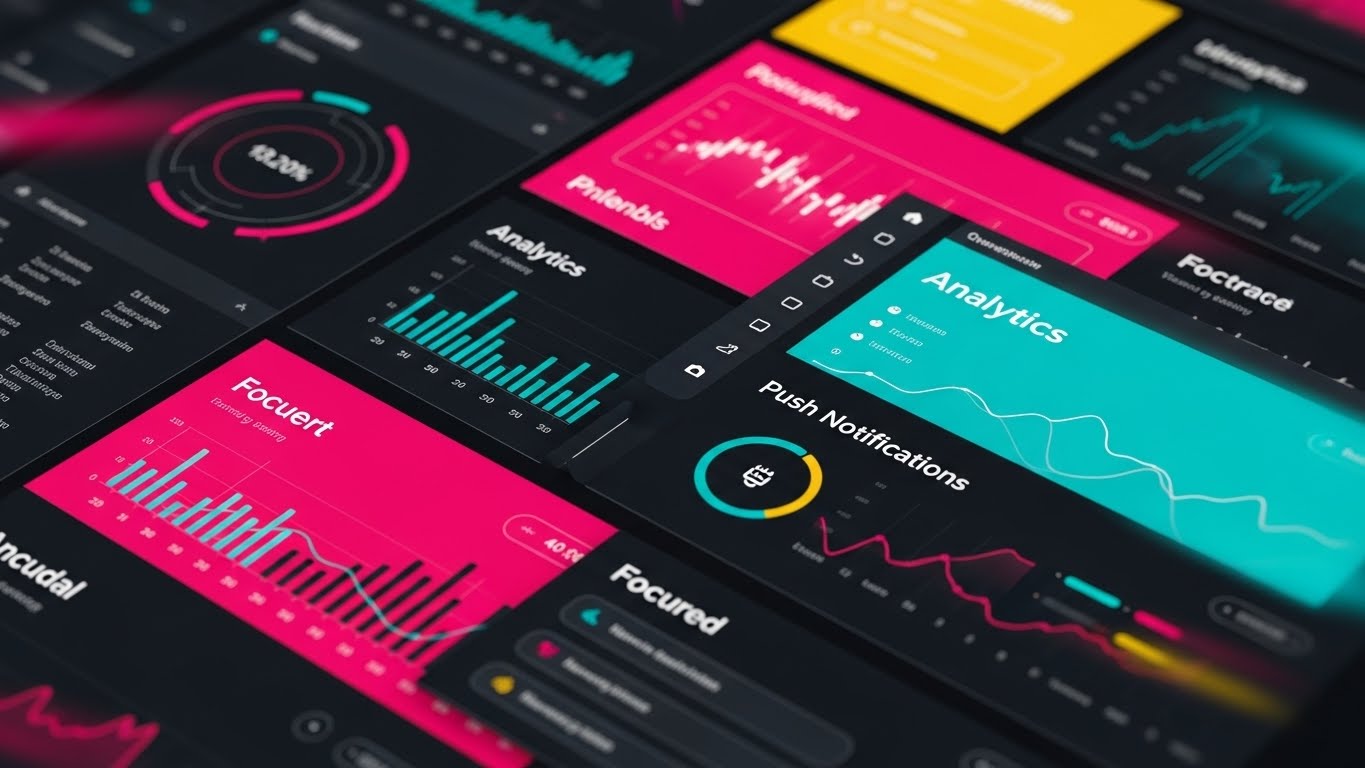
(Rapid UI Montage): Kinetic Density + Overwhelming with Value
The Visual & Narrative Approach
The final push requires a demonstration of sheer volume. This style uses a "Diagonal Slice" composition to layer multiple UI screens together—Analytics, Push Notifications, Inventory, User Profiles. Motion blur is applied to the edges, suggesting these screens are flying past. The palette is a vibrant spectrum of UI colors. It conveys the message that the platform is a "Complete Suite," packed with more features than the user can even imagine, moving at the speed of business.
Psychological Impact & KPI Focus
- Perceived Value: The "Thud Factor"—the idea that a proposal is good if it sounds heavy when dropped. This visual creates a Digital Thud. It overwhelms the viewer with the quantity of features, triggering a fear of missing out (FOMO) if they choose a "lighter" tool.
- Operational Impact: It visualizes Comprehensiveness. It argues against "point solutions" (buying separate tools) by showing that this single platform covers the entire operational spectrum.
Strategic Implementation & Trade-offs
- Use Case: The footer of a Nurture Email sequence. The Call to Action is "See all features – Request a Demo."
- Trade-off: It is cluttered by design. It is not for education; it is for impression. Do not expect the user to read the data on the screens—just to feel the weight of them.
Companies using similar video content -
Adobe Commerce – Clarifying complex inventory hierarchies.
VTEX – Immersive digital commerce platform UI.
21. | Style 15: Clean UI Workflow (Light Mode)
Onboarding | Self-Serve Onboarding
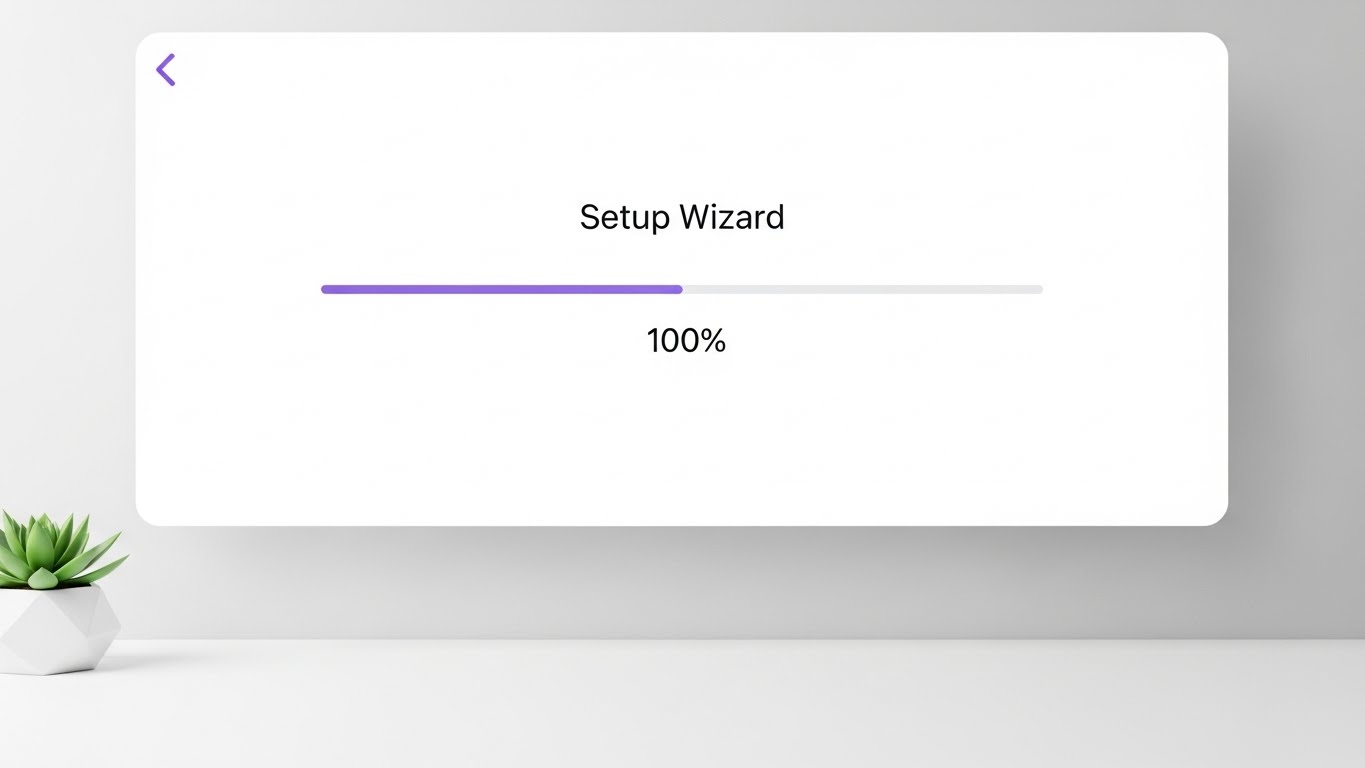
(Clean UI Workflow): Pristine Minimalism + Accelerating Setup Velocity
The Visual & Narrative Approach
The moment after sign-up is fragile. The user is asking, "Did I make the right choice?" This style answers with radical simplicity. We present a pristine, high-key UI composition featuring a "Setup Wizard" progress bar hitting 100%. The aesthetic is intentionally calming: Soft Lilac accents, rounded corners, and very soft diffused shadows on a pure white background. A minimalist white desk surface with a small green succulent plant grounds the digital interface in a calm, organized physical workspace. It visually signals that the hard work is done.
Psychological Impact & KPI Focus
- Cognitive Unloading: New users are often overwhelmed by complex dashboards. This style uses Visual Reductionism (removing all non-essential elements) to focus the user solely on the progress bar. It leverages the "Goal Gradient Effect"—showing the finish line to encourage completion.
- Operational Impact: It visualizes Time-to-Value. By making the setup look simple, linear, and automated, it reduces the psychological barrier to starting configuration, directly improving the "Activation Rate" KPI.
Strategic Implementation & Trade-offs
- Use Case: The "Welcome" email or the very first screen of the in-app onboarding flow.
- Trade-off: It is aspirational. If your actual product onboarding is clunky or requires code, this clean visual will create a "Expectation vs. Reality" gap that damages trust.
Companies using similar video content -
Oracle Commerce Cloud – Overwhelming with comprehensive platform value.
Microsoft Dynamics 365 Commerce – Kinetic density of integrated features.
22. | Style 5: 2D Character-Driven Story
Onboarding | Accelerating Time-to-Value

(2D Character Narrative): Relatable Optimism + Humanizing the Launch
The Visual & Narrative Approach
SaaS adoption is an emotional journey. This style introduces a protagonist—a stylized 2D vector character representing the Merchant—to walk that journey with the user. We see the character smiling and high-fiving a stylized rocket ship labeled "LAUNCH." The background explodes with abstract geometric shapes in Orange and Teal, signifying forward momentum. The art style is modern and flat, avoiding generic corporate tropes in favor of a distinct, energetic brand personality.
Psychological Impact & KPI Focus
- Emotional Validation: Launching a mobile store is stressful. This visual leverages Mirror Neurons to validate the user's ambition. It reframes the technical act of "deployment" as a celebratory life event, fostering a sense of partnership.
- Operational Impact: It visualizes Milestone Achievement. It gamifies the onboarding process, treating the "Launch" button as a victory. This positive reinforcement encourages users to push through the final, difficult steps of setup.
Strategic Implementation & Trade-offs
- Use Case: "Getting Started" video intros or a "Congratulations" modal that appears after the first product is uploaded.
- Trade-off: Character design is subjective. If the style feels too juvenile, it may undermine the perceived enterprise robustness of the tool. It requires a balance of whimsy and professionalism.
Companies using similar video content -
Dynamic Yield – Contextual commerce for upsell recommendations.
Bloomreach – Monetizing moments with AI personalization.
23. | Style 10: Isometric 3D Workflow
Onboarding | Trial/Freemium User Activation
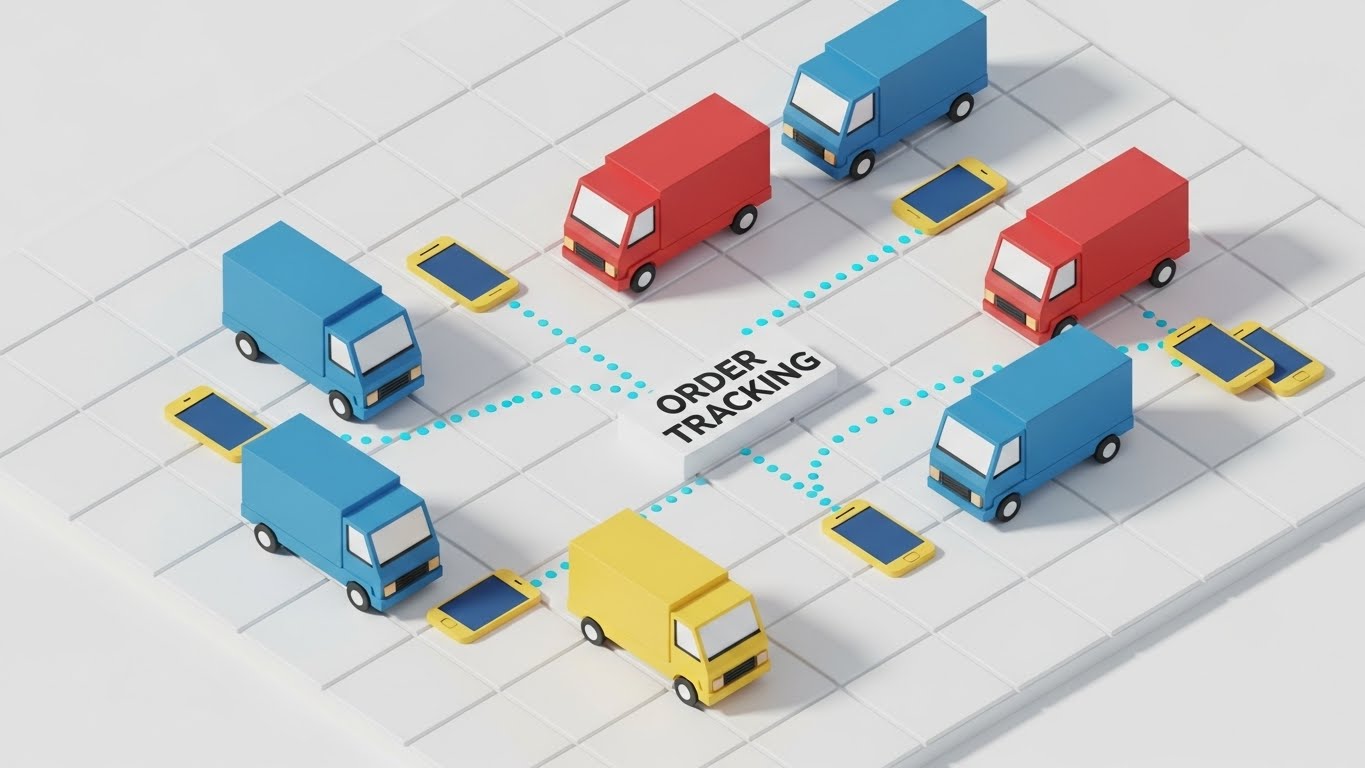
(Isometric 3D Micro-World): Logistic Clarity + Demystifying the Supply Chain
The Visual & Narrative Approach
To explain how the digital app controls physical logistics, we shrink the world. This style uses a "Claymation-style" isometric render to create a charming, manageable micro-world. Miniature delivery trucks (Red, Blue, Yellow) and mobile phones are arranged on a clean white grid, connected by dotted data lines representing "Order Tracking." It looks like a high-end strategy game. This simplifies the complex web of API calls, inventory tracking, and shipping updates into a single, cohesive ecosystem.
Psychological Impact & KPI Focus
- System Mastery: Logistics managers fear losing control of inventory. This style gives them a God’s Eye View, making the chaotic supply chain feel contained and organized. It builds confidence in the system's logic.
- Operational Impact: It visualizes End-to-End Visibility. It demonstrates that the platform connects the digital order (phone) to the physical delivery (truck), validating the tool's role as the central nervous system of the business.
Strategic Implementation & Trade-offs
- Use Case: Activation emails for Freemium users, specifically explaining "How Shipping Integrations Work."
- Trade-off: It is an abstraction. It effectively explains the concept of tracking but cannot capture the gritty details of exception handling (e.g., lost packages).
Companies using similar video content -
Shopify Plus – Humanizing digital wins and team success.
Salesforce Commerce Cloud – Celebrating customer success stories.
24. | Style 13: Futuristic Neon/Dark Mode
Retention | Reducing Implementation Friction

(Futuristic Neon Infrastructure): Backend Solidity + Anchoring Technical Trust
The Visual & Narrative Approach
For the technical buyer, retention depends on reliability. This style visualizes the "Engine Room." We look up at towering server racks in a virtual city at night. They glow with Neon Cyan and Magenta tubes against a deep black void, reflecting off a polished floor. The aesthetic is "Tron-like"—powerful, silent, and humming with energy. It visualizes the invisible, robust backend infrastructure that keeps the merchant's store running during traffic spikes.
Psychological Impact & KPI Focus
- Security & Power: This appeals to the CTO Mindset. The dark mode and neon aesthetics signal high-performance computing and modern architecture. It reassures the client that their data is housed in a digital fortress.
- Operational Impact: It visualizes Scalability. It gives a tangible form to the abstract promise of "99.99% Uptime," reinforcing trust during contract renewal discussions.
Strategic Implementation & Trade-offs
- Use Case: Background visuals for "System Status" pages, API documentation headers, or whitepapers on "Infrastructure Security."
- Trade-off: It is cold and impersonal. It speaks to the machine, not the human. Use strictly for technical topics to avoid alienating non-technical users.
Companies using similar video content -
Dynamic Yield – Tracking real-time customer intent.
Insider – Personalizing experiences with live data.
25. | Style 3: Isometric 2D Motion Design
Retention | Driving Deep Feature Adoption

(Isometric 2D Logic): Segmented Order + Automating Customer Data
The Visual & Narrative Approach
Advanced features like "Segmentation" are hard to explain with text. This style uses a diagrammatic approach. On a technical blueprint grid, we see clusters of colored dots (representing users) being mechanically sorted into different groups by stylized 2D arms. The palette is professional Corporate Blue and Cool Grey. It strips away the UI to show the logic of the algorithm: Input → Sort → Output.
Psychological Impact & KPI Focus
- Process Confidence: Merchants fear that automation will "mess up" their customer lists. This precise, diagrammatic style uses Mechanical Determinism to show that the sorting is logical, predictable, and safe.
- Operational Impact: It visualizes Marketing Automation. It shows exactly how the tool takes a messy audience list and organizes it into actionable cohorts, driving the adoption of advanced CRM features.
Strategic Implementation & Trade-offs
- Use Case: Feature announcement emails for complex upgrades (e.g., "New Smart Segments").
- Trade-off: It is dry. It prioritizes clarity over emotion. It works best for an educated audience that already understands the value of segmentation.
Companies using similar video content -
Sharpei – Kinetic social proof for flexible payments.
Loadstone – Amplifying advocacy for loyalty management.
26. | Style 9: Low-Poly 3D Modeling
Retention | Proactive Support/Announcements

(Low-Poly Support): Geometric Safety + Visualizing Proactive Help
The Visual & Narrative Approach
Support doesn't have to be boring. This style uses "Low-Poly" art—objects made of visible geometric facets—to visualize the concept of safety. A White and Orange lifebuoy floats in a solid Pastel Blue void. The hard, directional lighting casts sharp shadows, highlighting the faceted construction. It transforms a cliché symbol (the lifebuoy) into a modern piece of digital art, suggesting that "Support" is a designed feature, not an afterthought.
Psychological Impact & KPI Focus
- Approachability: Traditional support stock photos (headsets) are ignored. This style uses Aesthetic Novelty to grab attention while signaling safety. The "Low-Poly" look suggests that the support system is structured, modern, and sturdy.
- Operational Impact: It visualizes Resource Availability. It frames help resources as tangible tools floating nearby, always ready to be grabbed, encouraging users to use self-help docs before logging a ticket.
Strategic Implementation & Trade-offs
- Use Case: Social media posts announcing new Help Center articles, support hours, or status updates.
- Trade-off: The "faceted" look is a specific artistic choice. It needs to align with the brand's broader design language or it will look out of place.
Companies using similar video content -
Adobe Commerce – Projecting future AR commerce capabilities.
VTEX – Augmented reality shopping features.
27. | Style 25: 2D Animation & UI Composition
Retention | Reducing Churn

(2D Animation Safety Net): Fluid Intervention + Intercepting Churn
The Visual & Narrative Approach
Churn is the silent killer. This style visualizes the "Save." A 2D cel-shaded character (the Merchant) is depicted actively weaving a "safety net" made of glowing data lines. They catch a falling "User Icon" (a sad face turning happy). Floating UI elements labeled "Churn Reduction" interact with the character. The background is a fluid Yellow and Black gradient (caution/action colors). It visualizes the active intervention of the software.
Psychological Impact & KPI Focus
- Agency & Control: Users churn when they feel helpless. This visual triggers Loss Aversion but empowers the user. It demonstrates that the platform is not passive; it gives the merchant a tool (the net) to actively catch at-risk revenue.
- Operational Impact: It visualizes Retention ROI. It metaphorically explains features like "Win-back Campaigns" or "Exit Intent Popups" as safety mechanisms, driving the adoption of premium retention tools.
Strategic Implementation & Trade-offs
- Use Case: Win-back emails or upgrade prompts for merchants with high customer churn rates.
- Trade-off: It frames the conversation around "falling" (failure). It must be paired with positive copy: "We catch them so you don't have to."
Companies using similar video content -
Ordergroove – Fluid intervention for subscription churn.
sticky.io – Intercepting churn with loyalty programs.
28. | Style 20: Lifestyle Stock with UI Overlay
Expansion | Driving Upsell/Cross-sell
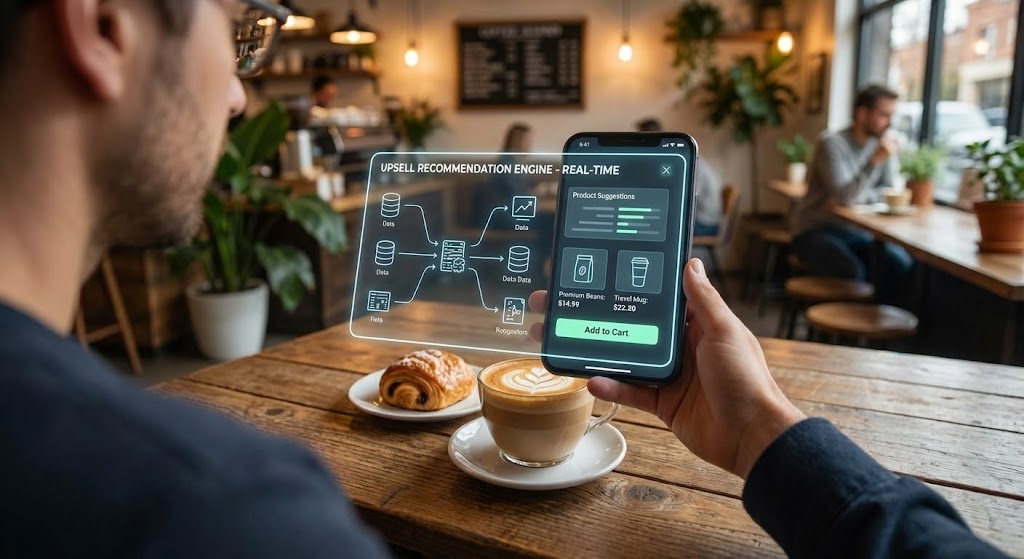
(Lifestyle Augmented Reality): Contextual Commerce + Monetizing the Moment
The Visual & Narrative Approach
To sell "Expansion," we must show the end result in the real world. We use an over-the-shoulder POV shot in a cozy coffee shop. A user holds a smartphone displaying the client's app. Hovering over the phone is a crisp, glowing "Upsell Recommendation Engine" UI overlay, showing data paths connecting products (e.g., "Coffee Bean" → "Travel Mug"). It blends the warmth of the physical experience with the cold precision of the upsell algorithm.
Psychological Impact & KPI Focus
- Aspirational Freedom: This appeals to the "Laptop Lifestyle" dream. It suggests that with this software, the merchant can manage complex revenue engines (upsells) while enjoying a coffee. It removes the chain to the office desk.
- Operational Impact: It visualizes Automated Intelligence. It demonstrates that the platform understands context, delivering the right offer at the right time without manual intervention.
Strategic Implementation & Trade-offs
- Use Case: Landing pages for "Mobile App" features or "Merchant Success" stories.
- Trade-off: The UI overlay must be readable. If the background is too busy or the text too small, the message of "intelligence" is lost.
Companies using similar video content -
Vendure – Accelerating custom commerce time-to-market.
SpreeCommerce – Blueprint realization for open-source platforms.
29. | Style 23: 2D Graphics Over Live Action
Expansion | Driving Referrals & Advocacy
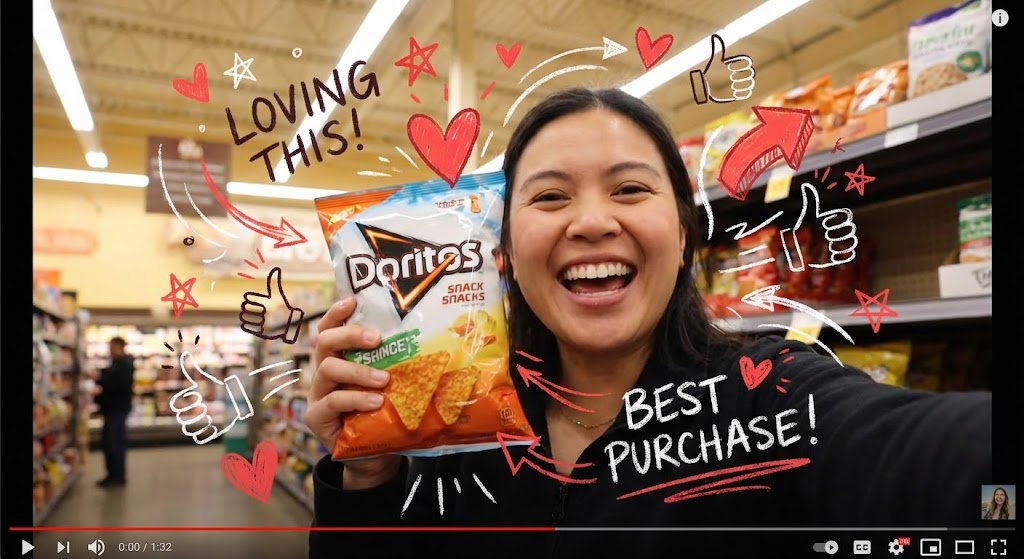
(Mixed Media Doodles): Kinetic Social Proof + Amplifying Advocacy
The Visual & Narrative Approach
Referrals are born from excitement. This style captures raw enthusiasm. We use a handheld, selfie-style video of a happy customer in a retail aisle holding a product. Overlaid on the footage are hand-drawn 2D doodles in High-Energy Red and White—exploding hearts, stars, arrows, and "Thumbs Up" icons. The style mixes the authenticity of User Generated Content (UGC) with the branding power of motion graphics.
Psychological Impact & KPI Focus
- Social Validation: B2B buyers are influenced by B2C trends. This style leverages Bandwagon Psychology. The "doodle" aesthetic mimics popular social media trends, signaling that the brand is current, loved, and shareable.
- Operational Impact: It visualizes Virality. It shows the merchant what their customers could be doing—generating buzz—if they use the platform's referral and loyalty tools.
Strategic Implementation & Trade-offs
- Use Case: Instagram Reels or TikTok ads promoting the "Loyalty Program" feature set.
- Trade-off: It looks informal. It is excellent for B2C-facing features but may feel too "Gen Z" for a serious B2B financial integration announcement.
Companies using similar video content -
Adobe Commerce – Executive focus on strategic growth.
Bloomreach – Humanizing customer data insights.
30. | Style 30: Realistic Character Video
Expansion | Knowledge Base & FAQ Videos
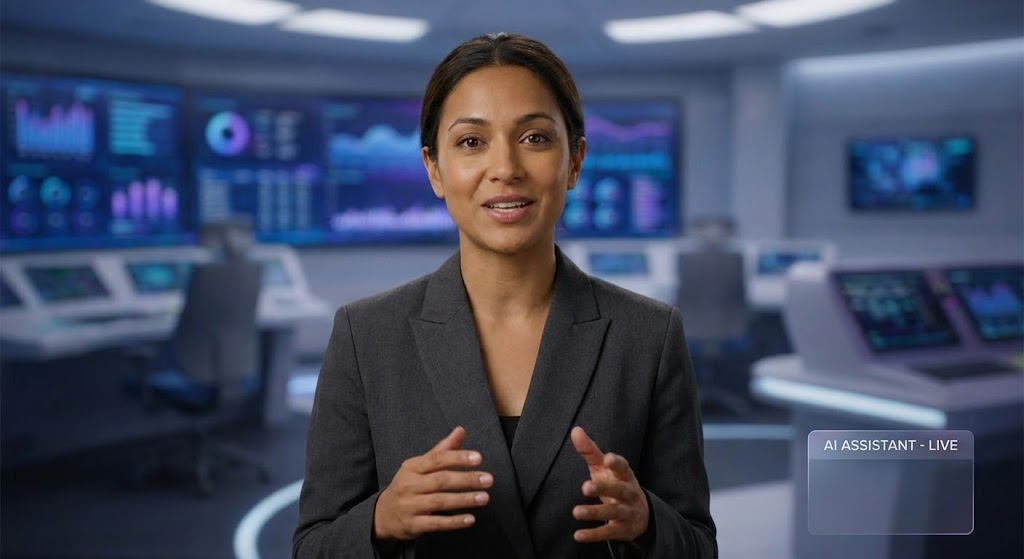
(AI Professional Avatar): Scalable Empathy + Future-Proofing Support
The Visual & Narrative Approach
The future of support is scalable humanity. This style features a highly photorealistic AI agent. She has warm skin tones, professional Grey attire, and speaks directly to the camera in a blurred, high-tech newsroom setting. She uses friendly hand gestures to explain a complex API concept. This is not a cartoon; it is a "Digital Human" designed to deliver consistent, high-quality training at scale without the cost of a film crew.
Psychological Impact & KPI Focus
- Competence & Consistency: Humans vary; AI is consistent. This style triggers Trust in Consistency. The professional demeanor and perfect delivery suggest that the platform's knowledge base is current, accurate, and always available.
- Operational Impact: It visualizes Knowledge Accessibility. It transforms static text FAQs into engaging video content, reducing the cognitive load for users trying to learn complex features.
Strategic Implementation & Trade-offs
- Use Case: Embedded video tutorials inside the dashboard or the "Help" widget.
- Trade-off: The "Uncanny Valley." The lip-sync and eye movement must be perfect (using top-tier AI generators) to avoid looking like a "deepfake" and alienating the user.
Strategic Knowledge Base: The Visual Operations Doctrine
To bridge the gap between "aesthetic" and "revenue," we must move beyond treating video as marketing content. It is operational infrastructure. This section synthesizes the 30 styles into a cohesive business framework for Mobile Commerce leaders, transforming visual assets into tools for Adoption, Efficiency, and ROI.
Strategic Alignment & Visual Architecture (Pre-Production)
"Designing the Visual Operating System"
Before a single pixel is rendered, the visual strategy must be architected to solve specific business friction points. This is not about "looking good"; it is about "communicating fast."
- The Cognitive Load Audit: Before commissioning assets, audit your current merchant training. If a concept takes 3 paragraphs to explain, it requires a "Style 3" (Isometric Motion) or "Style 15" (Clean UI) visualization. Measure success by "Time Saved," not "Aesthetics."
- Role-Based Visual Mapping: Differentiate your visual language. "Merchants on the Go" (Mobile users) require high-contrast, large-text styles (Style 4, Style 21) for quick consumption. "Admins/Ops Managers" (Desktop users) need dense, data-rich styles (Style 16, Style 24) to feel in control of the infrastructure.
- The "Glanceability" Standard: In mobile commerce, users are distracted. Visuals must pass the "Glance Test"—can the core message be understood in 2 seconds without audio? Use high-contrast Kinetic Typography (Style 4) for these moments.
- Brand Voice Consistency: Your SaaS platform likely has multiple modules (Inventory, CRM, Shipping). Use a unified visual thread (e.g., the "Blue Wireframe" from Style 26 or the "Neon Glow" from Style 8) to signal that these disparate tools are part of one connected ecosystem.
- The Advids Strategic Audit: Partner with Advids early in the process to define this "Visual Operating System." We don't just animate; we map your features to the specific visual styles that trigger the correct psychological response in your buyer.
- Standardization vs. Customization: Use "Stock-based" styles (Style 22, Style 28) for generic concepts like "Growth" or "Happiness." Reserve bespoke, high-cost 3D (Style 17, Style 19) for your core differentiators (e.g., your proprietary encryption or unique checkout flow).
- The Cross-Departmental Bridge: Use visuals to unify terminology. A "Blueprint" video (Style 8) shared between Sales and Engineering ensures both teams describe the "Integration Architecture" exactly the same way.
- Legacy System Integration: Many B2B buyers fear abandoning their old systems. Use "Transition" styles (Style 26, Style 8) to visualize the connection between their old on-premise servers and your new cloud SaaS, rather than just showing the new shiny tool.
- Accessibility in Global Commerce: Your user base is diverse. Ensure motion graphics (especially Style 1 and Style 21) rely on shape and icon recognition, not just English text, to support a multi-lingual global user base.
- The Mobile-First Mandate: 59% of commerce is mobile. Ensure every video style (especially the UI showcases in Style 7 and 18) is legible when viewed on a vertical smartphone screen. If the text is too small for mobile, the asset is worthless.
Operational Adoption & Implementation (Deployment)
"Embedding Visuals into the Workflow"
A video that sits unwatched on YouTube is a failed investment. Visuals must be embedded directly into the user's daily workflow to drive adoption.
- Overcoming "Data Privacy" Anxiety: When introducing AI or tracking features, use empathy-driven visuals (Style 27, Style 22). Show the software protecting the merchant's data (e.g., preventing errors), not just monitoring it. Frame it as "Safety," not "Surveillance."
- The Micro-Learning Shift: Replace 50-page PDF manuals with a library of 30-second "Clean UI" loops (Style 21). Embed these "Micro-Visuals" directly inside the app next to the relevant feature.
- Just-in-Time Support: Don't force users to search for help. Trigger a "Proactive Support" visual (Style 26) automatically when a user hovers over a complex setting for more than 5 seconds.
- Gamification of Training: Use "Level Up" visuals (Style 22) to reward users for completing onboarding tasks. Visualizing progress increases completion rates by tapping into the dopamine reward loop.
- Reducing Support Ticket Volume: There is a direct correlation between the quality of your "Self-Serve" visuals (Style 21) and the volume of Level 1 support tickets. Invest heavily in Style 21 to deflect common questions.
- Remote Onboarding: For distributed merchant teams, you cannot hold in-person seminars. Use "Screencast + Avatar" styles (Style 30) to simulate a personal training session that can be scaled to thousands of users instantly.
- Visual SOPs: Transform text-based Standard Operating Procedures into "Visual Process Flows" (Style 10, Style 3). It reduces ambiguity. If the SOP says "Check the integration," show exactly where and how in 3D.
- Feedback Loops: Use interactive video elements. At the end of a "Feature Update" video (Style 20), add a clickable "Thumps Up/Down" overlay (Style 29) to gather immediate feedback on the new feature's reception.
- Scalable Localization: Global SaaS needs global assets. Design your visuals (Style 12, Style 2) with text-free layers so that captions can be swapped easily for different regions without re-rendering the animation.
- Leadership Communication: When pitching a renewal or upsell to a generic C-suite executive, drop the technical UI videos. Use "Aspirational Stock" (Style 11, Style 28) to sell the vision and result (Revenue, Retention), not the tool.
Measuring Impact & Future-Proofing (ROI)
"Quantifying Value and Scaling Growth"
Visual communication is an investment that must yield a return. We must measure its impact on the bottom line and prepare for the next wave of technology.
- Beyond "Views": Stop measuring "Video Views." Measure "Time-to-Competency" (how fast a user learns) and "Feature Adoption Rate" (how many users try a feature after watching the video). These are the metrics that matter to the CFO.
- The "Idle Time" Metric: High-quality UX visualization (Style 21) should reduce the time a user spends "figuring things out." A decrease in "Session Duration" for a specific task is a positive metric—it means your visuals made the user efficient.
- Compliance Velocity: How fast are new regulations (e.g., GDPR, Tax Laws) understood? "X-Ray Security" visuals (Style 19) accelerate the comprehension of complex compliance requirements better than text emails.
- Retention and LTV: Use "Churn Reduction" visuals (Style 27) in your exit flows. A well-timed reminder of the value they are losing can save a percentage of canceling users, directly boosting Lifetime Value (LTV).
- The AI Visual Frontier: Prepare for Generative UI. As interfaces become dynamic, your video assets must evolve. Style 30 (AI Avatars) is the first step toward real-time, personalized video support generated on the fly.
- Scalability of Assets: Build a library, not a folder. Your "Isometric Assets" (Style 23) should be reusable components that can be reassembled for future feature launches.
- The Advids Partnership: Visual strategy is not a one-time project. Advids acts as the long-term partner, managing the evolution of your asset library to ensure it scales with your feature set and market position.
- Benchmarking Success: "Good enough" visuals are a competitive risk. If your competitor uses "Holographic AR" (Style 17) and you use flat screenshots, you look outdated. Visual fidelity is a proxy for Code Quality in the buyer's mind.
- The ROI of Safety: For commerce, "Safety" means data security. Quantify the value of trust. A robust "Encryption" visualization (Style 14) can be the deciding factor for an Enterprise contract.
- Final Call to Innovation: The "Invisible" Commerce of 2025 demands visible explanation. By adopting these 30 styles, you are not just making videos; you are building a Visual Interface that bridges the gap between complex code and human success. Treat your visual strategy with the same rigor as your code architecture.
Companies using similar video content -
Saleor – Flexible headless commerce for custom experiences.
DynamicWeb – Unified commerce for personalized products.
Author & Editor Bio